Learning agenda set for Unique Venues of London showcase
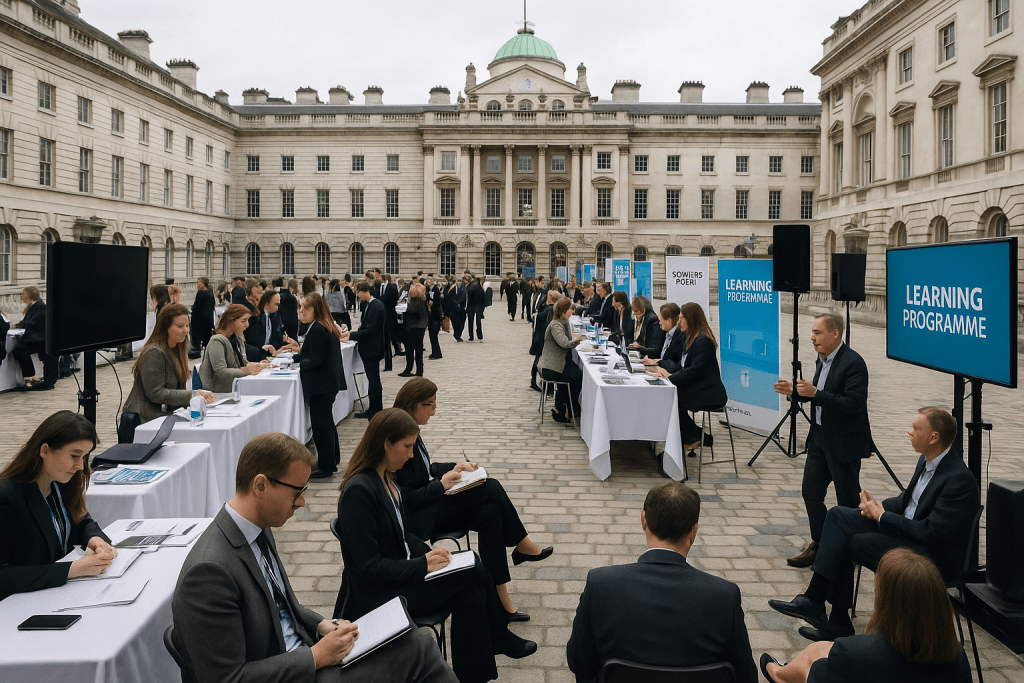
The Unique Venues of London Showcase has outlined the themes for its educational programme, adding a structured learning component to the free-to-attend event for planners and organisers. The showcase is scheduled for Tuesday 6 October at Somerset House, one of the capital’s best-known cultural and heritage sites.
The annual gathering brings together a broad cross-section of non-traditional and character-led venues from across the city, aimed at agencies, corporate organisers and association planners seeking distinctive locations for conferences, exhibitions, incentives and brand experiences.
Background and industry context
Unique Venues of London (UVL) is a marketing consortium representing a portfolio of specialist event spaces, including museums, galleries, historic buildings, visitor attractions and contemporary cultural institutions. Its showcase has become a fixture in the London event calendar, offering buyers the opportunity to meet multiple venue teams in one place.
Educational content has increasingly become a pillar of venue showcases and trade events across the business meetings and events sector. Organisers are moving beyond simple table-top displays toward curated programmes that address the operational, strategic and technological challenges faced by event professionals. By introducing a formal learning strand, UVL is aligning its flagship event with this industry shift towards more knowledge-focused formats.
Somerset House, the host venue for this edition, regularly stages large-scale public events, corporate functions and cultural programmes, making it a relevant backdrop for discussions around venue capabilities, audience experience and hybrid use of historic spaces.
Key developments at the showcase
Organisers have confirmed that the educational programme will be built around defined themes designed to reflect current priorities for event planners working in and around London. While full session details and speaker line-ups have not been disclosed, the framework is intended to help delegates plan their visit and identify content most relevant to their role.
The learning agenda is expected to sit alongside the main exhibition-style showcase, where attendees can meet representatives from member venues, explore space options and discuss logistics, capacities and technical capabilities. The addition of education is intended to ensure that participation delivers both sourcing value and professional development.
A trade publication from the event sector is collaborating on the programme, supporting the content structure and themes. This media involvement is positioned to help ensure discussions reflect current market sentiment, with a focus on practical insights rather than product promotion.
Attendance at the showcase is complimentary for qualified event professionals, which is likely to encourage a mix of corporate planners, agencies, PCOs and in-house event teams. The expectation is that delegates will be able to move between educational sessions and the main showcase floor throughout the day.
Potential industry impact
The decision to place education at the centre of a venue-focused event underlines how buyer expectations are evolving. Organisers now seek environments where they can both review suppliers and access targeted insight on topics such as risk management, audience engagement, sustainability, accessibility and the role of technology in venue selection and production.
For London’s venue community, a more content-rich showcase may help shift conversations beyond capacity charts and day delegate rates. Structured themes can open discussion on how unconventional spaces support complex formats, from immersive product launches and experiential exhibitions to hybrid conferences requiring integrated AV, streaming capabilities and flexible layouts.
The focus on learning also reflects how venues are positioning themselves within the broader event technology and services ecosystem. As delegates increasingly ask about connectivity, digital infrastructure, in-house production support and data policies, educational sessions can help frame these issues and highlight where historic and cultural spaces have invested in modern capabilities.
More broadly, adding an educational programme to a venue showcase could influence similar events in other regions, encouraging organisers to adopt formats that balance supplier discovery with structured knowledge sharing. This trend may support more informed buying decisions and closer collaboration between venues, planners and technology partners.
Why this matters for event professionals and technology providers
For event professionals, attending a showcase that offers both venue access and a curated learning schedule can improve the return on time invested. Delegates can use the event to:
- Benchmark a range of distinctive London venues in a single visit.
- Gather insight on how non-traditional spaces are adapting to new event formats and attendee expectations.
- Explore how heritage and cultural venues are handling technical requirements such as broadcast-quality streaming, Wi-Fi density and hybrid event support.
- Discuss operational issues such as crowd flow, security, compliance and accessibility in complex or listed buildings.
For technology providers working with venues and planners, the showcase’s educational component offers a window into how buyers perceive emerging requirements. Even without direct product sessions, themes around content delivery, attendee data, sustainability reporting or remote participation inevitably touch on digital tools and infrastructure. Understanding the questions delegates ask venue teams can help suppliers refine solutions for historic and specialist sites.
The Somerset House setting is likely to spotlight how older buildings can accommodate sophisticated event technology without compromising architectural integrity. This is a recurring challenge for production companies and tech vendors looking to deploy rigging, LED, networking and interactivity in protected or unusual spaces.
Conclusion
By outlining clear themes for its educational programme, the Unique Venues of London Showcase is positioning its October event as more than a traditional venue fair. The move reflects a wider industry direction in which buyers expect supplier meetings to be underpinned by structured learning and practical insight.
As planners continue to search for stand-out locations that can support increasingly complex technical and experiential requirements, the combination of a curated venue line-up and focused education at Somerset House is likely to attract strong interest from both the corporate and agency communities. For venues, the format offers a platform to demonstrate not only their architectural appeal but also their readiness to support the next generation of live, digital and hybrid events.