UK Initiative Uses Events to Build Future Talent Pipeline
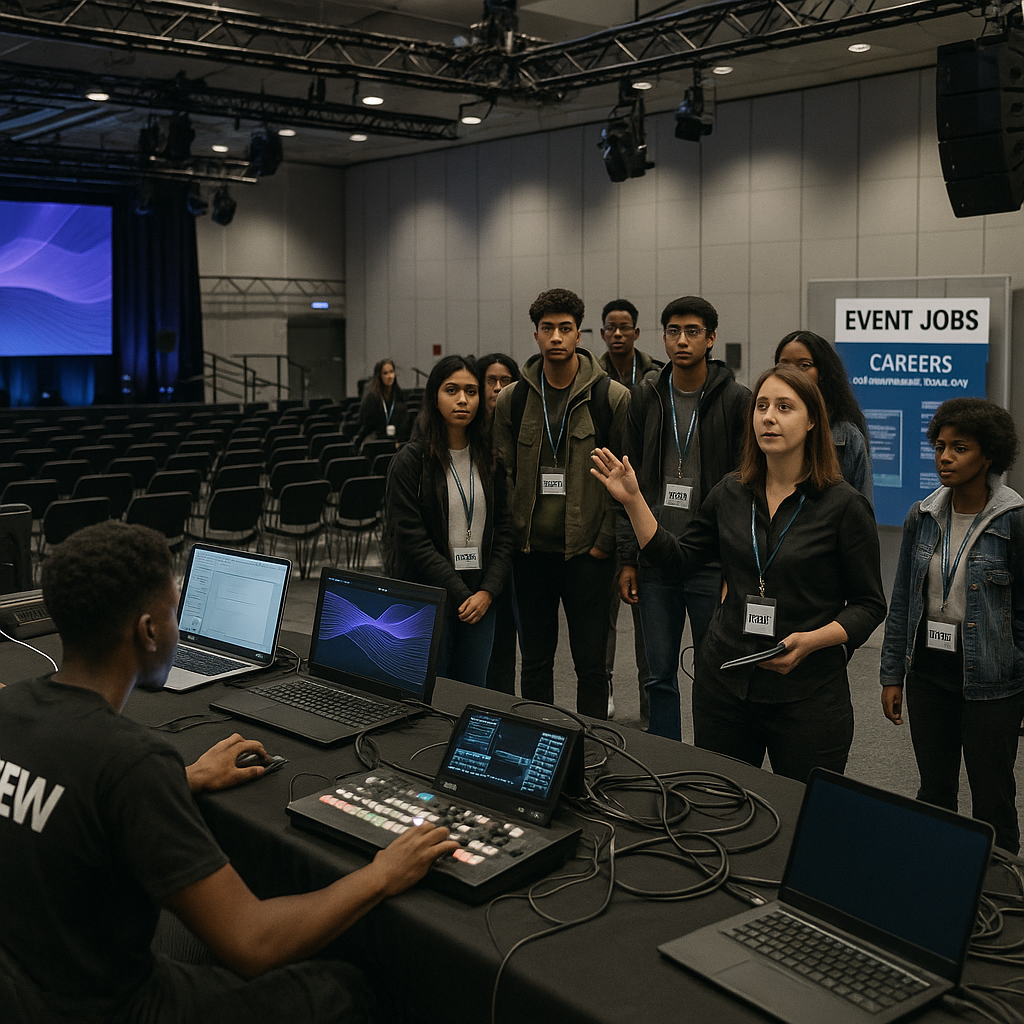
A UK-wide initiative is working to position the events industry as a clearer and more accessible career path for young people, using data, mapping and structured work experience to connect schools, students and employers.
The Power of Events, led by CEO Rick Stainton, is developing a series of programmes aimed at demystifying careers in events and creating routes into the sector. Its work spans a national industry map, outreach to schools and colleges, and a dedicated Experience of Work initiative designed to provide structured placements for young people.
Background: events industry seeks clearer career pathways
The events sector in the UK encompasses business conferences, trade shows, exhibitions, festivals, sports, cultural experiences and brand activations, cutting across multiple disciplines including operations, production, technology, marketing and logistics. Despite its scale, the industry has long faced challenges in communicating its breadth of roles and long-term career potential to students, parents and educators.
Pathways into events have often been informal, relying heavily on word-of-mouth, personal networks and ad hoc work experience rather than clearly defined entry routes. At the same time, event organisers and suppliers report persistent skills gaps in areas such as production technology, digital and hybrid delivery, data, sustainability and project management.
In this context, initiatives that can systematise awareness, signpost opportunities and connect education providers with employers have become a growing focus for industry bodies and talent-focused organisations.
Key developments: mapping, schools outreach and work experience
The Power of Events is building an industry-wide framework that attempts to address several of these structural issues in parallel.
UK events industry map
At the centre of the initiative is an interactive map of the UK events industry, designed to showcase the scale and diversity of organisations working in the sector. The map highlights companies, venues, agencies, suppliers, associations and supporting services across different event segments.
The aim is to provide an accessible, visual reference for students, educators and career advisers, demonstrating that events work extends beyond visible roles on-site to encompass planning, design, logistics, content, digital platforms, data and technology, among others. For employers, the map also offers a way to be more visible to potential future talent and to the education sector.
Nationwide schools and education engagement
Alongside the mapping exercise, The Power of Events has developed a schools engagement programme targeting secondary schools, colleges and universities. This work focuses on introducing events as a credible career option and explaining how students can build skills relevant to the sector.
The organisation engages with educators and careers leaders to provide resources, information and signposting. Sessions and materials are designed to break down the different types of events roles, from operations and production to creative, commercial and digital positions, including those that intersect with event technology and data management.
The programme seeks to reach young people at an earlier stage in their decision-making, positioning events as a sector where they can apply skills in project management, communication, technology, design and customer experience.
Experience of Work initiative
Complementing the awareness work, the Experience of Work initiative is being established to create more structured opportunities for young people to experience working life in events. The project focuses on building meaningful work placements rather than short-term or purely observational experiences.
The scheme is intended to connect students with event businesses able to provide defined tasks, mentorship and exposure to real projects. By doing so, it aims to support the transition from education into vocational skills and employment, while giving employers an opportunity to assess and nurture emerging talent.
Although specific participation numbers and timelines have not been publicly detailed, the initiative is being described as national in ambition, with the intention of involving a broad mix of event organisers, suppliers, venues and agencies.
Industry impact: bridging education and vocational skills
The combined effect of the mapping, schools outreach and work experience initiatives is intended to create a more coherent pathway into the events profession. For an industry that spans multiple disciplines and frequently adopts new technologies, the ability to highlight clear role types and development routes is seen as increasingly important.
By engaging directly with education providers, the programme helps careers teams better understand where events sit within the wider creative, business and technology landscape. It also offers a framework for aligning existing courses—such as media, business studies, IT, hospitality or performing arts—with real-world event roles.
For employers, a more structured flow of interested, better-informed candidates can support longer-term workforce planning. By participating in Experience of Work and appearing on the industry map, companies have opportunities to raise their profile among potential recruits who may otherwise not have considered events as a career option.
The focus on meaningful placements is also notable in an industry where work experience can sometimes be informal or short-term. A more standardised approach offers the potential for clearer expectations, improved safeguarding and more consistent learning outcomes for young people.
Why this matters for event professionals and technology providers
For event professionals, the initiative speaks directly to current and future skills needs, including technology-driven roles. As digital platforms, data analytics, event apps, streaming, AI tools and production technologies become more central to event delivery, the sector requires new entrants who are comfortable working with both live and digital environments.
A clearer talent pipeline can help organisations plan for emerging skills needs, from virtual and hybrid event production to registration systems, engagement tools and on-site infrastructure. Technology vendors and platform providers also have a stake in this development, as they rely on event teams who understand how to specify, implement and optimise their solutions.
Engagement with schools and colleges offers opportunities for technology-focused suppliers to showcase the tools that power modern events, whether through case studies, guest lectures, or participation in work experience placements. This can support greater digital literacy among future planners, producers and operations staff, as well as among those who may go on to work for event technology companies themselves.
More broadly, a visible, structured route into events can help the sector compete for talent with other industries that have long-established graduate schemes and apprenticeship pathways, particularly in areas such as software, engineering and media.
Conclusion
The Power of Events is attempting to reshape how young people encounter and access careers in the UK events industry by combining sector mapping, targeted education outreach and structured work experience. While still developing in scale and reach, the initiative reflects a wider recognition that the events sector must articulate its career opportunities more clearly and provide tangible entry points for future professionals.
As event formats evolve and technology becomes ever more embedded in planning and delivery, structured talent initiatives such as these may play a significant role in ensuring the industry can attract, train and retain the skills it needs for the next phase of growth.