Reading and Leeds unveil major multi-stage redesign
Reading and Leeds Festival have outlined a significant redesign of their core staging and arena set-up, in what organisers describe as the most substantial production overhaul in the twin events’ 37-year history. The move reshapes the physical layout of the sites and introduces a refreshed leadership structure aimed at steering the festivals into their next phase of development.
The changes, which centre on a new multi-stage configuration, are expected to alter how audiences navigate the events, how artists are programmed, and how suppliers deliver production, technical infrastructure and crowd management services across both sites.
Background and industry context
Launched in the late 1980s, Reading and Leeds have long been regarded as cornerstone events in the UK’s live music calendar, drawing large youth audiences and hosting a broad mix of rock, alternative and increasingly mainstream pop and hip-hop acts. The festivals operate as linked, simultaneous events over the same weekend, typically sharing much of the same line-up across two geographically separated locations.
Over nearly four decades, the events have reflected broader shifts in festival culture and audience expectations, including growing demand for genre diversity, higher production values, more flexible viewing options and enhanced safety and accessibility. More recently, the UK festival sector has also faced rising operational costs, changing ticket-buying behaviour and the need to differentiate live experiences in an environment where fans have become used to high-quality digital content and hybrid engagement.
Within this context, large-scale festivals are reassessing site design, stage configurations and technical infrastructure to improve audience flow, spread demand more evenly across arenas and offer more varied performance environments for artists and sponsors. Reading and Leeds’ latest announcement aligns with that wider industry trend toward modular, flexible and multi-headline models.
Key developments in the festival overhaul
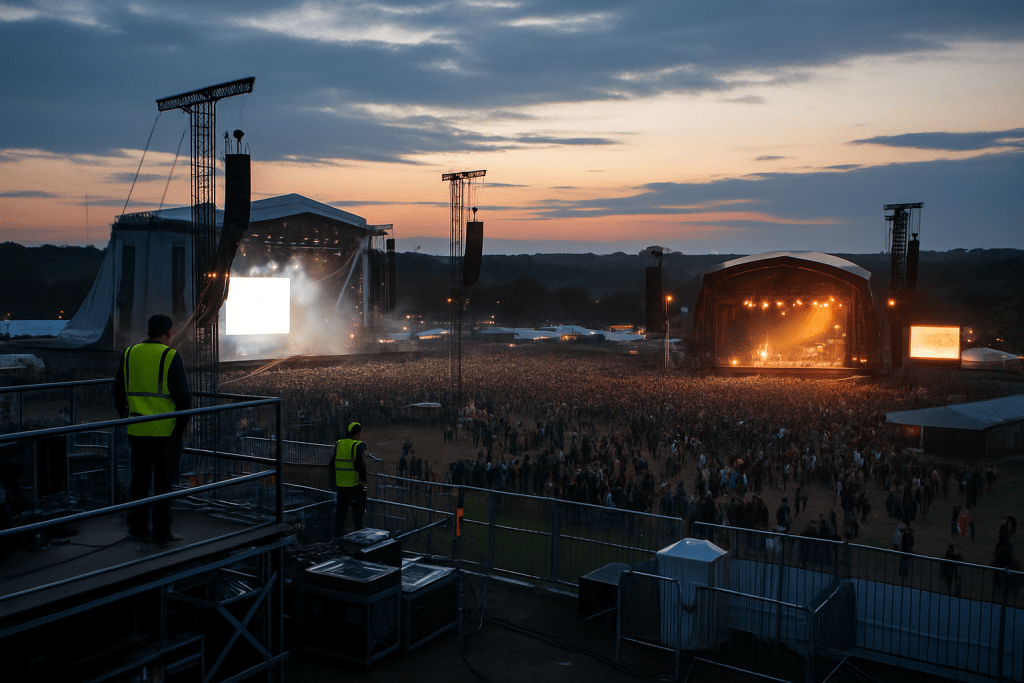
Organisers have confirmed that the festivals will undergo what they describe as the biggest staging and arena transformation in their history. At the centre of the change is a reconfigured approach to main performance spaces, involving multiple large stages rather than a single dominant main stage focus.
The redesign is intended to give artists more prominence across the sites and create additional “headline moments” throughout the day and evening. For production teams and technology providers, this implies a more distributed technical footprint, with increased emphasis on synchronised schedules, parallel sound systems, lighting rigs and broadcast-ready setups at multiple key locations.
A broadened leadership team has also been introduced to guide this next phase. While specific titles and responsibilities have not been fully detailed, the expanded structure is designed to bring in new expertise across programming, production, operations and audience experience. This shift suggests a more collaborative management approach, with separate leads likely taking responsibility for core areas such as staging, site design, artist relations, sustainability and digital integration.
The multi-stage model will also affect how the site is divided into arenas, including potential adjustments to crowd capacities, ingress and egress routes, and the placement of food, beverage, sponsor activations and welfare facilities. For vendors, this can mean revisiting cabling routes, power distribution, network connectivity and rigging plans to ensure each arena operates as a semi-autonomous but integrated production environment.
Industry impact for large-scale festivals
The decision to fundamentally rework staging at two of the UK’s most visible festivals is likely to be closely watched by promoters, venue operators and production houses. A multi-stage emphasis can support more balanced line-ups, reduce bottlenecks around a single headliner and help distribute audiences across the site, potentially improving safety and comfort.
From a technology standpoint, the approach encourages greater investment in duplicated or scalable systems. Audio, lighting, video and control infrastructure may need to be configured with redundancy across multiple key stages, raising the bar for coordination between suppliers. Networked control systems, IP-based audio distribution and synchronised timecode solutions become more critical in environments where several large stages operate concurrently.
The shift also showcases how festivals are adapting to changing audience behaviour. Attendees increasingly expect the ability to curate their own experience, moving between genres and performance spaces rather than centring their day around a single headline act. In practice, this can influence everything from wayfinding design and signage technology to real-time mobile app features that help audiences navigate competing performance schedules.
Why this matters for event professionals and technology providers
For event professionals, the Reading and Leeds overhaul underscores the need to view staging as part of an integrated experience strategy rather than a purely technical task. Site layouts, stage positions and arena definitions now intersect with data insights, crowd modelling and digital engagement tools.
Organisers working on large outdoor events can draw several lessons:
- Flexible stage architectures: Building in the capacity to run multiple high-specification stages in parallel can mitigate risk around weather, artist logistics and crowd surges, while enabling more dynamic programming.
- Advanced planning and modelling: Multi-arena designs require detailed pre-event simulation of audience flows, sound bleed, emergency routes and infrastructure placement. Production and safety teams must collaborate closely from early planning stages.
- Scalable technical infrastructure: Power, connectivity and control systems need to be specified for scalability. This includes considering distributed power generation, resilient network backbones and centralised monitoring of multiple stages and arenas.
- Data-informed operations: When audiences are more evenly dispersed, organisers can use location data, app interactions and on-site sensors to monitor real-time crowd density, adapting content, staffing and messaging accordingly.
For technology providers, the move opens further opportunities around integrated control rooms, cross-stage content capture, live streaming capabilities and sponsor-led digital experiences that can be mirrored or differentiated between arenas.
Conclusion
The staging and arena redesign at Reading and Leeds marks a notable evolution for two of the UK’s longest-running music festivals. By committing to their largest production overhaul to date and expanding the leadership team overseeing these changes, organisers are signalling a long-term strategy focused on more flexible, distributed and audience-centric event design.
While implementation details will continue to emerge as future editions take shape, the direction of travel is clear: large-scale festivals are moving toward multi-stage models that demand closer collaboration between creative teams, operations, and technology partners. For the wider live events and event technology sector, the developments at Reading and Leeds offer a real-world case study in how legacy festivals can adapt their physical and technical infrastructure to meet contemporary audience expectations and market pressures.