Prism Events strengthens focus on hybrid and virtual delivery
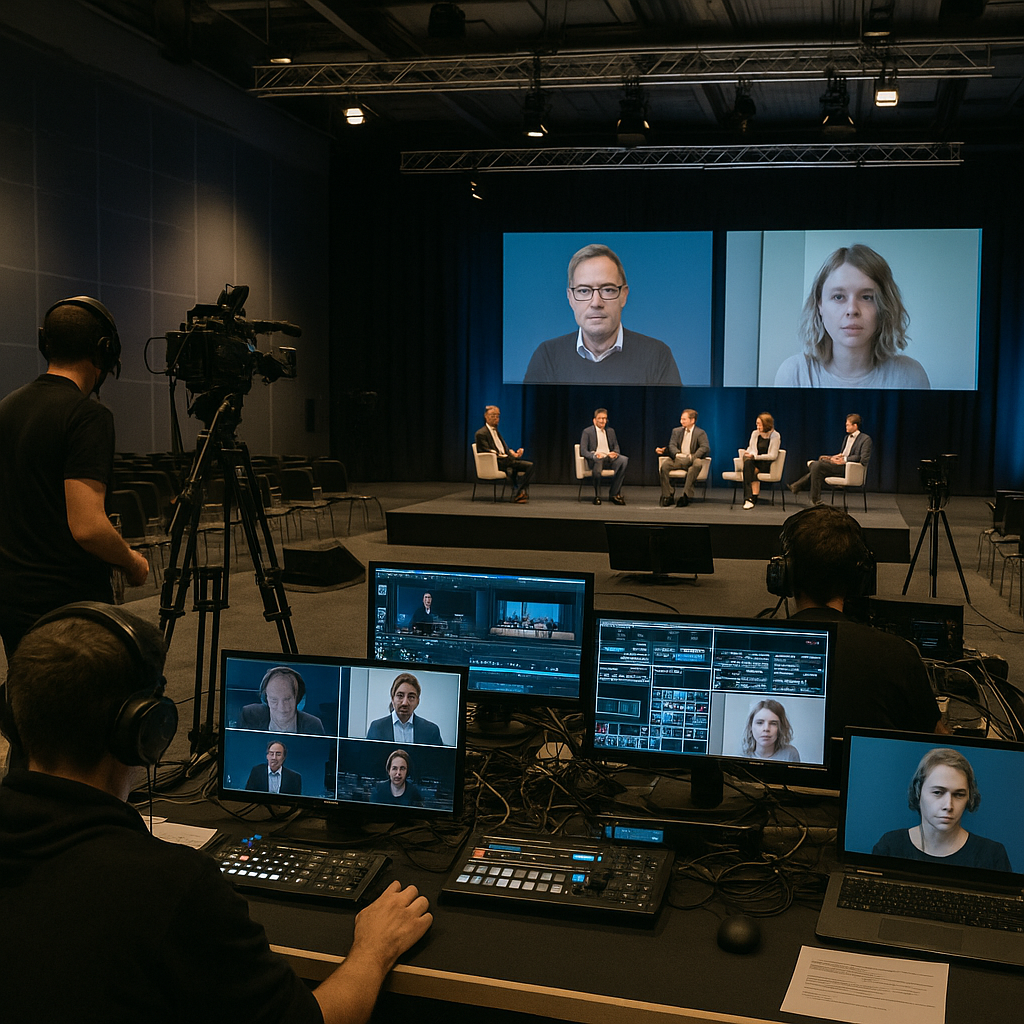
Prism Events is sharpening its focus on hybrid and virtual event delivery, drawing on more than 18 years of experience in professional live streaming and online production for organisations across culture, education, engineering and technology.
The company works with clients that need to reach audiences beyond a single physical venue, supporting fully virtual experiences as well as integrated hybrid formats that connect in-person and remote participants. Its portfolio includes work for organisations such as the British Museum, Cambridge University Press & Assessment, the Royal Academy of Engineering, Microsoft and Siemens.
Background and industry context
The events sector has undergone a structural shift in how audiences expect to consume content. While physical meetings and conferences have resumed, many organisers now design programmes on the assumption that a portion of their audience will join online. This has increased demand for providers that can reliably handle broadcast-quality streaming, remote speaker integration and multi-location production.
For institutions such as museums, universities and professional bodies, extending reach to global audiences has become a strategic priority rather than a temporary response to travel restrictions. Likewise, large technology and engineering businesses continue to blend internal town halls, customer briefings and product updates across physical stages and digital channels.
Key services and delivery approach
Prism Events positions itself around three core areas: virtual events, hybrid events and professional live streaming. While specific implementations vary by client, these services typically include end-to-end production support, from pre-event technical planning through to live delivery and post-event content capture.
Virtual events are delivered entirely online, enabling organisations to host conferences, briefings, training sessions or cultural programmes without requiring delegates to travel. Hybrid projects combine on-site production with remote access, allowing speakers and attendees to participate either in person or via digital platforms.
The company emphasises broadcast-standard live streaming, which is increasingly important as audiences compare event experiences with consumer streaming services. For clients such as museums and universities, this can mean multi-camera coverage of lectures, panel discussions or public talks, while corporate clients may require secure streaming for internal communications or sensitive product presentations.
Work with cultural, academic and corporate clients
Prism Events’ track record spans several sectors with different content and compliance needs. Work with the British Museum and similar cultural institutions often focuses on public-facing programmes, where the priority is to make exhibitions, talks and educational content available to wider audiences online, sometimes in multiple time zones.
Engagements with clients such as Cambridge University Press & Assessment reflect the growing importance of digital channels in academic publishing and assessment. Here, online and hybrid events can support educator training, research dissemination and stakeholder briefings, requiring clear delivery of complex information and integration with institutional systems.
For professional bodies like the Royal Academy of Engineering, virtual and hybrid formats help extend networks of experts and practitioners, enabling debate and knowledge sharing without geographic constraints. Events in this space often involve specialised subject matter and panel formats that must translate effectively for remote participants.
Prism Events’ work with technology and industrial brands such as Microsoft and Siemens highlights the continuing demand for robust streaming in corporate communications. These organisations typically require high reliability, consistent branding, and the ability to reach global teams and customers with minimal disruption.
Industry impact
The sustained investment in hybrid and virtual formats by established institutions and global enterprises reinforces that online participation is now embedded in long-term event strategies. Providers like Prism Events contribute to this shift by bringing broadcast and production expertise that many in-house teams do not hold at scale.
This capability is influencing how programmes are designed. Timings, formats and audience interaction tools are being rethought so that sessions work equally well for people in the room and those joining remotely. High-quality streaming also enables events to live on beyond the scheduled date, as recorded sessions are repurposed for training, marketing or public engagement.
By supporting clients with complex content requirements and diverse international audiences, specialist production partners are helping to normalise higher standards for accessibility, recording quality and on-demand viewing across the event lifecycle.
Why this matters for event professionals and technology providers
For event organisers, the experience of institutions and corporates working with dedicated streaming and hybrid specialists offers several takeaways:
- Planning for multi-channel delivery: Agendas, speaker briefings and technical setups need to be designed from the outset for both in-person and online consumption, rather than adding streaming as a last-minute layer.
- Alignment with organisational goals: Institutions in culture and education often prioritise outreach and learning impact, while corporates may focus on internal alignment and customer engagement. Production choices should support those specific objectives.
- Longevity of content: High-quality capture and streaming increase the value of event content, enabling reuse in digital libraries, gated resources or public archives.
- Integration with existing platforms: Many organisations now operate their own learning management systems, intranets or customer portals. Event technology providers that can connect seamlessly with these environments have an advantage.
Technology vendors and platform providers can also draw lessons from this sustained demand. Reliable video infrastructure, scalable access control, analytics and content management are becoming baseline expectations rather than premium additions. Partnerships with production firms that understand both studio workflows and on-site event constraints are likely to grow more important.
Conclusion
With nearly two decades of experience and a client list spanning museums, academic institutions, professional bodies and global enterprises, Prism Events illustrates how specialist providers are helping organisations standardise high-quality hybrid and virtual delivery.
As audiences continue to expect flexible participation options, event professionals are likely to work more closely with partners that can bridge the gap between live event production and broadcast-grade online experiences. The continued evolution of hybrid and virtual formats will depend not only on platforms and tools, but on the practical production expertise required to make complex programmes accessible to participants wherever they are.