Indie duo Ray Bull standardises tour monitoring with Allen & Heath SQ-Rack

Background and context
Brooklyn-based indie pop duo Ray Bull recently completed their “Please Stop Laughing” tour across major cities in the United States and Canada. Like many emerging artists moving into larger rooms and longer runs, the band faced challenges maintaining consistent in-ear monitor mixes from venue to venue.
Front of house engineer John Michael Young, who first encountered Ray Bull at a festival in Atlanta, joined the tour to support their live sound. After mixing a show for the band and receiving positive feedback on their monitor sound, Young began looking at how to give them greater control and repeatability on the road.
Key announcement
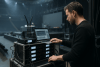
To tackle these monitoring issues, Young recommended a dedicated in-ear rig built around Allen & Heath’s SQ-Rack, a rackmount variant in the company’s SQ series of 48-channel, 96 kHz digital mixers. The SQ-Rack provides the same processing engine as the SQ consoles but without physical faders, making it suitable for compact, touring monitor setups.
Young says the decision was driven by the need to streamline load-in and teardown with a small crew, while eliminating the need for analog splits. Having previous experience with Allen & Heath systems, he cited stability and reliability as key reasons for choosing the platform.
On tour, Young paired the band’s new SQ-Rack monitor mixer with his own Allen & Heath SQ-5 at front of house. The two devices were linked via the SLink connection, allowing digital audio distribution over a single CAT cable and simple tie-line routing between the monitor and FOH systems.
The SQ-Rack’s 16 local inputs enabled it to serve as the duo’s stagebox, taking feeds directly from their playback system into the main mix and monitor buses. Young highlighted the routing options, preamp quality and low latency as important factors at this price level.
Industry impact
Ray Bull’s move to a dedicated, networked monitor rack reflects a broader trend in live sound, where even smaller touring acts seek consistent, self-contained in-ear systems independent of venue consoles. Digital splits over network cabling reduce setup complexity and allow visiting engineers to carry a complete show file from one stop to the next.
The setup also demonstrates how compact, faderless racks are being used as the core of modern touring rigs, particularly when stage space, trucking and crew numbers are limited. By combining a rackmount engine on stage with a separate FOH surface, engineers can tailor workflows while keeping the technical footprint small.
In practice, the new rig reduced on-the-fly changes to the band’s monitor mixes. According to Young, what had previously required constant adjustments during the show became largely static, freeing the performers to focus on their set rather than sound issues.
Why this matters
For production teams working with rising artists, the Ray Bull tour illustrates how mid-range digital systems can deliver features usually associated with higher-budget rigs. The band and engineer used the free SQ MixPad app to control the monitor console wirelessly, with a tablet on stage for the drummer and another at front of house for Young.
Young also made use of the SQ platform’s onboard processing, including multiband compression on the main mix and dynamic EQ on guitar to manage tonal shifts between patches. He noted that the ability to customise routing and surface layout helps adapt the console to different show demands.
As more artists demand consistent in-ear monitoring and flexible workflows without significantly increasing production costs, compact systems like Allen & Heath’s SQ series are likely to see continued uptake. Further details on the SQ-Rack and related hardware can be found on the manufacturer’s official website at allen-heath.com.