Inside Agency EA’s production of the Obama Presidential Center opening week
Background and context
The opening of the Obama Presidential Center in Chicago drew national attention, bringing together political leaders, community stakeholders, donors, and media. Beyond its political and cultural importance, the project also represented a complex brief for the live events sector.
To support the first week of public activities, the Obama Foundation enlisted Chicago-based experiential marketing firm Agency EA to plan and produce a series of high-profile events. The assignment required the agency to balance ceremonial elements, community programming, and guest experience under tight security and media scrutiny.
Agency EA, which specializes in brand experiences and large-scale live events, was responsible for coordinating multiple touchpoints across the opening week rather than a single flagship event. More information about the company’s broader portfolio is available on its official site at AgencyEA.com.
Key announcement
Agency EA was selected to lead production for the opening week festivities at the Obama Presidential Center, overseeing event design, logistics, and on-site execution. The schedule reportedly included a combination of formal ceremonies, donor-focused experiences, and community-facing activities designed to introduce the center to the public.
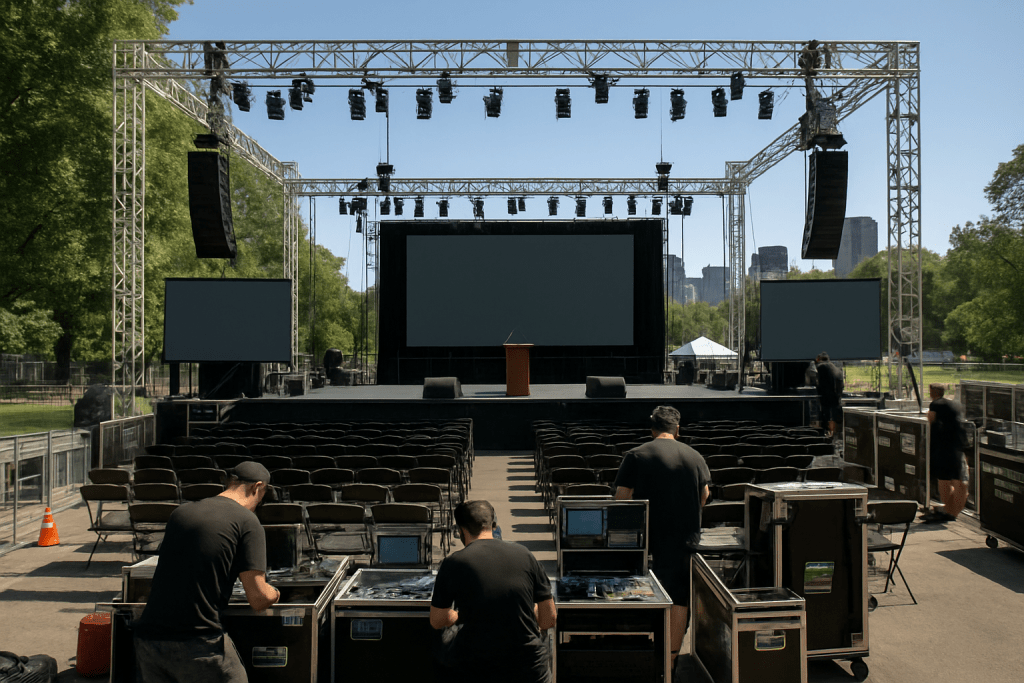
The agency’s role covered typical large-scale event functions such as staging, audiovisual integration, guest flow, and vendor coordination, while aligning with the Obama Foundation’s messaging and accessibility goals. Programming had to serve a wide range of audiences—from local residents to national dignitaries—within a single, cohesive week of events.
For event professionals, the engagement highlights how civic institutions and foundations are increasingly turning to experiential agencies to shape the public narrative around major openings and long-term cultural projects.
Industry impact
The Obama Presidential Center opening week illustrates several current trends in event production:
- Blending civic and experiential work: Cultural and civic openings are being treated less like one-off ceremonies and more like multi-day brand experiences with curated narratives and touchpoints.
- Heightened complexity: Events of this kind demand coordination with city authorities, security teams, and community organizations, pushing agencies to operate more like cross-functional production partners than traditional vendors.
- Local expertise as an asset: The choice of a Chicago-based agency underlines the value of regional knowledge, supplier networks, and familiarity with municipal requirements in high-stakes civic projects.
- Expanded expectations for storytelling: Stakeholders increasingly expect openings to deliver not just a ribbon-cutting, but ongoing content, engagement opportunities, and shareable moments for both in-person and remote audiences.
The project also reflects the broader shift toward experiential approaches in institutional communications, where live events sit alongside digital campaigns and community outreach in a unified strategy.
Why this matters
For the event technology and production community, Agency EA’s involvement in the Obama Presidential Center opening underscores the growing role of experiential agencies in shaping milestone civic moments. These engagements often require sophisticated AV setups, scalable infrastructure, and flexible design to support varied programming over several days.
As more museums, cultural centers, and civic initiatives open or relaunch, they are likely to look for partners capable of delivering politically sensitive, media-visible, and community-responsive experiences. Agencies and production companies that can handle these requirements—from security-aware layouts to accessible staging and content capture—may find new opportunities in this segment.
The Obama Presidential Center project demonstrates how high-profile institutional openings are evolving into multi-layered, narrative-driven experiences. For suppliers, producers, and technology providers, it offers a useful case study in the planning, coordination, and execution standards now expected at the intersection of public life, culture, and live events.