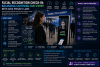
Advanced Biometric Security: Navigating Facial Recognition and Digital Identity Trust in 2026

Biometric security is rapidly becoming one of the most transformative and controversial technologies in the global event industry. As conferences, trade shows, sports venues, festivals, corporate summits, and smart venues continue digitizing attendee experiences, organizers are increasingly turning to biometric authentication systems to improve security, accelerate venue access, personalize attendee journeys, and reduce operational friction.
By 2026, facial recognition, behavioral biometrics, palm authentication, voice identity systems, and decentralized digital identity frameworks are expected to move beyond pilot programs and become integrated components of mainstream event infrastructure.
This shift is being driven by multiple converging pressures:
- Rising cybersecurity threats
- Growing demand for frictionless attendee experiences
- Increasing hybrid event complexity
- Expanding smart venue ecosystems
- Greater regulatory scrutiny around identity verification
- Escalating concerns about ticket fraud and unauthorized access
At the same time, biometric adoption is generating significant debate around surveillance, privacy, consent, algorithmic bias, and digital identity governance.
For the event industry, the challenge in 2026 is no longer simply whether biometric systems are technologically viable. The more critical issue is whether organizers can establish sufficient trust, transparency, and governance to deploy these technologies responsibly at scale.
Why Traditional Event Security Models Are Becoming Insufficient
Conventional event security systems rely heavily on fragmented identity verification methods such as:
- Printed badges
- QR codes
- RFID credentials
- Password-based logins
- Manual ID checks
- Mobile ticket validation
While effective in many contexts, these systems are increasingly vulnerable to:
- Credential sharing
- Ticket fraud
- Identity spoofing
- Unauthorized venue access
- Social engineering attacks
- Counterfeit credentials
At the same time, attendees expect faster and more seamless experiences.
Long registration lines, repeated authentication steps, and fragmented access workflows create operational bottlenecks that negatively affect attendee satisfaction.
Large-scale events now require identity systems capable of balancing:
- Security
- speed
- personalization
- privacy
- interoperability
Biometric technologies are emerging as a potential solution because identity becomes tied directly to the individual rather than a transferable credential.
The Evolution of Event Biometrics
Biometric systems within events are evolving far beyond simple facial scanning.
Modern identity ecosystems increasingly combine multiple biometric signals simultaneously.
These may include:
- Facial recognition
- Palm vein authentication
- Fingerprint scanning
- Voice biometrics
- Behavioral biometrics
- Gait analysis
- Iris recognition
- Device-linked identity patterns
The objective is creating layered identity confidence models that reduce fraud while minimizing attendee friction.
Facial Recognition as the Frontline Identity Layer
Facial recognition remains the most widely deployed biometric technology in event environments.
How Modern Facial Recognition Works
Contemporary facial recognition systems use AI-powered computer vision models to map facial features into mathematical representations known as biometric templates.
Unlike traditional image comparison systems, modern neural vision models analyze:
- Facial geometry
- Landmark positioning
- Depth characteristics
- Texture patterns
- Movement behavior
These systems compare live facial scans against encrypted identity templates stored within authentication databases.
Event Applications
Facial recognition is increasingly used for:
- Venue entry
- VIP access
- Staff authentication
- Restricted area security
- Ticket validation
- Frictionless check-in
- Smart payment systems
Some venues now support “walk-through authentication” where attendees enter without stopping for manual credential checks.
Real-Time Threat Detection
Advanced systems can also integrate with watchlist databases and security monitoring systems to identify:
- Banned individuals
- credential duplication attempts
- suspicious movement patterns
- perimeter violations
This improves operational awareness for large-scale venues.
Behavioral Biometrics and Passive Authentication
One of the most important developments in 2026 is the rise of behavioral biometrics.
Unlike traditional biometrics requiring active scanning, behavioral systems continuously analyze user behavior patterns passively.
Behavioral Signals
These systems may evaluate:
- Typing rhythms
- Walking patterns
- Device handling behavior
- Gesture movement
- Voice cadence
- Interaction timing
AI models generate continuous identity confidence scores based on behavioral consistency.
Advantages for Events
Behavioral biometrics improve:
- Continuous authentication
- Fraud detection
- Account protection
- mobile app security
- attendee identity verification
without requiring repeated active scanning.
This creates more seamless attendee experiences while strengthening security.
Decentralized Digital Identity and Self-Sovereign Identity
A major shift occurring in 2026 is the movement toward decentralized identity frameworks.
The Problem with Centralized Identity Systems
Traditional biometric systems often rely on centralized databases storing sensitive personal information.
This creates risks involving:
- Large-scale data breaches
- unauthorized surveillance
- identity theft
- data misuse
- cross-platform tracking
Self-Sovereign Identity Models
Self-sovereign identity (SSI) systems allow attendees to maintain ownership and control over their digital identity credentials.
Using blockchain-backed identity frameworks, attendees can selectively share only the information required for specific interactions.
For example, attendees may verify:
- age eligibility
- ticket ownership
- VIP status
- professional credentials
without exposing unnecessary personal data.
Verifiable Credentials
Digital identity wallets increasingly support cryptographically verifiable credentials that allow trusted authentication without centralized identity replication.
This significantly improves privacy and trust architecture.
AI-Powered Identity Intelligence
Artificial intelligence is becoming central to modern biometric ecosystems.
Multi-Factor Identity Scoring
AI systems combine multiple signals simultaneously, including:
- facial recognition
- behavioral patterns
- device authentication
- location context
- access history
- transaction behavior
This creates adaptive identity confidence models that improve fraud prevention.
Anomaly Detection
Machine learning systems can identify suspicious behavior such as:
- abnormal access patterns
- credential sharing
- spoofing attempts
- unauthorized movement
- synthetic identity attacks
This strengthens event security without relying solely on manual intervention.
Adaptive Risk Authentication
Some systems now dynamically adjust authentication requirements based on contextual risk levels.
For example:
- low-risk attendees may experience frictionless entry
- higher-risk scenarios may trigger additional biometric verification
This improves both security and user experience.
Privacy, Ethics, and Trust Challenges
Despite rapid adoption, biometric systems remain highly controversial.
Surveillance Concerns
Facial recognition technologies raise concerns regarding:
- mass surveillance
- unauthorized tracking
- attendee profiling
- behavioral monitoring
- data retention abuse
Many attendees remain uncomfortable with persistent biometric observation.
Consent and Transparency
One of the largest industry challenges is ensuring meaningful consent.
Organizers must clearly communicate:
- what data is collected
- how it is processed
- who can access it
- how long it is retained
- whether it is shared externally
Opaque biometric deployment significantly damages trust.
Algorithmic Bias
AI recognition systems may demonstrate uneven performance across:
- ethnic groups
- age ranges
- gender identities
- accessibility conditions
Biased systems can create discriminatory access outcomes and reputational risk.
Deepfake and Synthetic Identity Threats
As generative AI advances, biometric systems face increasing threats from:
- deepfake attacks
- synthetic facial models
- voice cloning
- identity spoofing
This is accelerating the need for liveness detection and multimodal authentication systems.
Smart Venues and Biometric Ecosystems
Biometric systems are increasingly integrated into broader smart venue infrastructure.
Connected Security Environments
Modern venues combine biometric systems with:
- IoT sensors
- AI surveillance analytics
- occupancy monitoring
- crowd intelligence platforms
- smart access systems
This creates highly interconnected operational environments.
Personalized Attendee Experiences
Identity systems are also enabling personalized services such as:
- customized wayfinding
- automated hotel check-in
- personalized retail recommendations
- frictionless payments
- adaptive lounge access
This shifts biometrics beyond security into experience orchestration.
Operational and Business Impact
Biometric identity systems create several strategic advantages.
Faster Venue Entry
Facial authentication significantly reduces registration and access bottlenecks.
Reduced Fraud
Biometric identity verification improves protection against:
- ticket duplication
- credential sharing
- unauthorized access
- account compromise
Better Operational Visibility
AI-driven identity analytics improve crowd management and security awareness.
Enhanced Personalization
Persistent identity systems support more contextual attendee experiences across venues and digital platforms.
The Future of Biometric Trust Infrastructure
The next generation of event biometrics is expected to become increasingly decentralized, privacy-preserving, and AI-adaptive.
Emerging developments include:
- on-device biometric processing
- privacy-preserving AI authentication
- decentralized identity wallets
- biometric zero-knowledge proofs
- emotion-aware venue systems
- multimodal identity fusion
- AI-generated trust scoring systems
As these technologies evolve, digital identity may become a continuous trust layer embedded invisibly throughout the attendee journey.
Conclusion
Advanced biometric security is fundamentally reshaping identity management within the event industry. Facial recognition, behavioral biometrics, decentralized identity systems, and AI-powered authentication frameworks are enabling more secure, personalized, and frictionless event experiences at unprecedented scale.
However, the future of biometric adoption will depend less on technical capability and more on trust architecture. Organizers that prioritize transparency, consent, privacy protection, ethical AI governance, and attendee control over digital identity are more likely to achieve sustainable adoption.
By 2026, the event industry will likely move beyond viewing biometrics solely as security infrastructure. Instead, biometric identity systems will increasingly function as intelligent trust frameworks connecting physical access, digital engagement, personalization, and operational intelligence across fully connected event ecosystems.