Event Registration Systems: The Digital Entry Point to Event Ecosystems
Introduction: Registration as the First System Interaction
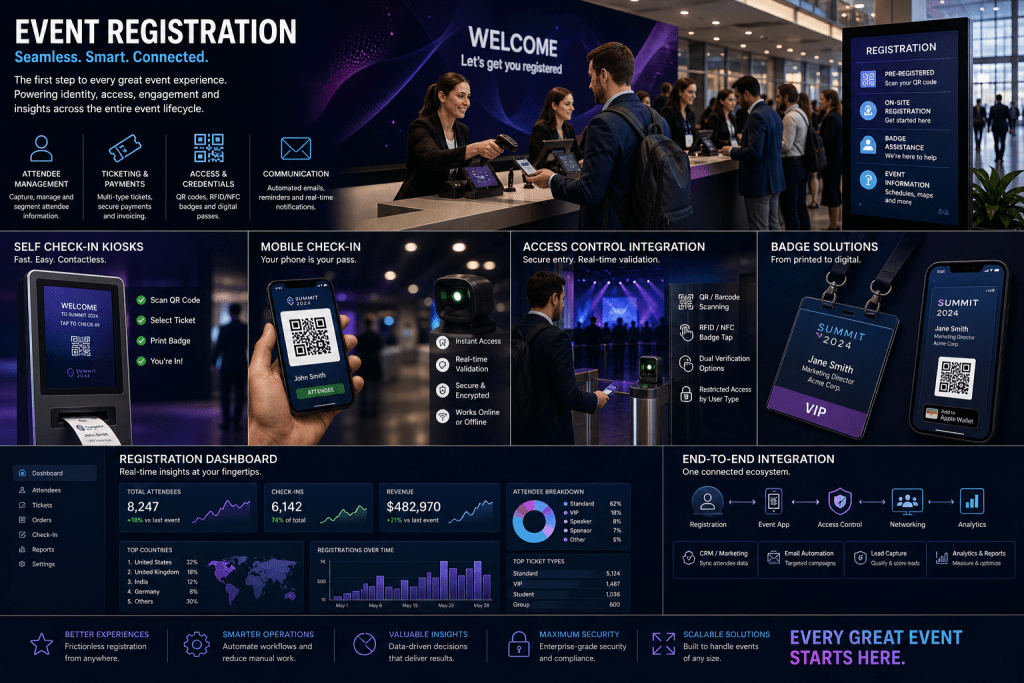
Event registration is no longer a standalone administrative task—it is the first operational touchpoint in a broader event technology ecosystem. It establishes identity, access, personalization, and data flow before an attendee even enters the venue or logs into a virtual platform.
Modern registration systems must operate as integrated, real-time platforms capable of handling identity verification, payments, access control, and downstream system synchronization. As events scale in complexity and move toward hybrid and global formats, registration becomes a critical infrastructure layer rather than a front-end process.
Core Functions of Event Registration Systems
Identity and Profile Management
Registration systems create and manage attendee identities.
This includes:
- Personal and professional details
- Ticket types and access levels
- Preferences and interests
These profiles serve as the foundation for personalization across the event lifecycle.
Ticketing and Payment Processing
Registration platforms handle ticket issuance and payment workflows.
Capabilities include:
- Multi-tier ticketing (VIP, general, sessions)
- Secure payment gateways
- Dynamic pricing and discount logic
Integration with financial systems ensures compliance and reporting.
Access Control and Credentialing
Registration systems define who can access what.
They generate credentials such as:
- QR codes for scanning
- RFID/NFC-enabled badges
- Digital passes within mobile apps
These credentials integrate with on-site access systems.
Communication and Confirmation
Automated communication workflows ensure attendees receive:
- Registration confirmations
- Event updates and reminders
- Personalized schedules
These communications are often triggered by registration events.
System Architecture: From Input to Event Integration
Event registration systems operate as centralized data hubs.
Front-End Interfaces
Attendees interact with registration through:
- Web portals
- Mobile apps
- On-site kiosks
These interfaces must handle high traffic, ensure usability, and support multiple devices.
Backend Processing Layer
The backend manages:
- Data validation and storage
- Payment processing
- Ticket generation
It must operate with high reliability and scalability.
API and Integration Layer
Registration systems connect with other event technologies through APIs.
Key integrations include:
- CRM and marketing platforms
- Event apps and personalization engines
- Access control systems (RFID/NFC scanners)
- Analytics and reporting tools
This ensures data flows seamlessly across systems.
On-Site Registration and Check-In Technologies
Self-Service Kiosks
Kiosks enable attendees to check in and print badges without manual intervention.
Benefits include:
- Reduced queues
- Faster throughput
- Lower staffing requirements
Mobile Check-In
Attendees can check in using smartphones via QR codes or digital passes.
This supports:
- Contactless entry
- Real-time validation
- Integration with mobile event apps
Staff-Assisted Registration
For complex cases, staff-assisted desks provide support for:
- On-site registrations
- Issue resolution
- VIP handling
Integration with Event Technology Ecosystems
Registration systems are deeply interconnected with other event technologies.
Event data platforms use registration data as the primary identity layer. Personalization engines tailor experiences based on attendee profiles.
Access control systems validate credentials at entry points. Networking platforms use registration data to facilitate connections.
In hybrid events, registration systems synchronize with virtual platforms, enabling unified access across physical and digital environments.
Operational and Business Impact
Registration systems directly influence event efficiency and attendee experience.
For attendees, a smooth registration process sets the tone for the entire event. Delays or errors can negatively impact perception.
For organizers, registration provides critical data for planning, forecasting, and resource allocation.
For sponsors, registration data enables targeted engagement and lead generation.
Strategically, registration systems support scalability, enabling events to handle large and diverse audiences.
Technical Challenges
Event registration systems must address several challenges:
- Handling high traffic during peak registration periods
- Ensuring data accuracy and validation
- Integrating with multiple external systems
- Maintaining security and compliance
Scalability and reliability are critical, particularly for large-scale events.
Future Outlook: Intelligent and Unified Registration Platforms
The future of event registration lies in intelligent, unified platforms.
AI-Driven Personalization
Registration systems will use AI to recommend sessions, networking opportunities, and content based on attendee profiles.
Seamless Identity Systems
Digital identity solutions will enable attendees to use a single identity across multiple events and platforms.
Real-Time Adaptive Workflows
Registration systems will adapt dynamically based on demand, automatically adjusting pricing, access, and communication.
Integration with Biometrics and Contactless Systems
While privacy remains a concern, advanced systems may integrate secure biometric or token-based authentication for faster, frictionless access.
Conclusion: Registration as the Foundation of Event Intelligence
Event registration systems are the foundation of modern event ecosystems. They establish identity, enable access, and drive data flow across all systems.
As events become more complex and data-driven, registration must evolve into a fully integrated, intelligent platform that supports personalization, scalability, and seamless experiences.
For event technology leaders, optimizing registration is not just about efficiency—it is about building the foundation for every interaction that follows.