RFID in Events: Building Real-Time Identity and Interaction Infrastructure

Introduction: From Passive Identification to Active Event Intelligence
Event environments have traditionally relied on manual verification, printed credentials, and barcode scanning to manage attendees. While functional, these methods introduce friction, limit real-time visibility, and restrict the ability to understand attendee behavior at scale.
Radio Frequency Identification (RFID) transforms this model by introducing continuous, contactless identification. It enables events to move from static check-ins to dynamic, real-time systems where every interaction—entry, movement, engagement—can be captured and interpreted.
In modern event ecosystems, RFID is not just a tool for access control. It is a foundational infrastructure layer that connects physical presence with digital intelligence.
Understanding RFID in Event Contexts
RFID is a wireless communication technology that uses electromagnetic fields to detect and identify tags attached to objects or individuals.
In events, RFID is commonly embedded in:
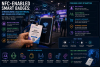
- Wristbands for festivals and large-scale gatherings
- Badges for conferences and exhibitions
- Cards or tokens for controlled environments
Each tag carries a unique identifier that can be read without direct line-of-sight, enabling seamless and fast interactions.
Core Components of RFID Systems
RFID Tags
Tags are the identity carriers used by attendees.
They are typically:
- Passive tags: Powered by the reader’s signal, cost-effective, and widely used
- Active tags: Battery-powered, offering longer range and continuous transmission
Passive RFID is most common in events due to scalability and cost efficiency.
RFID Readers and Antennas
Readers detect and communicate with RFID tags. Antennas define the read range and coverage area.
Deployment depends on use case:
- Entry gates for access control
- Booths for engagement tracking
- Checkpoints for movement analysis
Placement and calibration are critical for accuracy.
Middleware and Event Processing
RFID generates high-frequency data streams. Middleware systems process this data by:
- Filtering duplicate reads
- Mapping tag IDs to attendee profiles
- Triggering actions based on predefined rules
This layer converts raw signals into actionable insights.
Integration Layer
RFID systems integrate with other event technologies through APIs.
These include:
- Registration and ticketing platforms
- Event mobile applications
- CRM and marketing systems
- Analytics and reporting tools
Integration ensures that RFID data contributes to the broader event ecosystem.
Operational Workflows
Access Control and Entry Management
RFID enables fast, contactless entry.
Attendees:
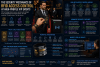
- Tap or pass through RFID-enabled gates
- Are validated in real time
- Gain access without manual intervention
This significantly reduces queues and improves throughput.
Session Tracking and Attendance
RFID readers at session entrances automatically log attendance.
Benefits include:
- Accurate participation tracking
- No need for manual scanning
- Real-time session analytics
Engagement and Networking
RFID badges can be used for interaction at booths and activations.
Examples:
- Tap to collect digital content
- Tap to exchange contact details
- Tap to participate in experiences
Each interaction is recorded and linked to attendee profiles.
Cashless Payments
In some events, RFID wristbands are linked to payment systems.
This enables:
- Fast, contactless transactions
- Reduced reliance on cash or cards
- Integrated spending analytics
System Architecture: Event-Driven Data Ecosystem
RFID operates within an event-driven architecture.
- A tag enters a reader’s range
- The reader captures the tag ID
- Middleware processes and validates the event
- Actions are triggered (e.g., grant access, log interaction)
- Data is sent to analytics and other systems
This real-time pipeline enables immediate response and continuous synchronization.
Integration with Event Technology Ecosystems
RFID acts as a bridge between physical and digital systems.
Event data platforms use RFID events as core inputs for behavioral analysis. Personalization engines leverage this data to tailor experiences dynamically.
Real-time orchestration systems can trigger workflows—such as notifications or access changes—based on RFID interactions.
In advanced setups, RFID works alongside NFC, beacons, and computer vision systems to create a multi-layered sensing environment.
Experience and Business Impact
RFID delivers measurable benefits across multiple dimensions.
For Attendees
- Faster, frictionless entry
- Seamless interactions
- Reduced need for manual processes
For Organizers
- Real-time visibility into crowd flow and engagement
- Improved operational efficiency
- Data-driven decision-making
For Sponsors and Exhibitors
- Detailed engagement analytics
- Measurable ROI on activations
- Targeted follow-up opportunities
Technical Challenges and Considerations
Infrastructure and Calibration
Reader placement and signal tuning are critical. Poor calibration can result in missed or duplicate reads.
Signal Interference
Dense environments can create interference, affecting accuracy. Careful planning is required to manage overlapping signals.
Privacy and Data Protection
RFID systems collect detailed behavioral data. Transparency, consent, and compliance with data protection regulations are essential.
Cost and Scalability
While passive RFID is cost-effective, large-scale deployments still require investment in hardware, integration, and operations.
Future Outlook: Toward Intelligent Event Sensing
RFID is evolving as part of broader event intelligence systems.
Integration with AI and Analytics
Advanced analytics will enable predictive insights—such as crowd movement forecasting and engagement optimization.
Convergence with IoT
RFID will integrate with IoT devices, creating richer datasets that combine location, interaction, and environmental context.
Enhanced Tag Capabilities
Advances in chip technology will improve range, reliability, and functionality while reducing costs.
Unified Identity Systems
RFID may become part of unified digital identity frameworks, enabling seamless experiences across multiple events and platforms.
Conclusion: Connecting Presence to Insight
RFID transforms events by linking physical presence with digital systems in real time. It enables seamless access, richer engagement, and continuous data collection.
As events become more complex and data-driven, RFID will play a central role in building intelligent, responsive environments where every interaction contributes to a deeper understanding of the audience.
For event technology leaders, RFID is not just an operational tool—it is a strategic capability for creating scalable, efficient, and insight-driven event ecosystems.