Nteractive extends New Balance deal for London Marathon
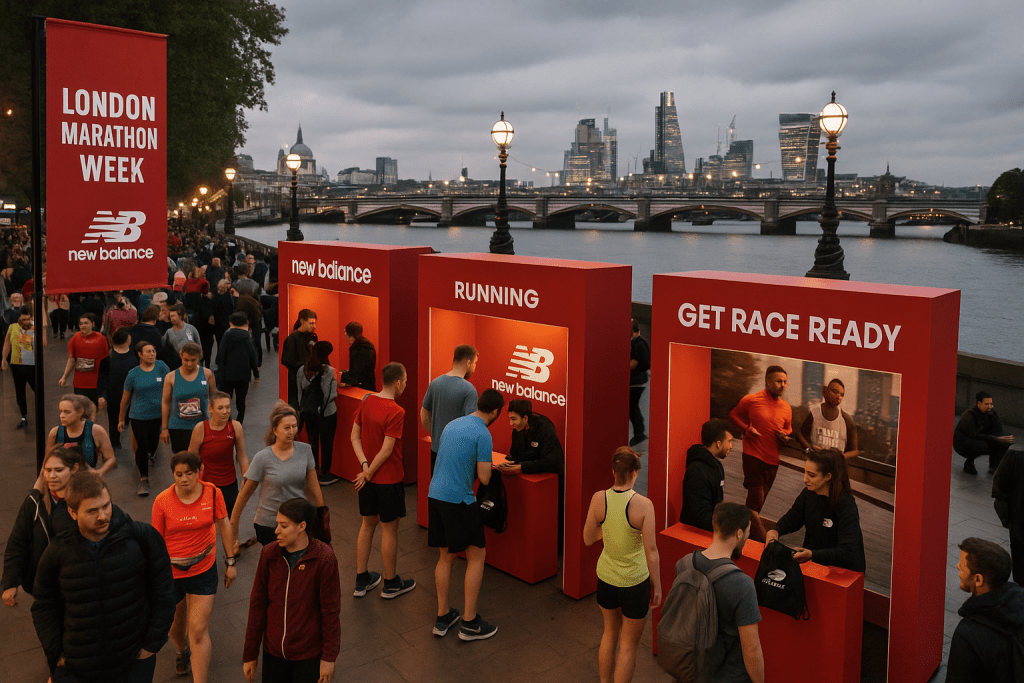
Experiential agency Nteractive has confirmed it will extend its long-running collaboration with New Balance for the 2026 TCS London Marathon, building on more than ten years of partnership around the capital’s flagship running event.
The agreement sees Nteractive once again support New Balance in its role as lead athletic sponsor, with a multi-location activation designed to connect with runners, supporters and the wider public before and during the race weekend.
Activity for the next edition of the marathon is scheduled to begin on Wednesday, 22 April, with a programme of touchpoints that aim to frame the race not only as an elite sporting fixture but as a broader cultural experience in the city.
Background and industry context
Major mass-participation events such as city marathons have become key testing grounds for how brands deploy experiential campaigns, digital tools and data-led engagement at scale. Athletic sponsors in particular are using these events to move beyond traditional logo placement towards more integrated, multi-channel interactions with participants and fans.
For New Balance, the London Marathon is one of the most high-profile platforms in its global running portfolio, bringing together elite athletes, charity runners and international visitors. For over a decade, Nteractive has worked alongside the brand to evolve how that presence is delivered across physical venues, on-site experiences and supporting content.
The continued partnership reflects a wider trend in the event technology and experiential sectors: long-term strategic relationships between brands and specialist agencies that can design, deliver and iterate complex programmes over multiple event cycles. This approach allows sponsors to refine their audience insights and optimise activations year-on-year.
Key developments and announcement
The latest phase of the partnership centres on a multi-site activation plan that stretches across the days leading up to the 2026 TCS London Marathon. From 22 April, Nteractive will coordinate a series of touchpoints intended to accompany participants through the core moments of their marathon journey.
While detailed plans have not been publicly disclosed, the activity is described as spanning several locations and formats, with the objective of turning the race build-up into a city-wide experience. These touchpoints are expected to support New Balance’s role as lead athletic sponsor, underlining the brand’s visibility across participant services, fan engagement and broader public awareness.
For Nteractive, the brief encompasses strategy, creative and operational delivery across the sites involved. The agency is tasked with ensuring that the different components of the activation – from pre-race engagement through to race weekend presence – are consistent, scalable and aligned with the marathon organiser’s framework.
New Balance’s sponsorship status gives it a central role in how runners and spectators encounter the brand on and off the course. The multi-touchpoint design reflects an effort to build a joined-up narrative rather than isolated promotional activities, using the days before the race as a key window for interaction.
Industry impact
The decision to extend an existing relationship and invest in a broader, multi-site plan illustrates how sports and mass-participation events are continuing to evolve as experiential platforms. Instead of concentrating activity solely at race expo venues or finish lines, brands and agencies are increasingly distributing experiences across different parts of the host city and across multiple days.
This shift has implications for event technology vendors and service providers. Multi-location campaigns demand integrated logistics, consistent data capture and tools for managing participant flow and engagement across touchpoints. They also require flexible infrastructure that can support both high-footfall sites and smaller, targeted activations.
For organisers, the presence of a lead athletic sponsor capable of coordinating this kind of programme with an experienced agency partner can help elevate the overall event experience, potentially enhancing international profile and commercial value. At the same time, it raises expectations for how other sponsors and partners activate around the event.
The longevity of the New Balance–Nteractive relationship further underlines the benefit of continuity in planning complex experiences. Multi-year collaborations can streamline procurement and delivery, enable iterative improvements based on previous editions, and provide a framework for integrating new technologies as they mature.
Why this matters for event professionals and technology providers
For event planners, rights holders and host cities, the 2026 London Marathon programme offers several takeaways:
- Multi-touchpoint design is becoming the norm. Brands are increasingly seeking to follow participants across their full event journey, from registration and kit collection to race day and post-event celebrations. This demands tighter coordination between creative, operations and technology teams.
- Data and measurement expectations are increasing. Distributed activations require consistent approaches to tracking attendance, dwell time and engagement across locations. Technology providers that can unify these insights will be better positioned for similar large-scale projects.
- Hybrid and digital layers remain important. While the announcement focuses on physical activations, most large-scale sponsorships now consider how content, apps or online communities extend the reach of on-site experiences. Vendors offering tools that bridge physical and digital channels can expect growing interest.
- Long-term partnerships favour strategic innovation. Agencies with multi-year mandates can experiment with formats, refine logistics, and introduce new tech incrementally. This opens doors for pilots around areas such as wayfinding, audience analytics, and personalised content tied to specific event touchpoints.
For technology firms supplying registration platforms, engagement apps, onsite analytics, audio-visual systems or interactive installations, this type of marathon-wide programme signals continued demand for reliable, scalable solutions that can be replicated across different venues within a single event ecosystem.
Conclusion
Nteractive’s renewed collaboration with New Balance for the 2026 TCS London Marathon underscores the growing importance of integrated experiential strategies at major sports events. By extending a partnership that now spans more than a decade, both organisations are positioning themselves to build on established learnings and respond to rising expectations from participants and spectators.
As mass-participation events continue to act as proving grounds for new engagement models, the London Marathon activation demonstrates how brands, agencies and technology partners are converging around multi-site, multi-day experiences that treat the event as a city-wide cultural moment as much as a single race.