Silent conferences emerge as flexible tool for event content
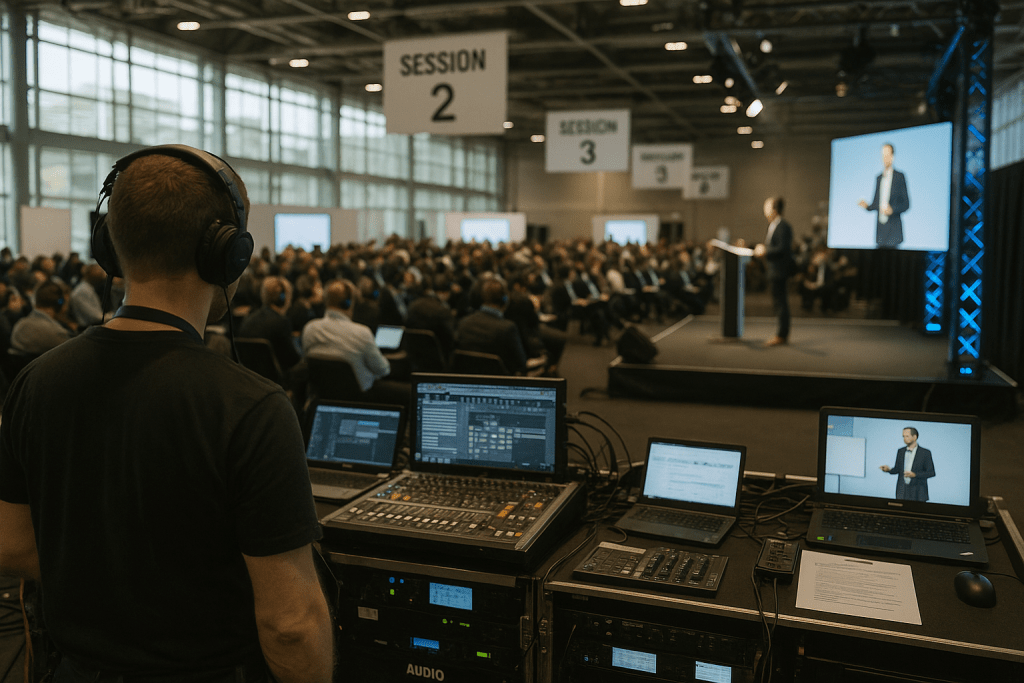
As conferences and exhibitions face tighter budgets, higher attendee expectations and challenging venue constraints, a once-niche format is gaining traction: the silent conference. Borrowed from the world of silent discos, wireless headphone systems are increasingly being deployed to deliver educational content in environments where traditional sound systems are impractical or cost-prohibitive.
Event organisers are experimenting with silent conference models to run multiple sessions side by side, transform open exhibition areas into learning zones, and reduce noise levels without sacrificing content density. While still far from universal, the approach is moving from novelty to a practical part of the event technology toolkit.
Background and industry context
For years, organisers have been under pressure to expand educational programmes and increase engagement without significantly increasing floor space or venue spend. At the same time, venues must comply with strict noise regulations, particularly in city-centre locations, historic buildings and multi-purpose complexes that host several events simultaneously.
Traditional solutions—such as building more enclosed rooms, adding heavy draping or investing in complex soundproofing—can be expensive and inflexible. They also clash with the trend toward more open, fluid event layouts that blend networking, exhibition and learning.
Silent conferencing offers an alternative: content delivered directly to attendees via wireless headphones, using one or more audio channels. Rather than projecting sound into the room, organisers transmit sessions to headsets, enabling multiple presentations to run in close proximity with minimal audio interference.
Key developments in silent conference formats
In its simplest form, a silent conference set-up involves presenters speaking into microphones connected to a radio transmitter. Attendees wear wireless headsets tuned to the appropriate channel for the session they wish to follow. Multiple channels allow concurrent streams, each associated with a different stage or language.
Several implementation patterns are emerging across trade shows, corporate events and association conferences:
- Multi-track stages in open halls: Organisers can create several small stages within an exhibition floor, each running continuous content, without building full conference rooms. Headsets isolate each programme stream, allowing dense scheduling in shared space.
- Silent theatres in busy environments: Learning areas can be placed in high-traffic zones—such as show floors, foyers or lounges—where amplified sound would be disruptive or technically restricted.
- Parallel sessions without extra breakout rooms: When venue room capacity is limited, additional tracks can be hosted in larger shared spaces, with audiences selecting channels via headsets.
- Language channels and accessibility: Simultaneous interpretation can be delivered over separate audio channels on the same headsets, supporting multilingual audiences without additional infrastructure.
The technology is typically provided as a turnkey solution by audio or event technology suppliers, including headsets, transmitters and on-site support. Systems are designed for quick deployment and can be scaled up or down depending on expected attendance and the number of content streams required.
Industry impact on event design and operations
Silent conferences are influencing how organisers think about spatial layout, session scheduling and overall attendee flow. By removing the requirement for fully enclosed rooms, organisers can reconfigure underused areas into content hubs, increasing the perceived value of floor space.
For exhibition organisers, integrating silent stages into the show floor can bring educational content closer to exhibitor stands, potentially boosting dwell time in commercial areas. Sponsors can be associated with specific silent stages or content tracks, creating new monetisation opportunities without significant construction costs.
Operationally, silent set-ups can simplify some aspects of production. There is less need for extensive PA systems and acoustic treatment, and fewer clashes with overlapping sessions. Noise management becomes more predictable, which can be particularly important in venues with multiple concurrent events or shared public areas.
However, the approach brings its own considerations. Organisers must manage headset distribution, hygiene and charging. Clear signage and wayfinding are needed so attendees understand how to select channels and locate associated content. There is also a learning curve in planning programming that remains engaging when participants are wearing headphones and potentially moving between spaces.
Why silent conferences matter for event professionals and technology providers
For planners, silent conferencing widens the range of viable formats when physical and financial constraints are tight. It allows them to:
- Increase the number of concurrent sessions without additional rooms.
- Use non-traditional spaces—such as lobbies, corridors or outdoor areas—for structured content.
- Address noise restrictions from venues or local regulations.
- Offer more personalised experiences, with attendees choosing their preferred channel or language.
For technology providers and production companies, the trend opens demand for integrated audio solutions, inventory management and on-site support services tailored to high-volume headset deployments. There is also potential to connect silent audio feeds with hybrid or on-demand formats, capturing or streaming channels for remote audiences using the same production infrastructure.
As attendees become more familiar with personal audio in public settings—whether through consumer headphones, translation devices or guided tour systems—the barrier to adoption is lowering. Silent conferencing fits into a wider shift toward providing attendees with more control over how and when they consume content at events.
Conclusion
Silent conferences are moving beyond their roots in entertainment-led experiences to become a functional response to some of the most pressing challenges in contemporary event design. By routing sound to individual headsets rather than rooms, organisers can deliver more content within the same footprint, manage noise more effectively and rethink how educational sessions integrate with exhibition and networking spaces.
While not a universal solution, and not suitable for every event format, the model is establishing itself as a flexible option for planners and a growth area for event technology suppliers. As constraints on venues and budgets persist, the adoption of silent conferencing is likely to continue, reshaping expectations around how conference content is delivered on busy show floors and in complex venues.