Interpretation Equipment in Events: Real-Time Language Infrastructure for Global Audiences
Introduction: Language as a System Constraint
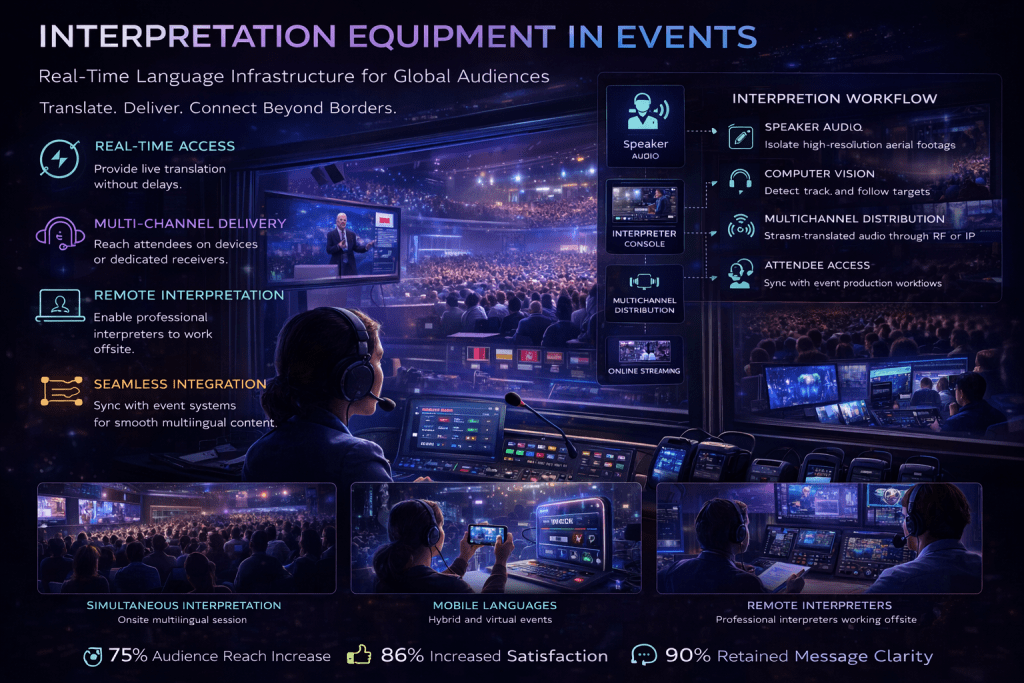
As events scale globally, language becomes more than a communication detail—it becomes a system-level constraint. Multilingual audiences expect real-time access to content without delays, distortion, or cognitive overload. Traditional interpretation setups—while effective—were designed for linear, stage-centric formats. Modern events, with distributed sessions, hybrid participation, and dynamic content delivery, require a more adaptive and integrated approach.
Interpretation equipment has evolved from isolated audio systems into a coordinated infrastructure layer that supports real-time translation, routing, and delivery across multiple channels and environments.
Defining Interpretation Equipment in Event Contexts
Interpretation equipment refers to the hardware and software systems used to deliver real-time language translation during events. This includes both simultaneous interpretation (real-time translation) and consecutive interpretation (delayed translation).
Core components typically include:
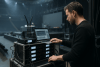
- Interpreter consoles
- Audio distribution systems
- Receiver devices or mobile applications
- Microphones and sound isolation systems
In modern environments, these components are increasingly digitized and integrated with broader event technology platforms.
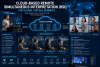
System Architecture: Audio Capture to Multilingual Delivery
Interpretation systems operate as real-time audio pipelines, requiring low latency and high fidelity.
Audio Input and Capture
The process begins with capturing the original audio source—typically a speaker’s microphone feed.
This audio must be:
- Clean and isolated from background noise
- Synchronized with video (in hybrid or virtual events)
- Routed to interpreter channels without delay
High-quality audio capture is critical, as interpretation accuracy depends heavily on clarity.
Interpreter Interface and Processing
Interpreters use dedicated consoles or software interfaces to listen to the source audio and deliver translated output.
Modern digital consoles allow:
- Channel selection and switching
- Volume and tone control
- Relay interpretation (interpreting from another language channel)
Increasingly, software-based interpretation platforms enable remote participation, allowing interpreters to work from distributed locations.
Audio Distribution and Channel Management
Translated audio is distributed across multiple channels, each corresponding to a language.
Distribution systems manage:
- Channel encoding and routing
- Synchronization across languages
- Redundancy to prevent signal loss
In digital systems, this is handled through IP-based audio streaming rather than traditional RF systems.
Listener Access and Delivery
Attendees access interpretation through:
- Dedicated receiver devices with headphones
- Mobile applications using personal devices
- Integrated audio streams in virtual event platforms
User interfaces must allow seamless switching between languages, with minimal latency and clear audio quality.
Evolution to Digital and Cloud-Based Systems
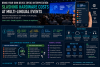
Traditional interpretation systems relied heavily on physical infrastructure—wired consoles, RF transmitters, and dedicated receivers. While reliable, these systems are limited in scalability and flexibility.
Modern systems are increasingly software-defined and cloud-enabled.
Remote Interpretation
Cloud platforms enable interpreters to participate remotely, reducing logistical constraints and expanding access to language expertise.
This model requires:
- Stable, low-latency internet connections
- Redundant audio paths
- Real-time monitoring for quality assurance
Mobile-Based Delivery
Attendees can access interpretation through mobile apps, eliminating the need for physical receivers.
Benefits include:
- Scalability for large audiences
- Reduced hardware costs
- Integration with event apps and personalization systems
Integration with Streaming Platforms
In hybrid and virtual events, interpretation is integrated directly into streaming infrastructure. Attendees can select language channels within the video interface, creating a seamless experience.
Integration with Event Technology Ecosystems
Interpretation systems are increasingly integrated with other event technologies.
Event operating systems can coordinate interpretation channels with session schedules and audience profiles. Real-time orchestration systems can adjust language availability based on demand.
Event data platforms can track language preferences and usage patterns, informing future planning and personalization.
In advanced scenarios, AI-based speech recognition and translation systems augment human interpreters, providing additional support or fallback capabilities.
Operational and Experience Impact
Effective interpretation infrastructure significantly enhances accessibility and engagement.
For attendees, it removes language barriers, enabling full participation regardless of linguistic background. Real-time delivery ensures that the experience remains synchronized and immersive.
For organizers, it expands audience reach and inclusivity. Multilingual support becomes a strategic capability rather than a logistical challenge.
For speakers, it enables communication with diverse audiences without altering presentation style or pacing.
Technical Challenges
Interpretation systems must address several technical challenges.
Latency is critical. Even small delays can disrupt comprehension and reduce engagement. Systems must maintain near real-time synchronization.
Audio quality must be preserved across multiple channels and devices. Compression, noise, and interference can impact clarity.
Scalability is another concern, particularly in large or hybrid events with multiple simultaneous sessions and languages.
Reliability is essential. Failures in interpretation systems can significantly impact the attendee experience.
Future Outlook: AI-Augmented Interpretation Systems
The future of interpretation equipment lies in the integration of AI and automation.
Speech recognition and machine translation systems are improving rapidly, enabling real-time transcription and translation. While not yet a complete replacement for human interpreters, they can augment workflows and provide fallback options.
Hybrid systems may combine human expertise with AI assistance, improving efficiency and scalability.
Integration with personalization systems could enable adaptive language delivery, automatically selecting preferred languages and adjusting content dynamically.
Conclusion: Language as Infrastructure
Interpretation equipment is no longer a peripheral service—it is a core component of event infrastructure. As events become more global and interconnected, the ability to deliver real-time, high-quality multilingual experiences is essential.
Modern interpretation systems combine audio engineering, digital infrastructure, and real-time processing to create seamless language access.
For event technology leaders, investing in advanced interpretation systems is not just about translation—it is about enabling inclusive, scalable, and globally accessible experiences.