Interpretation Equipment: The Real-Time Language Infrastructure Behind Global Events

Introduction: Enabling Communication Beyond Language Barriers
As conferences, summits, exhibitions, and hybrid events become increasingly international, language accessibility has become a core operational requirement rather than an optional service. Attendees now expect seamless multilingual experiences regardless of their geographic or linguistic background.
Interpretation equipment enables this capability by creating a real-time audio infrastructure that captures, translates, distributes, and delivers spoken content across multiple languages simultaneously. Modern interpretation systems are no longer isolated audio setups—they are integrated, software-driven platforms connected to broader event technology ecosystems.
In large-scale events, interpretation infrastructure functions as a mission-critical communication layer that directly impacts accessibility, engagement, and inclusivity.
Understanding Interpretation Systems
Interpretation systems are designed to support simultaneous or consecutive translation workflows.
Simultaneous Interpretation
In simultaneous interpretation, interpreters translate speech in real time while listening to the original speaker.
This model is widely used in:
- International conferences
- Government summits
- Corporate global events
- Hybrid and virtual meetings
Because translation occurs almost instantly, low latency and high audio clarity are essential.
Consecutive Interpretation
In consecutive interpretation, the speaker pauses periodically while the interpreter translates.
This method is typically used for:
- Small group meetings
- Press interactions
- Guided tours and workshops
Although technically simpler, it is less efficient for large-scale events.
Core Components of Interpretation Equipment
Interpreter Consoles
Interpreter consoles are the operational control centers used by translators.
These consoles allow interpreters to:
- Listen to source audio channels
- Select target language outputs
- Adjust microphone and volume levels
- Switch between relay channels
Modern systems increasingly use software-based consoles for remote workflows.
Interpreter Booths
For physical events, interpreters usually work inside soundproof booths.
Booths are designed to provide:
- Acoustic isolation from ambient venue noise
- Comfortable working environments for long sessions
- Clear visibility of speakers and presentation screens
Proper booth design directly affects interpretation accuracy and interpreter performance.
Microphones and Audio Input Systems
Interpretation systems rely on high-quality source audio captured through conference microphones and audio mixing systems.
Poor audio quality at the input stage significantly reduces interpretation effectiveness.
Central Control Units
Central units manage audio routing and distribution.
Their responsibilities include:
- Channel management
- Signal processing and encoding
- Synchronization across multiple languages
- System monitoring and redundancy
These devices form the backbone of the interpretation infrastructure.
Receivers and Listener Devices
Attendees access translated audio through:
- Wireless receiver units with headsets
- Mobile applications on smartphones
- Integrated streaming interfaces for hybrid events
Modern systems support easy language selection and low-latency playback.
Communication Technologies Used in Interpretation Systems
RF-Based Systems
Radio Frequency systems transmit audio wirelessly across venues.
Advantages include:
- Wide coverage
- Reliable signal transmission
- Scalability for large audiences
However, RF systems require frequency coordination to avoid interference.
Infrared (IR) Systems
Infrared systems use light-based transmission.
Benefits include:
- Improved privacy and signal containment
- Reduced cross-room interference
They are often preferred in government and secure corporate environments.
IP and Cloud-Based Systems
Modern interpretation systems increasingly operate over IP networks.
This enables:
- Remote interpretation workflows
- Cloud-based audio routing
- Hybrid event integration
IP-based systems are highly scalable and flexible but depend on stable network infrastructure.
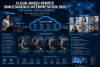
System Architecture: Real-Time Multilingual Audio Flow
Interpretation systems operate through a continuous real-time pipeline.
- Speaker audio is captured through microphones
- Audio is routed to interpreter channels
- Interpreters deliver translated output
- Central systems distribute audio across channels
- Attendees select and receive preferred languages
Latency management is critical throughout this process.
Integration with Event Technology Ecosystems
Interpretation systems increasingly integrate with broader event infrastructure.
Event Audio Systems
Interpretation depends on synchronized integration with PA systems, microphones, and DSP processors.
Video and Streaming Platforms
In hybrid events, interpretation channels must align with video streams to maintain synchronization for remote attendees.
Event Applications
Mobile apps allow attendees to:
- Select languages digitally
- Access captions and transcripts
- Switch channels seamlessly
Analytics Platforms
Digital interpretation systems can generate analytics such as:
- Language channel usage
- Participation trends
- Engagement patterns by region or audience segment
Operational and Experience Impact
For Attendees
Interpretation systems enable:
- Real-time multilingual participation
- Improved comprehension and inclusion
- Access to global content without language barriers
For Organizers
Organizers benefit from:
- Expanded global reach
- Greater audience accessibility
- Improved attendee satisfaction
For Speakers and Presenters
Speakers can communicate naturally without needing multilingual delivery themselves.
Technical Challenges
Latency Management
Even small delays can disrupt attendee comprehension and synchronization with visuals.
Audio Quality Dependence
Interpretation accuracy relies heavily on clean source audio and stable transmission.
System Scalability
Large events with multiple simultaneous sessions and languages require highly scalable infrastructure.
Reliability and Redundancy
Interpretation systems must remain operational without interruption, especially during critical sessions.
Future Trends: AI-Augmented Interpretation
Real-Time AI Translation
Advances in speech recognition and neural translation are enabling AI-assisted multilingual workflows.
Hybrid Human-AI Models
AI may support interpreters through transcription, terminology suggestions, and fallback translation.
Mobile-First Delivery
Smartphone-based interpretation platforms will continue reducing dependence on dedicated hardware.
Personalized Language Experiences
Future systems may dynamically adapt language delivery based on attendee preferences and context.
Conclusion: Building Language Accessibility into Event Infrastructure
Interpretation equipment is no longer a supplementary service—it is a core infrastructure layer for global events.
By combining audio engineering, wireless communication, software platforms, and real-time processing, interpretation systems enable inclusive, scalable, and multilingual event experiences.
For event technology leaders, investing in advanced interpretation infrastructure is essential for creating globally accessible events where communication remains seamless regardless of language differences.