Sennheiser highlights evolving DeviceHub platform at InfoComm 2026
Background and context
Sennheiser used InfoComm 2026 to underline the ongoing development of its DeviceHub platform, positioning it as a central tool for managing networked audio devices in corporate, education and live event environments.
As AV infrastructure continues to converge with IT networks, system managers are looking for ways to simplify configuration, monitoring and maintenance across larger estates of microphones, receivers and supporting hardware. Platforms such as DeviceHub are emerging as a response to that need, aiming to bring multiple devices and locations into a single interface.
InfoComm, one of the key trade shows for professional AV, has increasingly become a stage for manufacturers to showcase not only hardware but also software and management layers that sit above their product lines. Sennheiser’s focus on DeviceHub reflects this broader shift in the industry.
Key announcement
At InfoComm 2026, Sennheiser presented the latest evolution of DeviceHub, emphasising enhancements to device visibility, configuration workflows and integration with existing AV-over-IP infrastructures. The company framed these updates as part of an ongoing roadmap rather than a single major release.
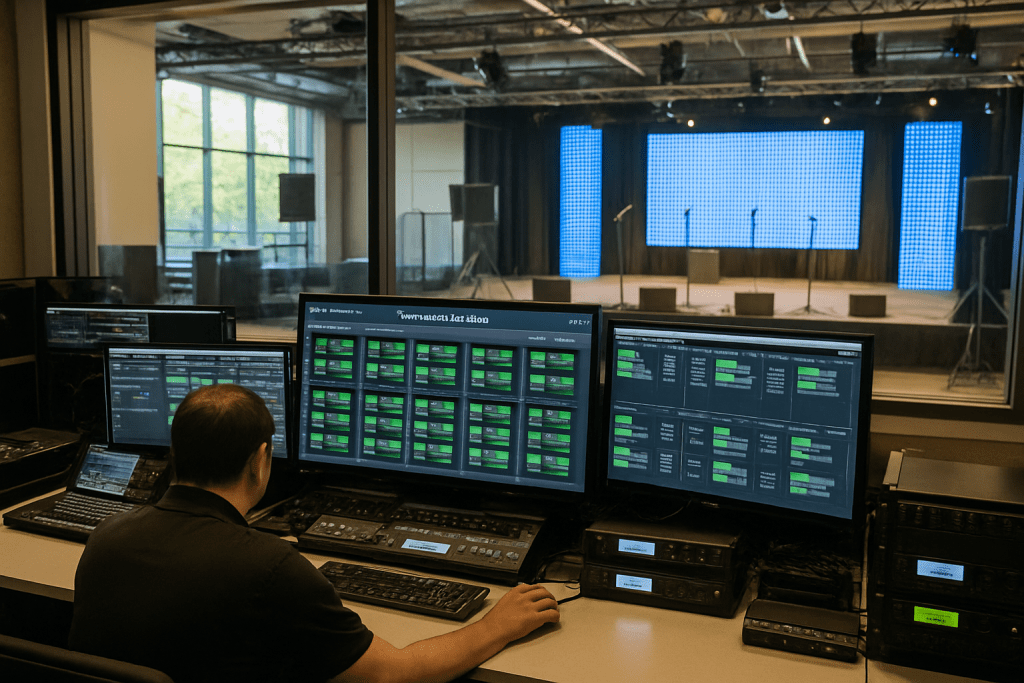
According to Sennheiser, the current iteration of DeviceHub is designed to make it easier for AV and IT teams to oversee distributed microphone systems and related equipment from a central location. Typical functions include:
- Discovering and listing compatible devices on the network
- Applying configuration profiles across multiple rooms or zones
- Monitoring status, firmware versions and basic diagnostics
- Standardising setups for repeatable room designs
The company also pointed to refinements in the user interface, aimed at speeding up routine tasks for technicians responsible for large fleets of wireless and installed audio equipment. While detailed technical specifications remain tied to the product documentation, Sennheiser indicated that DeviceHub is intended to sit comfortably in mixed AV/IT environments and to scale from single venues to multi-site deployments.
Further information about the platform and its current capabilities is available via Sennheiser’s official product pages at sennheiser.com.
Industry impact
Centralised management tools are becoming more important as venues and organisations standardise on networked audio. For system integrators, platforms like DeviceHub can reduce the time required for commissioning and later support, particularly when working with repeated room templates across campuses, conference centres or enterprise rollouts.
For live and hybrid events, having a unified overview of microphones and receivers across multiple spaces can help technical teams respond more quickly to issues such as dropouts, misconfigured channels or outdated firmware. In managed service models, remote access to this kind of management layer can also support proactive maintenance.
Sennheiser’s continued investment in DeviceHub underlines how major audio brands are extending their offerings beyond individual products toward ecosystems that combine hardware, software and network services.
Why this matters
For event technology professionals, the evolution of DeviceHub is part of a wider trend: audio systems are increasingly treated as managed network assets rather than stand-alone components. This shift has practical consequences for how venues are designed, specified and operated.
AV managers overseeing large inventories of wireless microphones and installed systems are under pressure to maintain reliability while controlling support costs. A central management platform can streamline tasks such as bulk firmware updates, configuration consistency and basic troubleshooting, especially when resources are stretched across multiple rooms or sites.
As InfoComm continues to highlight the role of software in AV environments, Sennheiser’s focus on DeviceHub suggests that manufacturers expect demand for these types of tools to grow. For integrators and end users evaluating future audio infrastructure, the capabilities and interoperability of such management platforms are likely to become a more prominent factor in purchasing decisions.