Understanding DECT NR+ and its role in modern wireless audio
Background and context
Demand for reliable wireless audio continues to rise across conferences, live events and broadcast productions. As venues host more simultaneous wireless systems, engineers face growing pressure on spectrum availability and audio quality.
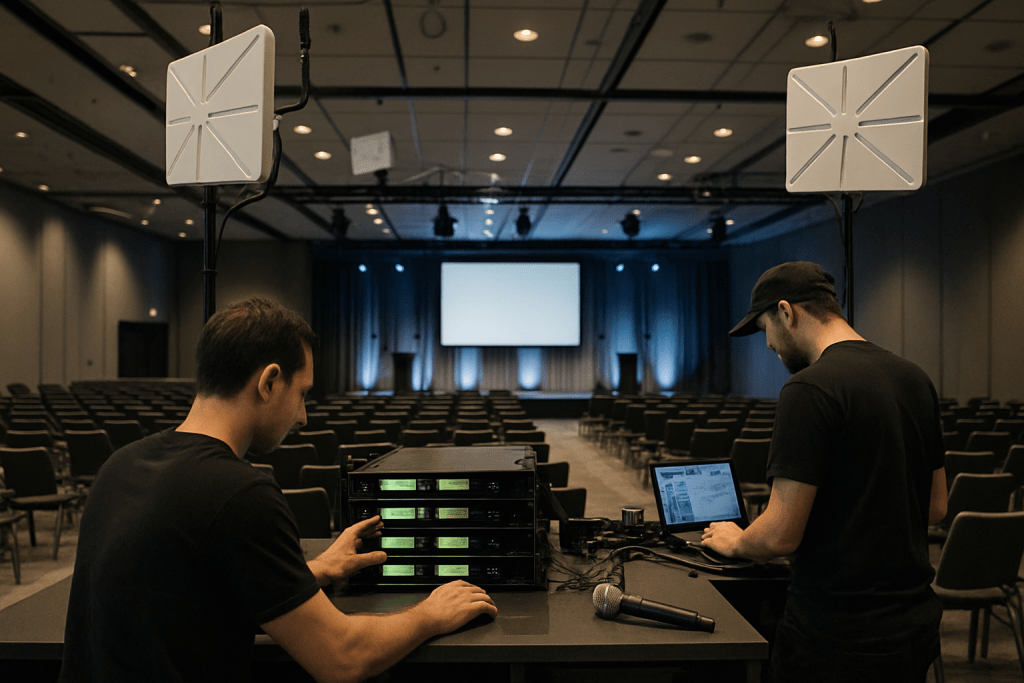
Digital Enhanced Cordless Telecommunications (DECT) has become a common standard for speech transmission in business and event environments. It is used for applications such as tour guide systems, intercoms and wireless microphones where stable, low-latency communication is essential.
In this context, Sennheiser has been working with an extension to DECT known as DECT NR+ (Noise Reduction Plus). The technology aims to improve robustness and intelligibility in challenging RF and acoustic conditions, particularly where multiple wireless systems operate in parallel.
Key announcement
Sennheiser has recently published an explainer on DECT NR+, outlining how the technology fits into the wider DECT ecosystem and what it is designed to achieve. While DECT itself is a long-established standard, NR+ refers to an additional set of techniques focused on noise reduction and interference handling.
According to the manufacturer, DECT NR+ is designed to enhance audio performance in environments with significant background noise or dense RF traffic. It does this by refining the way the system processes and prioritizes speech content, aiming to keep spoken word clear even when conditions are suboptimal.
The company positions DECT NR+ as a standards-based approach rather than a proprietary departure from DECT. This is intended to ensure interoperability and predictable behaviour within DECT-regulated frequency bands, which are commonly used across Europe and other regions for voice communication.
More technical details on the approach are provided by Sennheiser on its official newsroom and product information pages at sennheiser.com, where the firm discusses how NR+ interacts with channel allocation, error correction and codec performance.
Industry impact
For event technology providers, the implications of DECT NR+ are mainly operational. Many venues and rental companies already rely on DECT-based systems for talkback, translation and wireless speech. Any enhancements that make these links more reliable or intelligible can help reduce technical risk during shows.
In multi-room conference centers, it is common to see dozens of wireless channels in use at the same time. Better noise and interference management at the DECT layer may allow engineers to run more systems with fewer audible artefacts, particularly when spectrum planning is tight.
The technology could also be relevant in scenarios where RF conditions are unpredictable, such as temporary outdoor events or mixed-use buildings with many wireless devices. Here, improved resilience in the DECT domain may serve as a complement to traditional UHF microphone systems, rather than a replacement.
Why this matters
From an industry standpoint, the interest around DECT NR+ reflects a broader shift: audio performance is no longer judged solely on the microphone capsule or loudspeaker, but increasingly on the underlying transmission technology.
As audiences expect consistent sound quality and planners schedule tighter turnarounds, technical teams benefit from wireless solutions that require less troubleshooting and offer predictable behaviour in crowded RF environments. Incremental improvements at the protocol and processing level, such as those claimed for DECT NR+, can therefore have a practical impact on day-to-day workflows.
For rental houses, system integrators and venue operators, it will be important to understand where DECT-based solutions with NR+ fit into their overall RF strategy. That includes how such systems coexist with UHF microphones, in-ear monitoring and Wi‑Fi-based control networks, as well as how local spectrum regulations may shape deployment.
While DECT NR+ itself is a technical refinement, its adoption could influence how speech-heavy applications—panel discussions, guided tours, interpretation and production intercom—are planned and executed in the coming years.