Glasgow 2014 blueprint speeds up 2026 Games delivery
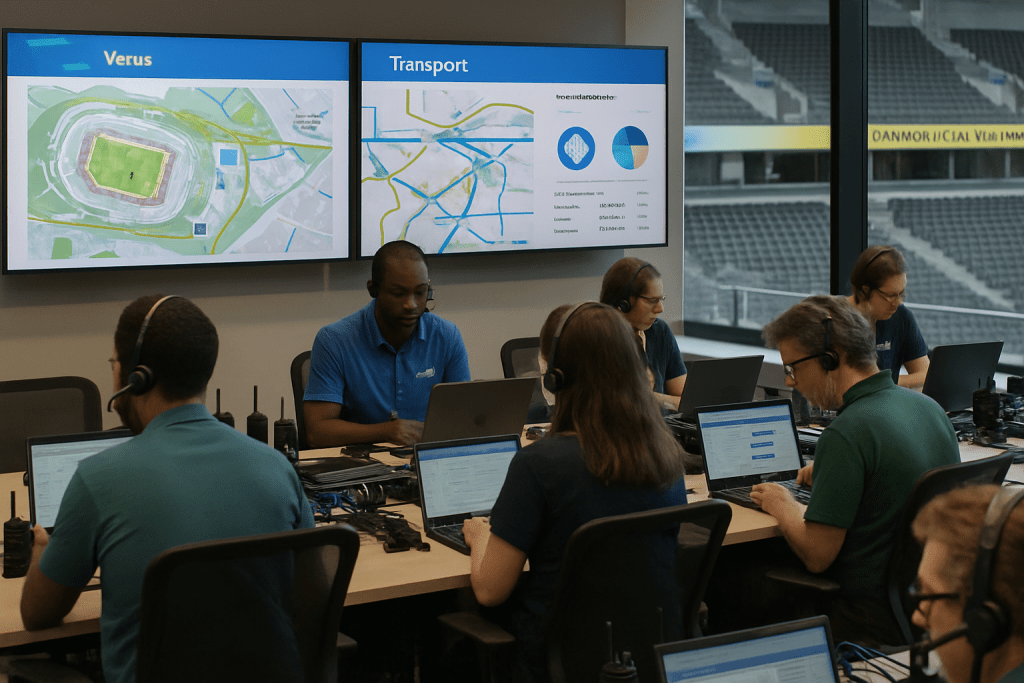
The operational and digital legacy from the Glasgow 2014 Commonwealth Games is being credited as a critical accelerator for the planning and delivery of the 2026 edition of the Games. Senior figures involved in preparations for 2026 say the knowledge, data and working models inherited from 2014 have allowed the organising team to move at unprecedented speed and deliver within a leaner, more tightly controlled budget.
This approach, built on reusing proven frameworks rather than re‑inventing major event operations from scratch, is emerging as a potential template for how future large-scale sporting events could be scoped, costed and executed.
Background or industry context
Legacy has long been a central pillar in the business case for hosting multi-sport events. Traditionally, discussions have focused on physical assets such as venues, transport upgrades and public realm improvements. Increasingly, however, organisers and host cities are looking at less tangible legacies—data, playbooks, digital infrastructure, operating procedures and governance models—that can be carried forward and reused.
Since Glasgow hosted the Commonwealth Games in 2014, the industry has faced mounting pressure over the cost and complexity of major events. Bidding processes have become more cautious, with governments and cities demanding clearer evidence of economic value, community benefit and cost control. At the same time, expectations around fan experience, broadcast quality, sustainability and security have escalated, putting further strain on budgets and timelines.
In this environment, the ability to reapply prior experience—especially from a recent, comparable event in the same movement—offers a significant advantage. For technology vendors, systems integrators and production companies, it also introduces more predictable frameworks for deployment and integration across editions of the Games.
Key developments or announcement
A senior member of the 2026 Commonwealth Games organisation has described the Glasgow 2014 legacy as acting like “rocket fuel” for current planning and delivery efforts. That legacy includes detailed operational plans, tested event delivery models and an understanding of how to align venues, workforce, transport and technology around Commonwealth Games requirements.
The 2026 team is working on what has been characterised as a “boutique” budget, implying a more tightly defined, carefully prioritised cost base than some previous multi-sport events. Having a proven operational template from 2014 has allowed the organisation to make faster decisions on what to keep, what to modify and what to scale back.
Key elements being reused or adapted include:
- Established workflows for venue operations, accreditation and results management.
- Frameworks for integrating ticketing, security, transport and spectator services.
- Experience with data flows between timing, scoring, broadcast and digital platforms.
- Governance structures and working relationships between organising committees, host authorities and commercial partners.
While specific systems and suppliers inevitably change over time, the underlying architecture and sequencing of the operational plan from Glasgow 2014 has provided a benchmark for what is needed, what can be streamlined and where technology can replace manual processes. This has been particularly relevant in areas such as accreditation, workforce deployment, event control, and digital communications with athletes, media and spectators.
Industry impact
The use of a previous Games’ blueprint as a foundation for 2026 underlines a wider shift in how major events are being designed and delivered. Rather than treating each edition as a one-off, organisers are increasingly moving towards a programme-based approach, with repeatable standards and components that can be adapted to local context.
For the event technology sector, this shift has multiple implications:
- More modular deployments: Vendors are likely to see growing demand for configurable, repeatable solutions that can be plugged into a common Games framework across host cities, rather than entirely custom-built platforms.
- Data as a strategic asset: Operational data from previous events—covering demand patterns, staffing, transport flows and digital engagement—is becoming central to planning. Technology providers that can help structure, analyse and visualise this data will be better positioned.
- Pressure on cost and complexity: A “boutique” budget mindset pushes organisers to favour systems with lower integration overheads, cloud-based deployment and shared services, while challenging suppliers to justify premium spend.
- Legacy by design: Providers are increasingly expected to ensure that platforms and processes can be handed over and reused by future events, including documentation, training resources and governance models.
This model also reinforces the role of knowledge transfer between organising committees, city authorities and delivery partners. Embedded learnings from Glasgow 2014 appear to be shortening the ramp-up time for 2026, reducing risk and enabling a more targeted use of resources.
Why this matters for event professionals and technology providers
For event professionals, the 2014–2026 link provides a live example of how legacy can go beyond infrastructure and branding to become a practical operational asset. Planners working on large conferences, exhibitions and citywide events can apply similar principles:
- Documenting workflows in sufficient detail for future reuse.
- Capturing and standardising data from each edition of an event.
- Building technology stacks that can be lifted and adapted for different venues or cities.
For technology providers, the emerging model emphasises interoperability, longevity and scalability. Systems that were once designed to support a single event cycle are now expected to form part of a longer-term ecosystem, where future organising committees can inherit configurations, integrations and analytics frameworks.
In practice, this encourages vendors to:
- Develop clear APIs and integration layers so platforms can be slotted into a broader Games architecture.
- Provide robust knowledge transfer, including playbooks and best-practice guidelines, not just technical documentation.
- Support flexible commercial models that reflect multi-edition use rather than one-off procurement.
As multi-sport events examine ways to reduce environmental impact and community disruption, the ability to reuse operational models and technology becomes part of the sustainability conversation as well. Reapplying existing frameworks can reduce the need for extensive new infrastructure and lower the footprint associated with testing, training and temporary build.
Conclusion
The experience of Glasgow 2014 is now shaping how the 2026 Commonwealth Games is being organised, demonstrating how a well-defined operational and digital legacy can accelerate delivery and support a more disciplined budget. While each host city brings its own context, regulations and stakeholder mix, the underlying idea—treating major event operations as an evolving, reusable asset rather than a one-time project—is gaining traction.
For organisers, suppliers and technology partners across the broader event sector, the message is clear: the decisions made during one edition of an event can directly influence the speed, cost and quality of the next. Building for reuse, and capturing the full value of event data and operational experience, is moving from a desirable principle to an operational necessity.