Drone Light Shows vs. Fireworks: The Sustainable Future of Event Finales
Drone Light Shows vs. Fireworks: The Sustainable Future of Event Finales
For generations, fireworks have represented the pinnacle of live event finales. National celebrations, music festivals, sporting events, corporate anniversaries, destination weddings, and international expos have traditionally concluded with spectacular pyrotechnic displays designed to leave audiences with a lasting impression. Their dramatic explosions, vibrant colors, and synchronized choreography have become synonymous with celebration.
However, changing environmental priorities, stricter regulations, growing public awareness of air and noise pollution, and advances in aerial robotics are reshaping this tradition. Drone light shows have rapidly emerged as a compelling alternative, combining hundreds or even thousands of synchronized unmanned aerial vehicles (UAVs) into animated aerial displays that create intricate visual narratives without the smoke, debris, or explosive noise associated with fireworks.
In 2026, the conversation is no longer whether drone shows can replace fireworks—it is about identifying where each technology delivers the greatest value. While fireworks continue to offer unmatched sensory impact, drone light shows provide unprecedented creative flexibility, sustainability advantages, and data-driven production capabilities that align with the evolving priorities of modern event organizers.
As sustainability becomes a strategic objective across the event industry, drone light shows are increasingly defining the future of memorable event finales.
The Changing Expectations of Event Audiences
Modern audiences expect more than visual spectacle.
Today’s event experiences are increasingly evaluated on:
- Sustainability
- Innovation
- Accessibility
- Environmental responsibility
- Brand storytelling
- Social media shareability
Event finales must now support organizational values alongside entertainment.
This shift has accelerated investment in technologies capable of delivering emotionally engaging experiences with reduced environmental impact.
How Fireworks Work
Fireworks create visual effects through controlled chemical explosions.
Each shell contains combinations of:
- Oxidizers
- Fuel compounds
- Metal salts
- Propellants
- Explosive charges
When ignited, these materials generate light, color, sound, and smoke.
Fireworks remain highly effective for producing dramatic, high-energy finales, particularly in large outdoor venues.
However, every launch involves combustion, making environmental emissions unavoidable.
How Drone Light Shows Operate
Drone light shows rely on fleets of GPS-enabled or RTK-assisted drones equipped with programmable LED lighting systems.
Each aircraft follows a precisely synchronized flight path generated through specialized animation software.
Instead of explosions, drones create images through coordinated movement and colored illumination.
Displays may include:
- Company logos
- Three-dimensional animations
- Product launches
- National symbols
- Abstract visual art
- Story-driven sequences
Because every drone acts as an individual pixel in the sky, designers gain extraordinary creative control.
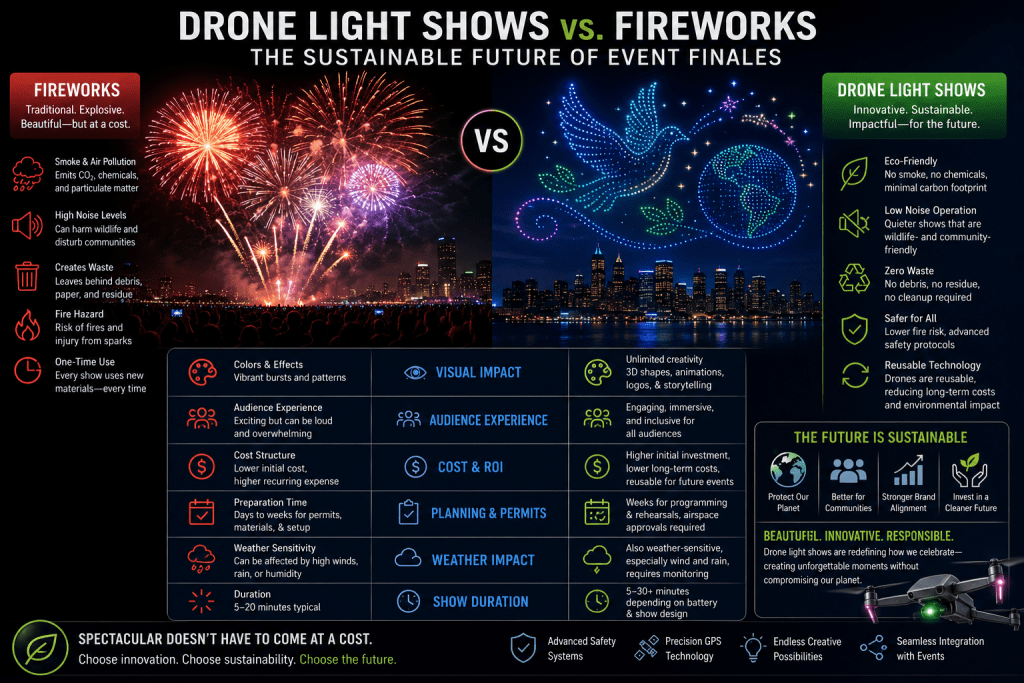
Sustainability Comparison
Environmental performance is one of the primary reasons organizers are adopting drone technology.
Air Quality
Fireworks generate:
- Smoke
- Fine particulate matter
- Carbon emissions
- Chemical residues
These emissions may temporarily reduce local air quality.
Drone light shows eliminate combustion entirely during performances.
Although electricity is required for charging batteries, overall emissions can be substantially lower, particularly when renewable energy sources are used.
Noise Pollution
Fireworks frequently exceed safe noise levels.
High-decibel explosions can affect:
- Young children
- Older adults
- Individuals with sensory sensitivities
- Wildlife
- Domestic animals
Drone performances operate almost silently at audience distances, creating a more inclusive experience.
Waste Reduction
Fireworks produce:
- Burned casings
- Debris
- Packaging waste
- Chemical residue
Drone fleets generate virtually no event-related physical waste during performances.
Creative Flexibility
Drone shows offer creative capabilities that fireworks cannot replicate.
Storytelling
Rather than displaying isolated explosions, drones can present animated sequences that evolve over time.
Organizers can communicate:
- Brand narratives
- Historical timelines
- Product launches
- Corporate milestones
- Cultural stories
through motion graphics in the sky.
Precision Branding
Sponsors increasingly seek measurable visibility.
Drone formations can accurately display:
- Corporate logos
- Product images
- QR codes
- Event branding
- Sponsor messages
This creates unique sponsorship opportunities.
Dynamic Animation
Unlike fireworks, drone formations can transition smoothly between multiple scenes during a single performance.
This expands creative possibilities significantly.
Operational Considerations
Despite their advantages, drone light shows require sophisticated operational planning.
Flight Planning
Every performance requires:
- Airspace analysis
- Flight simulations
- GPS calibration
- Safety testing
- Choreography programming
Preparation often begins weeks before the event.
Weather Sensitivity
Drone performances are more susceptible than fireworks to:
- Strong winds
- Heavy rain
- Electrical storms
Organizers require contingency plans for adverse weather.
Battery Management
Large-scale shows require careful coordination of:
- Battery charging
- Fleet rotation
- Flight duration
- Power monitoring
Operational discipline is essential.
Safety Comparison
Safety remains a critical factor for both technologies.
Fireworks Risks
Potential hazards include:
- Fire ignition
- Falling debris
- Explosive accidents
- Smoke inhalation
- Burn injuries
Extensive safety zones are required.
Drone Safety
Drone operations focus on:
- Collision avoidance
- Flight stability
- Geofencing
- Emergency landing procedures
- Redundant navigation systems
Modern fleets increasingly use AI-powered obstacle avoidance and automated fail-safe protocols.
Cost and Return on Investment
Initial investment differs considerably.
Fireworks
Costs typically include:
- Pyrotechnic materials
- Licensed operators
- Transportation
- Storage
- Cleanup
Displays cannot be reused.
Drone Light Shows
Although upfront production costs may be higher, drone fleets represent reusable assets.
Organizations conducting multiple events often achieve stronger long-term value through repeated deployment.
Sponsorship Opportunities
Drone animations create premium sponsorship inventory unavailable through traditional fireworks.
This can offset production costs.
Integration with Smart Event Technology
Drone shows increasingly connect with broader event ecosystems.
AI Choreography
Artificial intelligence assists in:
- Flight optimization
- Collision prevention
- Animation sequencing
- Energy management
reducing production complexity.
Digital Twins
Organizers use digital twins to simulate performances within virtual venue models before deployment.
This improves both safety and precision.
Synchronized Experiences
Drone shows increasingly synchronize with:
- Projection mapping
- LED displays
- Stage lighting
- Spatial audio
- Mobile applications
creating immersive multimedia finales.
Challenges of Drone Shows
Despite rapid adoption, several limitations remain.
Regulatory Requirements
Drone operations must comply with aviation regulations that vary by jurisdiction.
Approvals may require substantial planning.
Limited Flight Duration
Battery technology currently limits show duration compared with some fireworks displays.
Production teams must optimize choreography accordingly.
Technical Complexity
Successful performances depend on:
- Reliable positioning systems
- Stable communications
- Weather monitoring
- Fleet management software
These requirements increase technical demands.
The Future of Sustainable Event Finales
Several innovations are expected to accelerate drone adoption.
Emerging developments include:
- Autonomous swarm intelligence
- Hydrogen-powered drones
- AI-generated aerial choreography
- Longer-duration batteries
- Real-time audience interaction
- Augmented reality integration
- Carbon-neutral event productions
Future event finales will likely combine multiple technologies into highly immersive experiences.
Rather than replacing fireworks entirely, drone shows may increasingly complement or selectively replace them depending on event objectives.
Conclusion
Drone light shows are redefining what an event finale can be. By replacing explosive pyrotechnics with synchronized aerial robotics, organizers can deliver visually stunning experiences while significantly reducing noise pollution, air emissions, physical waste, and environmental impact.
Although fireworks continue to provide unmatched sensory intensity for certain celebrations, drone technology offers creative flexibility, precision branding, reusable infrastructure, and seamless integration with modern event production systems.
As sustainability becomes a defining factor in venue selection, corporate responsibility, and attendee expectations, drone light shows are positioned to become the preferred finale for many conferences, festivals, sporting events, and global celebrations. The future of event entertainment is not simply brighter—it is cleaner, smarter, and increasingly powered by intelligent aerial technology.