New event technology tools spotlight badge printing and exhibitor engagement
Background and context
Event technology continues to evolve as organizers look for faster onsite operations, more measurable exhibitor ROI, and stronger attendee engagement. Badge printing, lead capture, and digital interaction tools are receiving particular attention as in-person events grow in scale and complexity.
Vendors in this space are responding with more integrated platforms, aiming to connect registration, onsite services, and post-event analytics. For planners, the challenge is to identify tools that improve efficiency without adding friction for attendees or exhibitors.
With budgets under pressure and data expectations rising, the latest wave of products focuses on automation, self-service workflows, and deeper insight into participant behavior at trade shows, conferences, and corporate events.
Key announcement
Recent product updates highlighted for the events industry include new options for onsite badge printing, exhibitor engagement, and attendee-facing applications. These tools aim to streamline event check-in, strengthen exhibitor-attendee interactions, and provide organizers with clearer performance metrics.
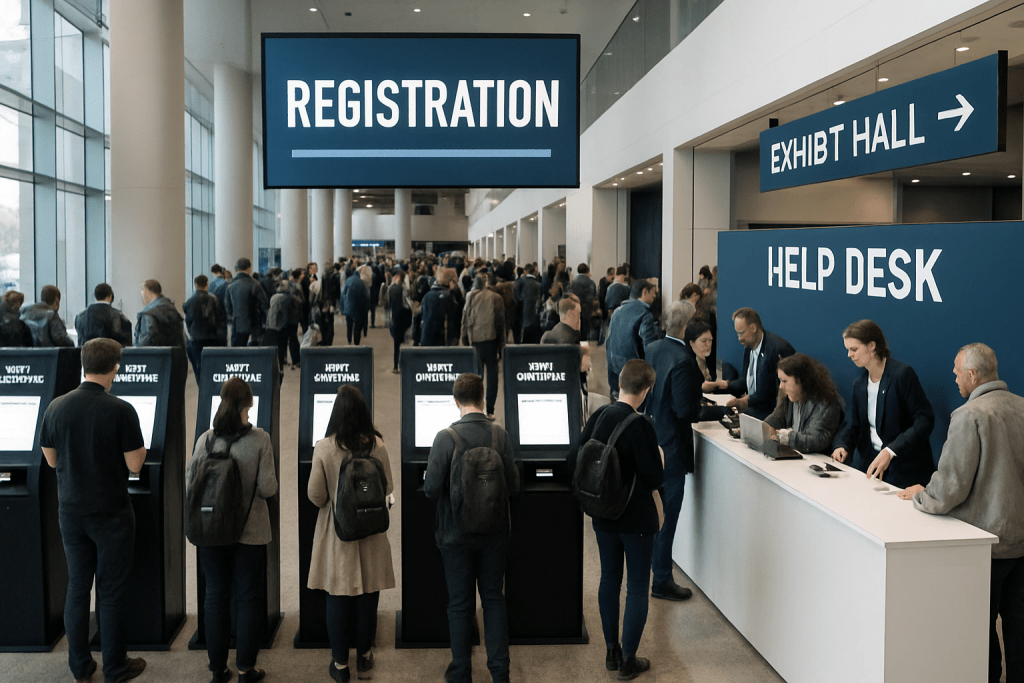
On the badge side, new systems emphasize self-service kiosks, QR-based check-in, and real-time data synchronization with registration platforms. The goal is to reduce front-desk queues and allow attendees to print or reprint badges quickly upon arrival.
For exhibitors, emerging engagement tools combine lead capture, digital content sharing, and follow-up automation. Exhibitors can scan badges or codes to collect contact details, qualify prospects on the spot, and sync data with CRM or marketing platforms after the show.
Some solutions also extend into attendee engagement features, such as in-app messaging, session bookmarking, and interactive floor plans. These aim to guide participants through the event, surface relevant exhibitors, and create a more personalized schedule based on declared interests.
Manufacturers presenting these capabilities position them as modular components rather than all-or-nothing platforms, allowing organizers to adopt specific tools—such as badge kiosks or exhibitor lead capture—without fully replacing existing registration or event apps. More details on these offerings can typically be found on the manufacturers’ official product pages and websites.
Industry impact
For event organizers, the main impact lies in operational efficiency and data quality. Faster, more reliable badge printing can help venues handle higher attendee volumes and reduce staffing requirements at registration desks.
Exhibitors stand to benefit from smoother lead capture and more consistent data. Instead of collecting business cards or manually entered forms, they can gather standardized digital records that are easier to analyze and follow up on after the event.
Venues and production partners may also see changes in infrastructure requirements. Self-service badge kiosks, for instance, increase the need for reliable connectivity and power distribution near entrance areas, while robust Wi-Fi and networking become essential for real-time syncing of attendee and engagement data.
For technology providers, the shift toward integrated yet modular tools could intensify competition. Vendors that can demonstrate interoperability with existing registration, CRM, and marketing systems are more likely to be considered by organizers who want to avoid disruptive platform overhauls.
Why this matters
As in-person events compete with digital experiences, seamless onsite operations and measurable outcomes are becoming central to success. Attendees expect quick entry and intuitive tools, while exhibitors increasingly demand proof that their investment leads to qualified conversations and tangible pipeline.
The latest generation of badge printing and exhibitor engagement tools reflects this pressure. By reducing wait times, standardizing lead capture, and providing clearer data, these products can help events run more smoothly and demonstrate value to sponsors and exhibitors.
For planners evaluating their tech stacks, the key questions will be how easily these tools integrate with existing systems, what support they require onsite, and whether the data they generate can inform future event design. As the technology landscape continues to shift, focusing on reliability, usability, and interoperability will likely matter more than any single feature set.