Event tech power Miami Swim Week 2026 activations across South Beach
Background and context
Miami Swim Week 2026 turned South Beach into a dense cluster of branded experiences, with runway shows, pop-ups, gifting suites, and beauty lounges spread across hotels, beachfront venues, and temporary build-outs.
What began as a schedule of swimwear runway shows has evolved into a broader platform for fashion, lifestyle, and beauty brands to stage live activations. The shift reflects an industry-wide trend: fashion weeks are increasingly designed as multi-day, multi-location experiences that mix live content, hospitality, and influencer-facing moments.
For event producers and AV teams, the week has become a testing ground for compact, quickly deployable production setups capable of moving between outdoor pool decks, indoor ballrooms, and unconventional spaces.
Key announcement
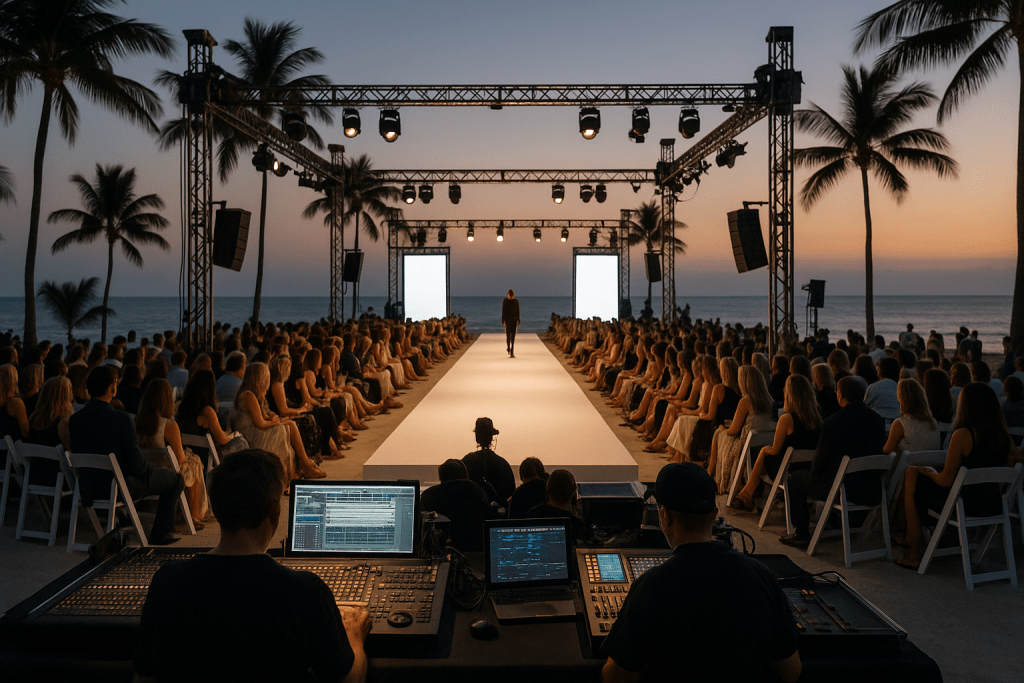
At Miami Swim Week 2026, organizers and participating brands expanded beyond traditional catwalk shows to focus on layered experiences. Alongside marquee runway moments, including a high-profile Sports Illustrated Swimsuit runway show, the schedule featured pop-up activations, curated gifting suites, and beauty lounges aimed at media, buyers, and creators.
These environments relied on a mix of event technology, including:
- Runway and stage lighting configured for both live audiences and broadcast-quality content capture.
- LED displays and projection surfaces used for show branding, sponsor integration, and real-time social content.
- Audio systems scaled for everything from intimate lounges to large-format runway shows, with live DJ performances and emcee segments.
- Content capture setups, including multi-camera positions, to feed social platforms and post-event marketing.
The pop-ups and suites were designed to be visually consistent with the shows, creating a continuous brand journey as guests moved between venues. Information about participating designers and activations was centralized through official Miami Swim Week digital channels and participating producers’ websites, giving attendees a single reference point for schedules and locations.
Industry impact
Miami Swim Week’s 2026 edition underscores how fashion and lifestyle events are leaning into hybrid formats that combine live performance, hospitality, and social-media-ready content. For AV providers and production agencies, the week highlights several operational and creative trends.
- Distributed production: Multiple smaller venues, rather than one main hub, require standardized yet flexible lighting and audio packages that can be deployed rapidly.
- Content-first design: Scenic choices, lighting levels, and LED backdrops are increasingly driven by how shows and lounges appear on camera, not just in the room.
- Influencer-centric spaces: Gifting suites and beauty lounges often function as miniature studios, with controlled lighting, branded sets, and dedicated content zones.
- Short build and strike windows: Many spaces operate on hotel or pool-deck schedules, pushing crews to rely on modular truss, pre-programmed lighting looks, and mobile power solutions.
As brands seek measurable returns from event spend, these complex environments also create demand for visitor flow management, data collection tools, and integrated registration that can link attendees to multiple on-site experiences.
Why this matters
For event professionals, Miami Swim Week 2026 serves as a visible example of how fashion-focused gatherings are becoming fully fledged experiential ecosystems. The convergence of runway production, pop-up retail, beauty services, and content creation under one umbrella increases the role of reliable AV infrastructure and on-the-fly technical problem solving.
Vendors that can support both high-pressure runway scenarios and more intimate, hospitality-driven spaces are likely to find growing opportunity at this type of multi-day event. The week’s format also signals that future fashion and lifestyle festivals may be designed less around a single flagship show and more around a network of smaller, tech-enabled environments that collectively define the brand experience.
As these models mature, the event technology community can expect more demand for portable lighting rigs, adaptable sound systems, compact LED solutions, and workflow tools that keep production consistent across venues, while still allowing each activation to feel distinct.