AV innovations reshaping the attendee experience by 2026
Audiovisual technology is moving from a supporting role to a central driver of the event experience. As organisations rethink conferences, corporate meetings, investor briefings and exhibitions, AV innovations are becoming critical tools for shaping how attendees see, hear and interact with content and with each other.
By 2026, the combination of higher production values, immersive formats and more intelligent systems is expected to redefine expectations for in-person, hybrid and virtual events. For event organisers and technology partners, this shift is less about flashy gadgets and more about using AV in a strategic way to enhance engagement, clarity and accessibility.
Background and industry context
Professional AV has long underpinned presentations, stage sets and live broadcasts, but its role is expanding as audiences grow more accustomed to high-quality digital media in their everyday lives. Delegates compare event experiences with streaming platforms, gaming environments and consumer devices, and they are increasingly unforgiving of poor audio, confusing visuals or clumsy hybrid setups.
At the same time, organisations are under pressure to justify travel, time away from work and event budgets. This is pushing planners to focus on creating experiences that cannot be replicated by a simple video call, while still supporting remote participation where required. AV innovation is at the centre of that balancing act, enabling richer in-room experiences and more inclusive remote access.
From LED backdrops and spatial audio to interactive displays and real-time content capture, AV is becoming a key differentiator between basic gatherings and strategically designed events. As hardware becomes more compact and software-driven workflows mature, advanced capabilities that were once limited to large productions are now accessible to a wider range of corporate and association events.
Key developments in AV innovation
Several technology trends are converging to reshape how events will look and feel by 2026. While adoption levels vary by region and budget, the following developments are gaining traction across conference centres, hotels, corporate venues and purpose-built event spaces.
Immersive displays and environments
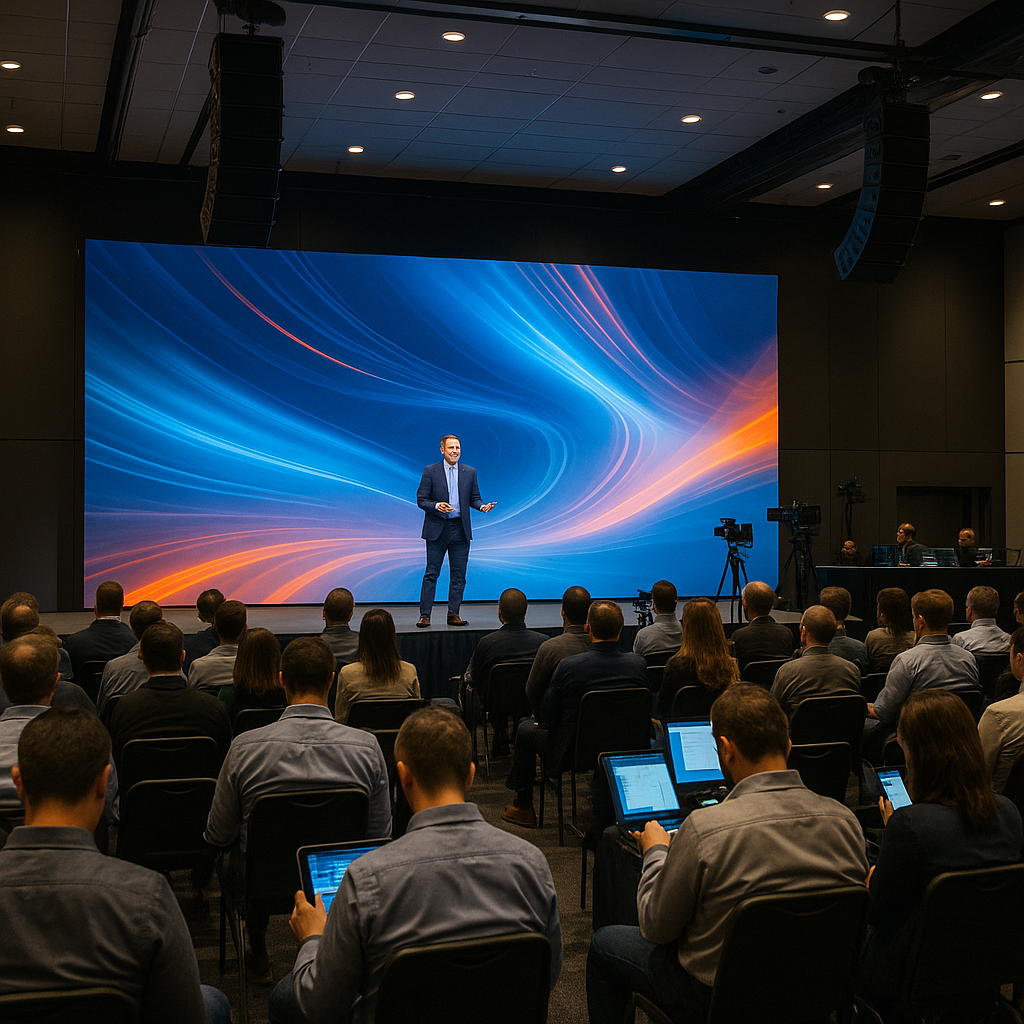
- LED video walls: High-resolution, bezel-free LED walls are replacing traditional projection in keynote spaces and exhibition areas. They support dynamic content, high brightness in lit rooms and flexible stage design, allowing organisers to adapt visuals quickly to different sessions or sponsor messages.
- Panoramic and curved screens: Wider, curved or wraparound displays are being used to create more immersive visual fields, particularly for product launches, investor presentations and experiential showcases.
- Extended reality (XR) stages: Virtual and augmented elements integrated into physical sets are enabling presenters to interact with data visualisations, 3D models and live feeds in more engaging ways, particularly for broadcast-style hybrid keynotes.
Advanced audio and intelligibility
- Beamforming and array microphones: Directional microphone systems are improving speech clarity and reducing background noise, especially in larger or acoustically challenging rooms.
- Spatial and immersive audio: Multi-channel audio setups allow sound to be positioned around the room, enhancing demos, brand experiences and plenary sessions while maintaining clear speech for presentations.
- Assistive listening and accessibility tools: Integrated systems for live captioning, audio description and translation are becoming more common, helping events meet accessibility and inclusivity standards.
Interactivity and engagement tools
- Interactive displays and touchpoints: Touchscreens, interactive kiosks and multi-user displays are enabling collaborative workshops, interactive agendas and on-demand content browsing at events.
- Second-screen and mobile integration: AV systems are increasingly linked with event apps, allowing participants to submit questions, vote in live polls and access session content directly on their devices while in the room or joining remotely.
- Camera tracking and automated production: Intelligent cameras that follow speakers or switch views automatically are elevating hybrid and virtual delivery without requiring full broadcast teams for every session.
Networked and software-driven AV
- AV-over-IP infrastructure: Moving audio and video over standard networks is enabling more flexible room setups, easier signal routing and centralised control across multi-room or multi-venue events.
- Cloud-based control and monitoring: Remote management of AV systems allows technical teams to monitor performance, troubleshoot issues and adjust configurations across events and locations.
- Integration with event platforms: Live AV feeds are being more tightly integrated with registration, content management and analytics platforms, enabling smoother hybrid workflows and better reporting on audience behaviour.
Industry impact
The shift towards more sophisticated AV is altering how venues, agencies and corporate event teams plan and deliver experiences. Several operational and commercial implications are emerging as these technologies mature.
- Rising expectations for quality: Delegates now expect clear audio, sharp visuals and seamless remote access as standard. Poor AV execution can undermine content and reflect negatively on brands, even when other aspects of the event are strong.
- New skill sets and collaboration models: As systems become more advanced and networked, there is greater demand for technically skilled staff, including AV engineers conversant with IT networks and digital workflows. Collaboration between in-house IT, venue technicians and external production partners is becoming more structured.
- Investment and lifecycle planning: Venues and corporate event teams face decisions about when and how to upgrade legacy equipment. Capital investments in LED, audio systems and IP-based infrastructure are increasingly evaluated against multiyear usage, hybrid event strategies and sustainability commitments.
- Data and measurement: With AV more tightly integrated into digital platforms, organisers can capture data on session attendance, engagement with interactive elements and content consumption. This is informing programme design and sponsorship models for future events.
Why this matters for event professionals and technology providers
For planners, producers and AV suppliers, the evolution of event technology is reshaping roles, budgets and success metrics.
- Strategic design over equipment lists: Event professionals are moving away from treating AV as a checklist of microphones and screens. Instead, they are incorporating AV planning into early event design discussions, aligning technology choices with learning objectives, audience profiles and brand messaging.
- Hybrid as a design challenge, not an add-on: AV innovations make it easier to serve both in-person and remote audiences, but they also highlight the need for formats that work across channels. Camera placement, audio capture and content framing are now central design considerations, not last-minute technical decisions.
- Stronger partnerships with AV providers: Technology suppliers are increasingly involved as consultative partners, helping clients translate event goals into specific technical solutions and workflows. This includes advising on what genuinely adds value versus what may be unnecessary complexity.
- Upskilling and knowledge sharing: As systems converge with IT and broadcast technologies, there is a growing need for training and shared standards. Teams that understand both the creative and technical potential of modern AV are better positioned to deliver distinctive experiences.
For technology vendors, the demand trend is towards solutions that are interoperable, scalable across event sizes and simple enough to operate reliably under real-world conditions. Systems that integrate with existing networks, event platforms and analytics tools are likely to see greater adoption than closed or highly specialised offerings.
Conclusion
AV innovations are poised to play a defining role in how events evolve through 2026 and beyond. As audiences become more discerning and organisations demand measurable outcomes, the ability to deliver clear, engaging and inclusive experiences will hinge increasingly on how effectively audiovisual technologies are deployed.
For the event industry, the opportunity lies in treating AV not merely as infrastructure but as a core component of experience design. Those who invest thoughtfully in the right mix of capabilities, skills and partnerships will be better positioned to meet rising expectations and demonstrate the ongoing value of live and hybrid events.