Hilton Birmingham Metropole Marks 50 Years in UK Events
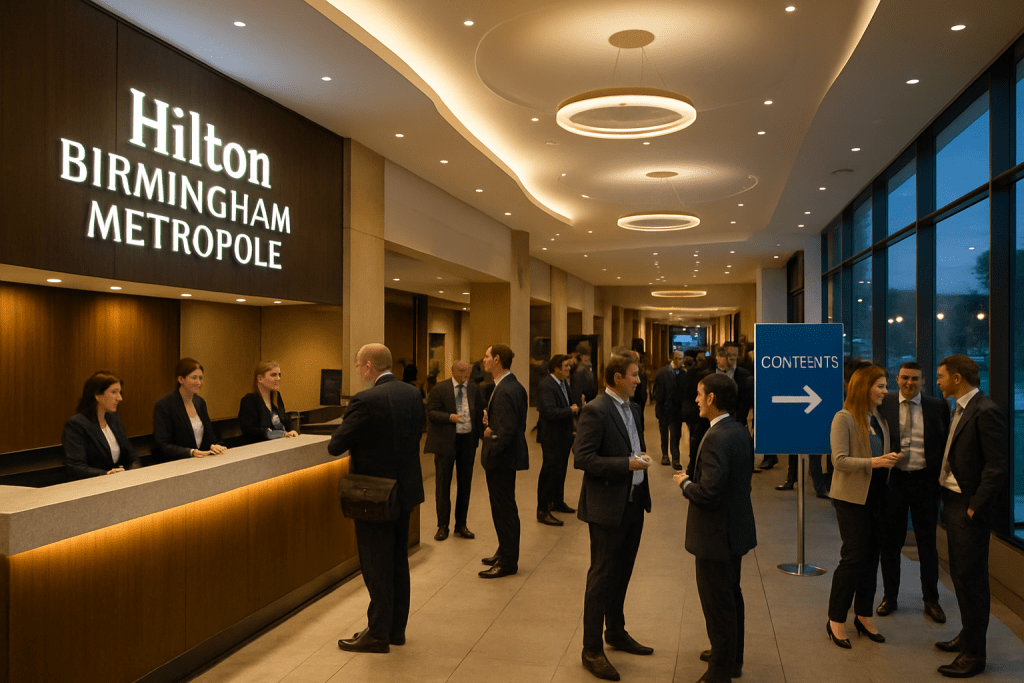
Hilton Birmingham Metropole is marking its 50th anniversary, underscoring half a century as one of the UK’s most established conference and event hotels. The property, which has developed alongside the country’s exhibition and meetings landscape, is using the milestone to reflect on its role in the sector and preview how it plans to support changing organiser and delegate expectations in the years ahead.
Speaking as part of its anniversary activity, the hotel’s Area General Manager, Nicola Betley, has highlighted the venue’s long-standing relationships with the events community, the importance of its experienced team, and how its offering is evolving to meet both business and leisure demands around major events.
Background: a fixture in the UK events landscape
Opened in the mid-1970s, Hilton Birmingham Metropole has grown in parallel with the wider UK meetings and exhibitions industry. Its location in the West Midlands, close to major transport links and exhibition facilities, has helped it become a regular base for large corporate meetings, association congresses and trade shows.
Over five decades, the property has hosted a broad spectrum of events, from industry conferences and product launches to annual gatherings and awards ceremonies. Many of those events have returned year after year, contributing to a calendar that mixes long-established fixtures with newer formats that respond to shifting attendee expectations.
The venue’s scale and flexibility – with extensive meeting space combined with a large room inventory – have positioned it as a hub for organisers looking to colocate accommodation, meetings and networking. At the same time, its proximity to regional infrastructure and attractions has made it a convenient base for delegates travelling from across the UK and internationally.
Key developments and anniversary focus
As part of its 50th anniversary, Hilton Birmingham Metropole is spotlighting the people, partnerships and operational milestones that have shaped its role in the market. Betley has pointed to long-serving team members as a central factor in the hotel’s continuity, noting that many staff have significant tenure and have supported the same events and client organisations over multiple decades.
This continuity has allowed the hotel to retain institutional knowledge of complex events, from bespoke room layouts to specific operational preferences, helping organisers deliver consistent experiences while still iterating formats year-on-year.
The anniversary year will also see a series of celebratory activities and curated events, aimed at both acknowledging the venue’s history and engaging current clients, partners and staff. While details are being shaped around evolving event schedules, the focus is on recognising partnerships that have been built over time and showcasing how the property continues to adapt its offer.
Betley has also referenced the hotel’s appetite for trialling new ideas and amenities around the core meetings product. Concepts such as glamping-style experiences and refreshed leisure facilities are examples of how the property has explored ways to extend delegate stays or add more informal and experiential elements alongside formal conference agendas.
Shifting expectations: from pure business to blended stays
One of the most noticeable changes over the venue’s five decades has been the way delegates and organisers design their time on site. Where business travel was once more functional and tightly scheduled, there is now greater emphasis on blending work and leisure, with attendees looking to maximise trips for both professional and personal value.
For Hilton Birmingham Metropole, this shift has influenced how it thinks about spaces and services that sit alongside meetings and exhibition activity. The hotel has invested in leisure and relaxation facilities, as well as social and networking environments, aiming to support guests who arrive early, stay after an event, or travel with partners or family.
Ideas such as outdoor activations, wellbeing-focused breaks and more flexible social areas have become part of the conversation with planners. While the core expectation of reliable meeting rooms, AV support and accommodation remains, there is increasing demand for spaces that can transition from formal sessions to informal collaboration or socialising.
Industry impact and role as a long-standing partner
Over 50 years, the venue has become a familiar name for organisers across multiple sectors, particularly those involved in national conferences and exhibitions requiring significant room blocks. Its long history has also meant that many industry professionals have returned to the hotel in different roles over time, from junior delegates to senior decision-makers.
The hotel’s presence has supported the growth of nearby exhibition and conference facilities by providing integrated accommodation and event space. For large-scale events, its ability to act as a headquarters hotel has been a recurrent feature, hosting main plenary sessions, sponsor activations, VIP programmes and ancillary meetings alongside official show activity elsewhere on the campus.
Partnerships have extended beyond individual events, with the venue maintaining ongoing relationships with associations, corporate clients and sector suppliers. These collaborations have often included testing new event formats, trialling hybrid components, or incorporating new technologies and services as they emerge.
Why this matters for event professionals and technology providers
For event professionals, Hilton Birmingham Metropole’s 50-year milestone offers a lens on how mature venues are evolving in response to changing expectations. The hotel’s experience illustrates several points relevant to planners and technology partners:
- Operational continuity: Long-serving teams and established processes can be an asset for complex events, especially those that repeat annually or rotate between a small number of venues.
- Flexibility in formats: The shift from purely business-focused stays to blended experiences has implications for space planning, scheduling and the integration of leisure, wellbeing and social elements into event programmes.
- Scope for experimentation: Initiatives such as glamping-style options or enhanced leisure offerings highlight that even traditional conference hotels are exploring new ways to create value around core event days.
- Technology integration opportunities: As venues expand beyond standard meeting rooms into more experience-led environments, there is increased scope for event technology providers to support wayfinding, engagement, content delivery and data capture across a wider range of touchpoints.
For technology providers, longstanding venues with consistent event calendars can serve as important testbeds for new tools and services. Properties that regularly host conferences and exhibitions are in a position to trial digital registration, mobile event apps, on-site engagement tools and hybrid delivery models at scale, while drawing on deep knowledge of attendee behaviour.
Looking ahead: a legacy shaped by change
As Hilton Birmingham Metropole enters its second half-century, its leadership is positioning the anniversary as both a celebration of its legacy and a marker of ongoing change in the events industry. While the fundamentals of providing reliable meeting space and accommodation remain constant, the way delegates use those spaces continues to evolve.
The venue’s experience suggests that future success for large conference hotels will depend on their ability to balance operational consistency with a willingness to trial new concepts and collaborate closely with organisers and technology partners. For event professionals, working with long-established venues that understand both historical patterns and emerging demands may offer stability at a time when delegate behaviours, travel patterns and content formats are still in flux.
Hilton Birmingham Metropole’s 50th anniversary underlines how deeply embedded certain venues have become in the UK events ecosystem. As the sector continues to adapt, the hotel’s next chapter will likely be judged on how effectively it translates five decades of experience into new forms of value for organisers, exhibitors and attendees.