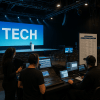
UK stadium venues convene for 2026 events summit at Edgbaston

Introduction
Stadium Experience has opened 2026 by hosting an industry summit at Edgbaston Stadium, gathering senior representatives from stadium venues across the UK for a full-day programme focused on the future of events. More than 70 decision-makers responsible for both matchday and non-matchday operations met to exchange practical insight, discuss emerging technologies and examine how stadiums can evolve as year-round event destinations.
Background or industry context
UK stadiums have been steadily diversifying their business models, moving beyond traditional sports fixtures to host conferences, exhibitions, live entertainment and hybrid corporate events. This shift has intensified since the pandemic, as venues seek to maximise revenue from existing infrastructure while responding to changing expectations around digital engagement, sustainability and audience experience.
At the same time, the technology landscape for stadium events is becoming more complex. From in-venue connectivity and mobile-first ticketing to data-driven crowd management and broadcast-quality streaming, operations teams are now expected to integrate multiple systems while maintaining security, safety and compliance. Industry forums such as this summit provide a space for venue leaders to compare approaches, share learnings from live deployments and discuss how new tools can be embedded into legacy environments.
Stadium Experience, a collaborative marketing and best-practice group for UK stadium venues, has traditionally focused on promoting facilities for conferences and corporate hospitality. Its decision to begin 2026 with a technology- and innovation-led meeting underlines how digital infrastructure and event platforms are now central to stadium strategies, not just an operational add-on.
Key developments or announcement
The Edgbaston gathering brought together senior managers, commercial leads and events professionals from stadiums nationwide, with an agenda built around collaboration rather than competition. While detailed session content was tailored to attendees, the programme centred on three broad themes: operational innovation, non-matchday growth and technology-enabled experiences.
On the operational side, venue leaders compared approaches to managing high-volume event days, including crowd flow planning, staffing models and real-time communication between control rooms, security and front-of-house teams. Discussions highlighted how integrated control platforms, radio over IP, and live data dashboards are being adopted to give operations teams better situational awareness across large, complex sites.
Non-matchday business was another priority. Delegates explored how stadiums are repositioning themselves as flexible venues for conferences, exhibitions, product launches and hybrid meetings. Case studies from participating venues touched on room reconfiguration, multi-purpose hospitality spaces, and the upgrade of AV infrastructure to support broadcast-standard presentations, content capture and streaming for corporate clients.
Technology and digital engagement ran as a thread throughout the day. Attendees examined the role of:
- Event management platforms that can handle both sports fixtures and business events within a single system
- Digital ticketing and access control for smoother entry and enhanced security
- Wi-Fi and 5G connectivity to support high attendee device usage and live content sharing
- Data analytics to understand attendee behaviours across different event types
- Hybrid and virtual event tools enabling stadium-based events to reach remote audiences
According to Stadium Experience, the summit was intentionally designed as an open forum for sharing best practice, with venue teams encouraged to discuss both successful implementations and challenges. This collaborative format is intended to help stadiums benchmark their own digital and operational maturity against peers, while identifying potential areas for joint initiatives or shared standards.
Industry impact
Although positioned as a member-focused meeting, the Edgbaston summit reflects broader trends within the stadium and large-venue sector. As stadiums seek to strengthen non-matchday revenues, there is growing recognition that success depends on more than physical capacity and location. Event organisers increasingly expect the same level of technical capability, connectivity and data insight at a stadium as they do at purpose-built conference centres.
By convening senior leaders from multiple venues, the summit allows the industry to move faster on common challenges. Shared discussions on topics such as digital signage networks, in-bowl and concourse AV, mobile ordering, and integrated CRM can reduce duplication of effort and help venues avoid repeating each other’s mistakes. This, in turn, has an impact on suppliers, who may see more consistent requirements emerging across the stadium market.
The event also underlines the role of stadiums as part of the wider event technology ecosystem. Many are now working closely with technology vendors, production companies and platform providers to ensure they can support complex hybrid formats and content-rich experiences. Conversations held at forums like this can shape future procurement decisions, influence infrastructure investment and guide how stadiums collaborate with external event tech partners.
Why this matters for event professionals and technology providers
For event professionals, the outcomes of this type of summit translate into practical changes in how stadium events are planned and delivered. Organisers can expect:
- Better-aligned non-matchday offerings, with clearer packages for conferences and exhibitions
- Improved baseline technology, including upgraded connectivity and AV capabilities
- More consistent operations around access control, visitor flow and attendee services
- A stronger focus on hybrid-ready infrastructure for streaming and remote participation
For technology providers, the gathering offers insight into near-term priorities for stadium venues. Vendors of event management platforms, ticketing systems, connectivity solutions, analytics tools and content delivery technologies can use these signals to refine their propositions. The presence of more than 70 senior representatives suggests that procurement and investment decisions for the next few years are being actively considered and informed by these collective discussions.
In addition, as stadiums become more experienced in hosting complex corporate and hybrid events, expectations around integration and interoperability are likely to rise. Technology partners will need to demonstrate how their products can operate within multi-venue, multi-system environments, aligning with the operational realities that venue leaders discussed in detail at Edgbaston.
Conclusion
Stadium Experience’s decision to open 2026 with an industry summit at Edgbaston Stadium highlights the strategic importance of collaboration in the stadium events sector. Bringing together more than 70 senior figures from UK venues, the meeting underscored how matchday and non-matchday operations are converging around a shared need for robust digital infrastructure, flexible spaces and integrated event technology.
As stadiums position themselves as versatile platforms for sports, entertainment and business events, collective forums of this kind are likely to play a growing role in setting operational benchmarks and shaping investment in new tools. For event professionals and technology providers, the discussions in Birmingham offer a clear signal: the UK stadium market is actively rethinking how it serves organisers and audiences, and technology will be central to that evolution throughout 2026 and beyond.