Spectera handheld microphone system tested on Vanessa Paradis tour
Background and context
Wireless microphone performance is under increasing scrutiny as live productions face denser RF environments, complex stage designs, and tight touring schedules. Artists and engineers are looking for systems that can cope with these pressures while staying reliable from rehearsal studios to major venues.
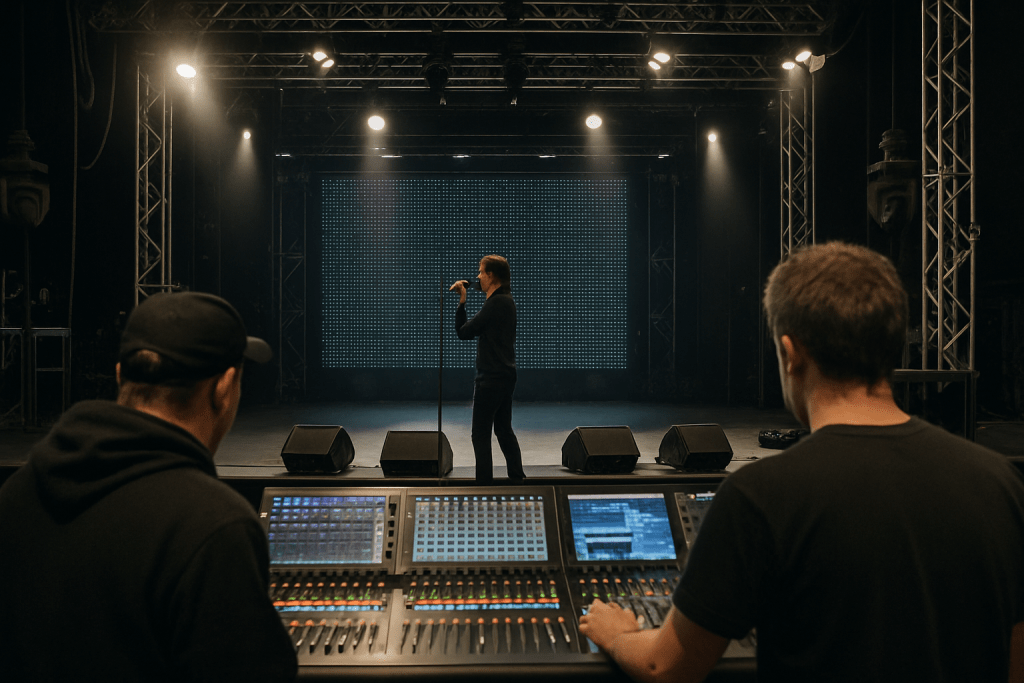
Against this backdrop, the Spectera handheld wireless system has been undergoing real-world testing on the road with French artist Vanessa Paradis. Her current live production has been using the system across rehearsals and performances, giving the new handheld a proving ground in professional touring conditions.
Key announcement
The manufacturer behind Spectera has confirmed that Vanessa Paradis and her technical team have been trialling the Spectera handheld transmitter as part of her live show setup. The tests have focused on day-to-day usability, RF stability, audio quality, and how well the system integrates with existing touring workflows.
According to the production team, the handheld has been used in a mix of environments, including soundchecks, full band rehearsals, and live performances in different types of venues. This has allowed engineers to evaluate its behaviour in varying levels of RF congestion and under the demands of a touring schedule.
Feedback so far has centred on aspects such as the handheld’s ergonomics for the artist, the ease of setup for engineers, and the consistency of sound from venue to venue. While the manufacturer positions Spectera as a solution for modern wireless challenges, the tour has effectively served as an extended field test under real production constraints.
Further technical information about the Spectera handheld and its companion systems is available on the manufacturer’s official product page.
Industry impact
Using an active tour as a test platform is not new in the pro audio sector, but it remains a valuable indicator of how new wireless systems may perform once widely deployed. High-profile tours typically involve busy RF environments, fast turnarounds, and limited tolerance for downtime, providing a strong benchmark for reliability.
For event technology professionals, the reported testing suggests that the Spectera handheld is being evaluated in conditions comparable to many touring and festival scenarios. Engineers responsible for conferences, corporate shows, and broadcast-linked events often face similar spectrum and coordination constraints, even if on a different scale.
- RF robustness in dense frequency environments
- Consistency of sound across multiple venues
- Workflow integration with existing racks and consoles
- Suitability for artists who move dynamically on stage
How the system performs in these areas will influence how quickly it is adopted beyond music touring, into theatre, broadcast, and large-scale corporate events.
Why this matters
For rental houses, production companies, and venue operators, first-hand reports from major tours can be as influential as datasheets. Gear that proves stable and predictable in front of paying audiences tends to move up the shortlist for future investments.
The ongoing tests with Vanessa Paradis’ team also highlight a broader shift: manufacturers are increasingly validating new wireless platforms in partnership with touring productions early in the product lifecycle. This can help surface practical issues around handling noise, battery management, RF coordination, and user interface design before wider rollout.
As spectrum availability tightens and events become more reliant on wireless infrastructure, tools that can withstand demanding tour schedules are likely to gain traction quickly. The outcome of this real-world trial will be of interest to engineers considering their next generation of handheld systems, particularly those working across both music touring and high-end event production.