DATALAND museum debuts with large-scale L-Acoustics immersive audio system

Background and context
A new museum in downtown Los Angeles is positioning sound as a core part of the visitor experience. DATALAND, described by its creators as a museum of AI arts, opened to the public on 20 June 2026 at The Grand LA complex.
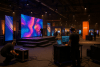
The venue’s opening exhibition, “Machine Dreams: Rainforest”, runs through 31 January 2027. Developed by Refik Anadol Studio, the project combines generative visuals, data-driven artwork and biometric interaction across five galleries. Visitors’ physiological data, gathered via wearables, is incorporated into the evolving installations.
To support this approach, DATALAND has been built as an “omni-sensory” environment, with audio, visuals, scent and other sensory elements tightly integrated. Audio manufacturer L-Acoustics has supplied the main sound infrastructure, working with systems integrator Solotech.
Key announcement
The museum features a 250-loudspeaker L-Acoustics ecosystem based on the company’s L-ISA immersive platform and its Ambiance active acoustics technology. According to L-Acoustics, this is the first permanent installation of Ambiance in the United States.
L-ISA is used for object-based, three-dimensional spatial audio throughout the galleries, allowing sound designers to position and move audio sources in relation to the visual content. Composer and sound designer Kerim Karaoğlu’s score blends original music, rainforest field recordings and traditional Yawanawá songs, all spatialized within the system.
Ambiance is deployed to modify the apparent acoustic properties of certain rooms in real time, extending or tightening reverberation and altering the perceived size and character of spaces. This is used most prominently in The Sanctuary gallery, where multiple loudspeaker rings and subwoofers create an adaptable acoustic environment.
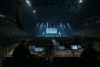
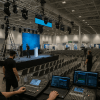
The main Data Pavilion, roughly 5,000 square feet in area with 21-foot ceilings, uses three vertical rings of loudspeakers. The lower level includes 27 Syva speakers with matching low-frequency elements and subwoofers, supported by surround and height layers of X8i loudspeakers and KS21i subs. An L-ISA Processor II handles object-based mixing, while LA7.16i amplified controllers power the system and manage energy efficiency via L-SMART processing.
Other spaces, including the Infinity Room, Latent Gallery, Discovery Portal and lobby, use combinations of compact coaxial loudspeakers and subwoofers to maintain continuous audio coverage as visitors move through the museum.
Industry impact
For the live and installed AV markets, DATALAND illustrates how museum environments are evolving toward fully programmable, show-ready venues rather than static exhibition spaces. The project also shows object-based audio and active acoustics moving beyond concert halls and theatres into cultural and experiential spaces.
L-Acoustics has previously collaborated with Refik Anadol Studio on immersive projects, including a permanent L-ISA installation at Casa Batlló in Barcelona. DATALAND extends that partnership into a multi-gallery, long-term deployment that must support frequently changing content and layouts.
From a technical standpoint, the installation demonstrates large-scale use of networked audio formats, with signal transport split between Milan-AVB and AES67 to provide routing flexibility and future expansion options.
Why this matters
For event and experience designers, DATALAND shows how immersive audio is being embedded at the architectural level in new-build cultural venues. Rather than treating PA systems as fixed infrastructure, the museum treats sound as a reconfigurable layer, on par with projection and lighting.
The use of Ambiance points to a growing interest in variable acoustics solutions that can serve both artistic and operational needs: the same space can host quiet, intimate experiences or high-impact, large-scale presentations without physical reconfiguration.
The project will likely be of interest to integrators and consultants planning immersive installations in museums, brand experience centers and mixed-use venues. It also highlights how artists and curators are working directly with manufacturers to shape next-generation spatial tools.
More technical information on Ambiance and related spatial technologies is available via the L-Acoustics product pages at l-acoustics.com.