Event sustainability leader joins climate roundtable at palace
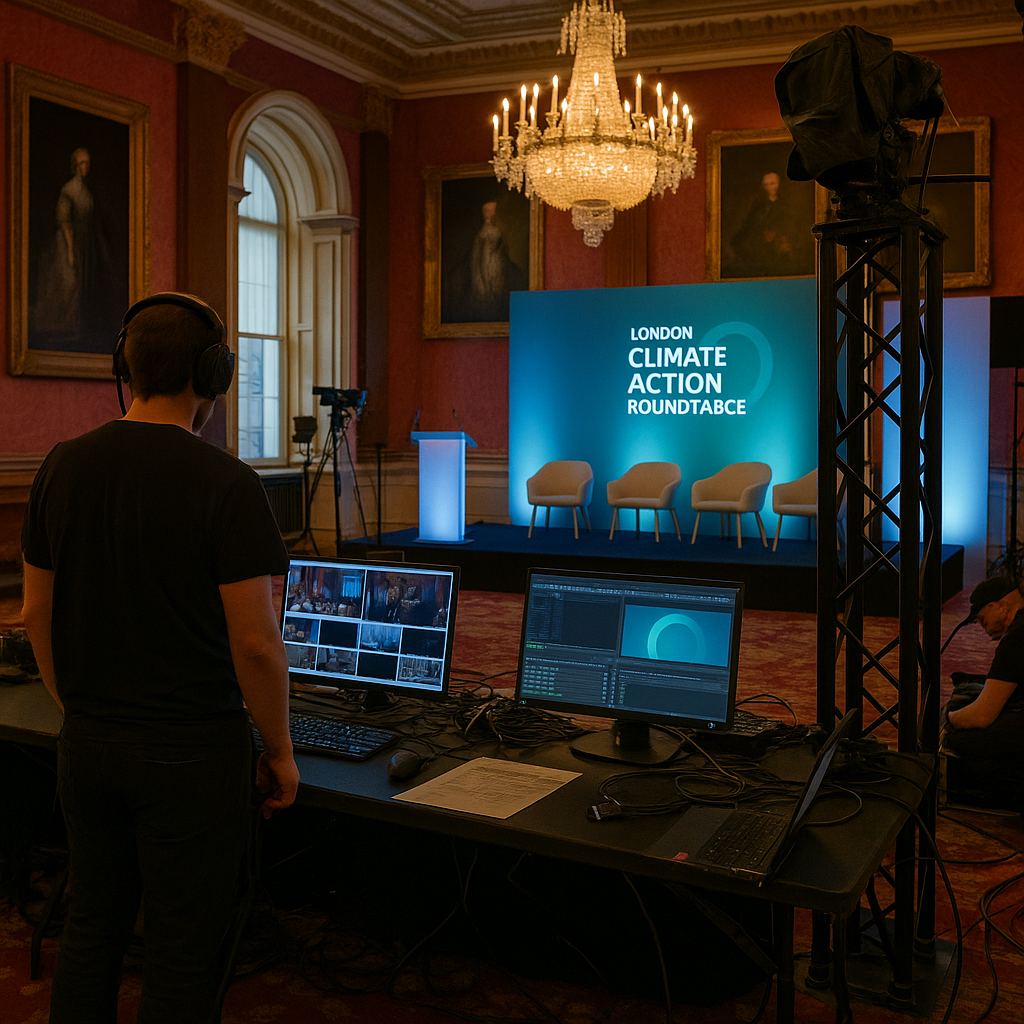
Event sustainability advocate Claire O’Neill was among a select group of climate and nature leaders invited to Buckingham Palace on 24 June for a high-level discussion on global climate action. The cross-sector roundtable, convened by Climate Action during London Climate Action Week, brought together representatives from government, the United Nations, business and civil society to examine progress on the Global Action Agenda.
The meeting, held on what was reported as the hottest day of the year in the UK so far, was followed by a reception hosted by His Majesty the King, underlining the increasing visibility of climate issues at the highest levels of public life. O’Neill, who leads sustainability initiatives in the live events and entertainment sector, participated in the discussion as part of a broader industry effort to align major events with international climate goals.
Background and industry context
London Climate Action Week has grown into a significant fixture in the global climate calendar, convening policymakers, scientists, investors, businesses and non-profits to advance practical solutions to the climate crisis. For the events industry, it serves as a focal point for conversations on how conferences, exhibitions, festivals and large-scale live experiences can reduce their environmental impact and contribute to wider decarbonisation targets.
In recent years, the events sector has faced rising scrutiny over emissions linked to travel, energy use, temporary infrastructure and waste. At the same time, events have been recognised as powerful platforms for climate communication and stakeholder engagement. Industry organisations and sustainability specialists have responded with frameworks for measurement, science-based reduction strategies and collaborative initiatives aimed at standardising greener practices worldwide.
Within this context, the presence of an event sustainability leader at a climate roundtable hosted at Buckingham Palace highlights the sector’s evolving role in climate discussions that span far beyond entertainment. It reflects a shift from seeing events purely as emissions sources to viewing them as strategic levers for behaviour change, innovation testing and cross-sector collaboration.
Key developments from the Buckingham Palace engagement
The roundtable at Buckingham Palace focused on the Global Action Agenda, a framework intended to align climate efforts across sectors and geographies. Participants included decision-makers from public institutions, multilateral bodies, business networks and civil society organisations, with the aim of identifying practical pathways to accelerate climate action.
Claire O’Neill joined the dialogue from the vantage point of the events and live entertainment ecosystem, where decarbonisation intersects with operational logistics, technology adoption and audience experience. While specific contributions from individual participants were not disclosed, the inclusion of an events-focused sustainability figure underlines a recognition that large-scale cultural and business gatherings are both climate challenges and potential catalysts.
Following the structured discussion, attendees were received by the King, who has long been an advocate for environmental issues. The reception provided an opportunity for informal exchanges among leaders from different sectors, potentially laying the groundwork for new collaborations that could draw on the convening power of events to mobilise broader climate action.
Implications for the event and exhibition industry
For organisers of conferences, exhibitions, trade shows and live entertainment, the visibility of event sustainability at a forum of this profile signals a clear expectation: climate considerations are no longer peripheral to event planning but are becoming embedded in strategic decision-making.
The sector is increasingly expected to address impacts across the entire event lifecycle, including:
- Venue and energy use: Transitioning to low-carbon venues, renewable energy sources and efficient production technologies.
- Audience and exhibitor travel: Encouraging modal shifts, supporting remote or hybrid participation and rethinking event portfolios to minimise unnecessary journeys.
- Materials and waste: Reducing single-use materials, implementing circular solutions and integrating credible reuse, recycling and recovery systems.
- Digital infrastructure: Evaluating the footprint of streaming, digital platforms and data use, while using technology to optimise resource consumption.
At the same time, events remain critical meeting points for climate innovation themselves. Sustainability-focused summits, industry showcases and cross-sector gatherings provide testbeds for new technologies, from low-carbon temporary structures and smart energy management systems to advanced measurement tools that track emissions in real time.
Why this matters for event professionals and technology providers
For event professionals, the Buckingham Palace roundtable serves as a signal that climate and nature considerations are consolidating at board and policy levels. Planners, production companies and venue operators can expect growing scrutiny from sponsors, exhibitors and attendees on how sustainability is embedded into event design and delivery.
This creates both pressures and market opportunities for technology providers. Measurement, reporting and optimisation tools that help organisers quantify and reduce environmental impacts are moving from optional add-ons to core infrastructure. Areas of increasing demand include:
- Carbon accounting platforms tailored to events, capable of integrating data from registration, travel booking, catering, logistics and production.
- Hybrid and virtual event solutions that maintain engagement while mitigating travel emissions, supported by analytics on participation and impact.
- Smart venue technologies for energy monitoring, crowd management, and resource allocation that reduce consumption in real time.
- Supplier and materials tracking systems that provide transparency on the sustainability performance of staging, stand builds, signage and catering.
For sustainability-focused organisations within the sector, participation in high-level climate forums helps ensure that the specific realities of events are reflected in emerging standards and policies. This can influence everything from future reporting requirements to the benchmarks sponsors and corporate clients apply when selecting event partners.
Conclusion
The participation of Claire O’Neill, a leading event sustainability figure, in a climate roundtable at Buckingham Palace during London Climate Action Week underscores how closely aligned the future of events is with global climate goals. As climate risks intensify and stakeholders demand clearer action, the industry is being drawn more directly into strategic climate planning alongside government, multilateral institutions and civil society.
For organisers and technology providers, the message is clear: sustainability can no longer be treated as a separate workstream. It is becoming a defining factor in how events are conceived, financed, delivered and experienced. Engagements at this level may help accelerate the integration of robust climate strategies into the core of event operations, reinforcing the role of conferences, exhibitions and live experiences as both more sustainable activities and influential platforms for climate action.