Spectera audio system supports wireless mics at 79th Tony Awards broadcast
Background and context
The 79th Tony Awards provided a high-profile testbed for emerging spectrum management tools in live broadcast audio. As productions rely on growing numbers of wireless microphones and in-ear systems, interference-free operation has become a critical technical challenge for major televised events.
Within this environment, audio teams are increasingly turning to specialized RF (radio frequency) analysis platforms to help coordinate frequencies, monitor interference, and respond quickly to issues during live broadcasts.
Key announcement
Spectera, a multichannel live-audio spectrum analysis and monitoring platform developed with broadcast and event workflows in mind, was deployed at the 79th Tony Awards in what the manufacturer describes as its largest U.S. broadcast implementation to date.
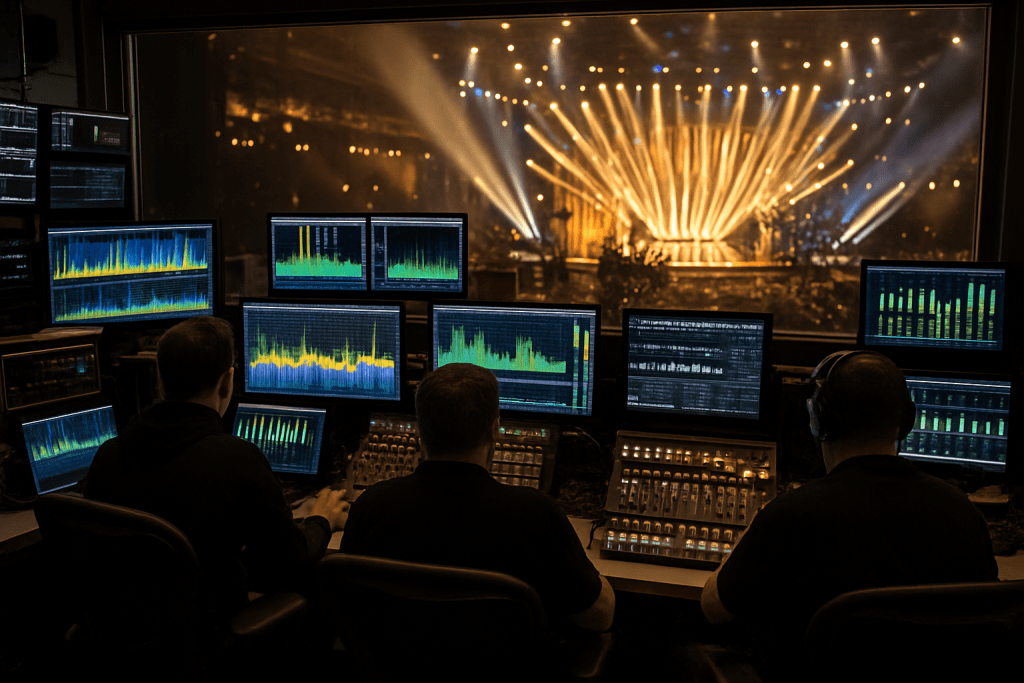
The system was integrated into the event’s RF coordination and monitoring setup, supporting the wireless microphone infrastructure used for the live telecast. According to the manufacturer, the deployment involved tracking multiple RF bands, visualizing spectrum activity in real time, and helping the RF team identify and manage potential interference sources during the show.
Engineers on site used Spectera to observe spectrum activity across numerous channels, verify occupancy, and keep a live overview of licensed and unlicensed signals in and around the venue. This was aligned with typical large-scale broadcast workflows, where multiple production elements—hosts, performers, presenters, and backstage communication—depend on reliable wireless audio.
While the manufacturer has previously highlighted the platform in touring and fixed-install environments, the Tony Awards appearance is being positioned as a key reference for its capabilities in complex broadcast conditions. Further technical details and product information are available via the manufacturer’s official site at sennheiser.com.
Industry impact
The Tony Awards deployment reflects a broader shift in how RF is managed at large entertainment and broadcast events. Coordinators are dealing with crowded spectrum, strict regulatory limits, and rising channel counts, particularly in major media markets.
Tools such as Spectera are part of an expanding category of specialized RF software and hardware that aim to give engineers clearer visibility into their spectrum environment. Real-time analytics, historical logging, and visual displays of RF activity can help production teams make informed decisions before and during a show.
For broadcasters and event technology providers, the use of these platforms in a high-stakes live environment signals that advanced spectrum analysis is moving from specialist use into more routine deployment on large productions.
Why this matters
Live televised events place exceptional demands on wireless systems. Failures are highly visible, rehearsal time is limited, and production requirements often change up to the last minute. In this context, any tool that helps keep wireless audio stable is of interest to broadcast audio engineers, rental houses, and RF coordinators.
The use of Spectera at the Tony Awards suggests that broadcasters are more willing to adopt third-party RF analysis platforms alongside traditional coordination methods. As spectrum pressure continues to increase, especially in dense urban areas, such tools may become standard in the technical planning and operation of major award shows, festivals, and large corporate events.
For the wider event technology sector, the deployment underscores a trend toward more data-driven management of wireless resources. Vendors providing sound, communications, and broadcast support may see growing expectations from clients that RF environments are not only coordinated in advance but continuously observed and documented throughout the event.