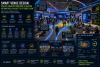
Two-Way Whisper Tech: Facilitating Interactive Q&A on Noisy Factory Floors

Introduction
Manufacturing facilities have increasingly become venues for executive briefings, customer visits, investor tours, regulatory inspections, supplier demonstrations, and workforce training. These events offer participants an opportunity to observe production processes in real operating environments, providing a level of transparency and engagement that cannot be replicated in conference rooms. However, factory floors present unique communication challenges. Continuous machinery operation, automated production lines, ventilation systems, material handling equipment, and safety alarms create high ambient noise levels that make conventional guided tours and interactive discussions difficult.
Traditional tour guide systems typically provide one-way audio, allowing presenters to speak through wireless headsets while attendees listen. Although effective for delivering prepared commentary, these systems often limit interaction because participants must remove headsets or raise their voices to ask questions. In technical demonstrations where immediate clarification is essential, this interruption reduces engagement and slows communication.
Two-way whisper technology addresses these limitations by enabling full-duplex, low-latency voice communication between guides and participants while preserving hearing protection and maintaining awareness of critical safety sounds. Combining digital wireless audio, intelligent noise suppression, beamforming microphones, and cloud-enabled management, these systems transform factory tours into collaborative, interactive experiences without compromising operational safety.
For event technology professionals supporting industrial events, two-way whisper systems represent an important evolution in guided communication, enabling meaningful dialogue within some of the most acoustically challenging environments.
Why Factory Floor Communication Is Challenging
Unlike conference venues designed for speech intelligibility, industrial facilities prioritize operational efficiency and worker safety.
Common sources of environmental noise include:
- CNC machines
- Robotic production cells
- Conveyor systems
- Industrial compressors
- Forklifts
- Ventilation equipment
- Packaging machinery
- Metal fabrication processes
Noise levels frequently exceed thresholds where normal conversation becomes difficult or impossible without amplification.
At the same time, participants must remain aware of emergency alarms, vehicle movement, and verbal safety instructions, making complete acoustic isolation inappropriate.
An effective communication solution must therefore improve speech clarity while preserving environmental awareness.
Understanding Two-Way Whisper Technology
Two-way whisper systems create secure wireless communication channels that allow guides and attendees to speak naturally without shouting.
Unlike traditional broadcast-only tour systems, participants can communicate directly with presenters or designated group members using integrated microphones.
A typical system includes:
- Wireless headsets
- Noise-canceling microphones
- Digital transceivers
- Audio management software
- Charging stations
- Group communication controllers
Modern systems support simultaneous conversations with minimal latency, enabling fluid discussions while participants remain mobile throughout the facility.
Core System Architecture
Successful deployments rely on several integrated technology components.
Full-Duplex Audio
Traditional push-to-talk systems interrupt natural conversation because only one participant speaks at a time.
Full-duplex communication allows multiple users to converse simultaneously, creating interactions that closely resemble face-to-face discussions despite high environmental noise.
This significantly improves engagement during technical demonstrations and collaborative inspections.
AI-Powered Noise Suppression
Machine learning algorithms distinguish human speech from industrial background noise.
Rather than suppressing all ambient sound equally, AI selectively reduces:
- Machine operation
- Mechanical vibration
- Ventilation systems
- Vehicle movement
- Tool operation
- Electrical interference
Speech remains clear without eliminating critical environmental awareness required for safe facility navigation.
Beamforming Microphones
Microphone arrays focus on voices arriving from the wearer’s speaking direction while minimizing sounds originating elsewhere.
Benefits include:
- Improved voice isolation
- Reduced echo
- Higher speech intelligibility
- Less microphone handling noise
- Better performance in crowded production areas
Beamforming becomes particularly valuable when multiple tour groups operate simultaneously within the same facility.
Wireless Communication Infrastructure
Reliable wireless connectivity is essential for uninterrupted communication.
Industrial deployments typically use:
- Digital RF systems
- DECT technology
- Wi-Fi-based audio
- Private 5G networks
- Mesh networking
- Frequency management systems
The choice depends on facility size, interference levels, regulatory requirements, and participant mobility.
Automatic channel management helps prevent communication disruptions caused by competing wireless equipment commonly found in manufacturing environments.
Supporting Interactive Q&A
The greatest advantage of two-way whisper technology is enabling continuous dialogue rather than one-directional presentations.
Participants can:
- Ask technical questions immediately
- Request clarification
- Discuss operational observations
- Participate in collaborative troubleshooting
- Interact with subject matter experts
- Receive individualized explanations
This improves learning outcomes while making tours significantly more engaging than passive listening experiences.
Moderators can also prioritize questions, temporarily mute participants if necessary, or create subgroup conversations for specialized discussions.
Integration with Event Technology Platforms
Modern whisper systems increasingly integrate with broader event ecosystems.
Tour Management Platforms
Registration systems automatically assign headset identifiers to participant profiles.
Attendance tracking, equipment allocation, and return verification become centralized within event management software.
Mobile Event Applications
Participants may access supplementary materials, digital manuals, equipment specifications, and safety documentation through synchronized mobile applications.
Audio discussions can reference these resources in real time.
AI Transcription Services
High-quality audio streams enable accurate:
- Live captions
- Searchable transcripts
- Training documentation
- Meeting summaries
- Knowledge repositories
These records support post-event learning while improving accessibility.
Analytics Dashboards
Organizers gain insights into:
- Tour duration
- Participant engagement
- Question frequency
- Equipment utilization
- Communication quality
- Session completion
Analytics help optimize future industrial events and workforce training programs.
Safety Considerations
Communication systems deployed in industrial environments must support—not compromise—workplace safety.
Important design principles include:
- Maintaining awareness of emergency alarms
- Preserving selected environmental sounds
- Supporting hearing protection requirements
- Minimizing equipment weight
- Providing comfortable all-day operation
- Ensuring battery reliability
Many systems incorporate adjustable environmental passthrough that allows important ambient sounds to remain audible while suppressing excessive machinery noise.
This balance is critical for maintaining situational awareness.
Operational Benefits
Organizations implementing two-way whisper systems often realize several measurable improvements.
Better Learning Outcomes
Interactive discussions improve participant understanding compared with passive guided narration.
Greater Tour Efficiency
Questions are answered immediately rather than postponed until quieter locations.
Improved Visitor Experience
Attendees remain connected with presenters regardless of movement throughout large production facilities.
Reduced Vocal Strain
Presenters no longer need to project their voices continuously over industrial machinery, reducing fatigue during lengthy tours.
Implementation Challenges
Deploying communication systems within manufacturing environments requires careful planning.
Facility surveys should identify radio frequency interference, wireless coverage limitations, and potential acoustic challenges before installation.
Equipment hygiene is another consideration. Shared headsets require cleaning protocols, replaceable ear cushions, and maintenance procedures to support frequent visitor use.
Battery management must also be addressed. Multi-shift operations require charging infrastructure capable of supporting consecutive tours throughout the day.
Finally, organizations should establish clear communication protocols governing participant microphones, emergency announcements, and equipment handling to ensure consistent operation across different tour groups.
Future Trends
Two-way whisper technology continues evolving alongside AI and industrial connectivity.
Emerging innovations include:
- Real-time multilingual translation
- AI-generated meeting summaries
- Voice authentication
- Indoor positioning integration
- Augmented reality guidance
- Private 5G connectivity
- Edge AI audio processing
- Digital twin synchronization
Future systems may automatically recognize equipment under discussion and present contextual documentation, maintenance histories, or engineering diagrams through wearable displays synchronized with live conversations.
As Industry 4.0 environments become increasingly connected, communication technologies will integrate more deeply with operational data, creating richer and more interactive visitor experiences.
Conclusion
Two-way whisper technology is transforming communication during factory tours, industrial demonstrations, and manufacturing events by enabling natural, full-duplex conversations in environments traditionally dominated by high levels of machinery noise. Through the integration of AI-powered noise suppression, beamforming microphones, intelligent wireless networking, event platform integration, and advanced audio processing, these systems significantly improve engagement, learning, accessibility, and operational efficiency. While successful deployment requires thoughtful planning around safety, wireless infrastructure, and equipment management, two-way whisper systems provide an effective solution for organizations seeking to create interactive and informative industrial event experiences. As manufacturing environments continue embracing digital transformation, intelligent communication platforms will become essential components of modern factory-based events and technical demonstrations.