London’s Ministry venues position for peak Christmas demand
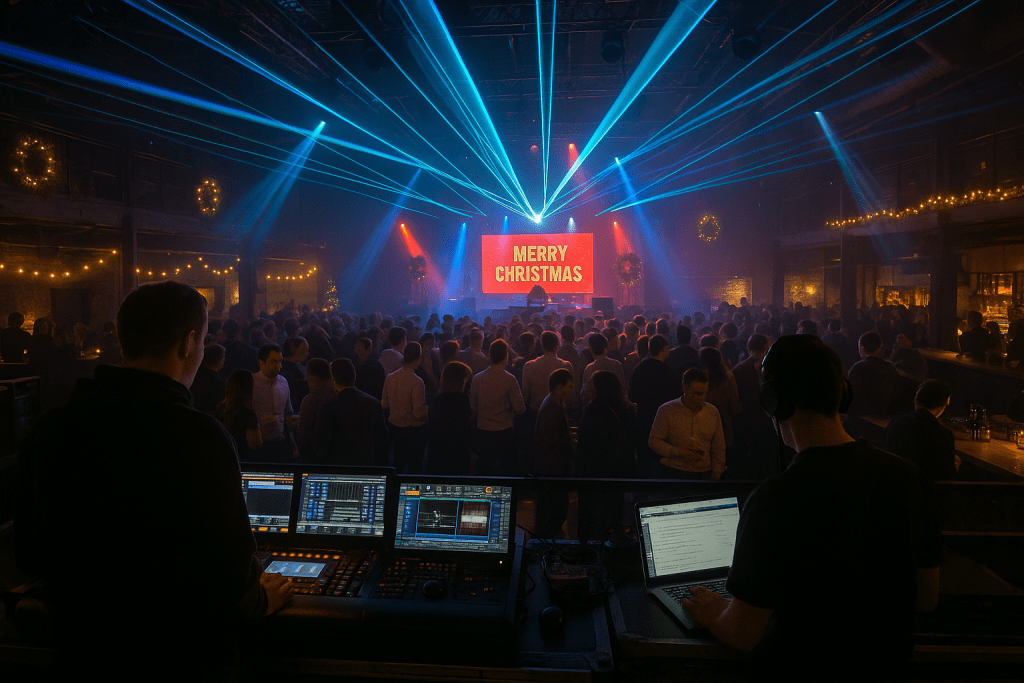
London’s year-end corporate events calendar is intensifying, and two South Bank venues – The Ministry and Ministry of Sound – are positioning themselves to attract brands and agencies seeking distinct experiences for Christmas parties and seasonal gatherings.
As competition grows among hospitality and event venues for festive bookings, these two properties, operating at different scales and with differing atmospheres, are aiming to stand out through clear audience segmentation and strong production capabilities rather than generic seasonal packages.
Background and market context
The capital’s Christmas party market remains one of the busiest periods of the year for venues, with corporate teams, agencies and end-user brands all competing for limited dates in late November and December. Hybrid work patterns and dispersed teams are increasing demand for in-person occasions that bring staff together, placing additional emphasis on memorable settings and high-quality technical delivery.
At the same time, event planners are under pressure to demonstrate value, which is driving closer scrutiny of venue flexibility, in-house production support and the ability to customise spaces for brand experiences, awards, and social events. Specialist venues with strong identities are using these capabilities to differentiate themselves from hotels and more traditional function rooms.
Key developments and positioning of the venues
The Ministry and Ministry of Sound are presenting themselves as complementary options within the same neighbourhood, with one focused on intimate, design-led environments and the other on large-scale, high-energy parties.
The Ministry is set up as a multi-purpose events venue with a stronger emphasis on hospitality, design and networking-friendly layouts. It is targeting corporate groups looking for a more curated, private-club feel for Christmas events, with spaces that can host seated dinners, receptions and informal celebrations. Its layout allows for multiple zones, enabling planners to build a journey through the venue, from drinks receptions to entertainment or late-night activity.
Ministry of Sound, by contrast, is built around its long-standing reputation as a nightlife destination. For the festive period, it is being positioned as a solution for larger companies or agencies seeking full-scale Christmas parties that prioritise sound, lighting and dancefloor-centric formats. The venue’s existing club infrastructure allows organisers to access concert-level audiovisual systems as part of their event design, supporting DJ-led programmes, live performances and immersive lighting shows.
Together, the two venues offer a range that spans smaller, experience-led gatherings to major end-of-year parties, while still enabling consistent production standards and event support across the portfolio.
Spaces, scale and production capabilities
For event planners, the core differentiator between the two venues lies in capacity and the type of experience each is optimised to deliver.
- The Ministry: Configured for mid-sized corporate events, with an emphasis on adaptable, design-focused rooms suited to receptions, private dining, creative showcases and social gatherings. The aesthetic leans towards contemporary workspace-meets-members-club, making it suitable for brands looking to align their Christmas events with a more premium, lifestyle-led image.
- Ministry of Sound: Best suited for high-volume, high-energy events where music, performance and lighting are central to the brief. The existing club layout supports large dancefloors, multiple bars and tiered spaces, enabling organisers to manage high attendee flows and extended late-night operations.
Both venues benefit from built-in technical infrastructure, which is an important factor for event professionals seeking to reduce external production costs. In-house sound, lighting and staging are designed for rapid reconfiguration, which can shorten build times and offer more flexibility for branding, content and live entertainment. The ability to plug into established AV rigs is particularly relevant in the busy Christmas window, where tight turnarounds and back-to-back bookings are common.
Industry impact and planner considerations
The approach taken by these venues reflects a broader trend in the London events market: a shift from generic festive packages to clearly positioned, experience-led offerings. Rather than competing purely on price or standard food-and-drink inclusions, operators are highlighting their production ecosystems, technical capabilities and atmosphere.
For agencies and corporate event teams, this can simplify the selection process. Rather than adapting a neutral space to fit a high-energy brief, Ministry of Sound offers a ready-made club infrastructure. Likewise, The Ministry gives planners a venue that can move between formal and informal modes within a single event, reducing the need to move guests between locations for different programme elements.
The venues’ focus on flexible layouts is also aligned with current demand for more inclusive formats. Planners are increasingly incorporating quieter networking areas, experiential zones and content-driven moments alongside traditional party elements. A venue that supports both high-intensity entertainment and lower-key interactions under one roof can help address diverse attendee preferences.
Why this matters for event professionals and technology providers
For event professionals, the positioning of The Ministry and Ministry of Sound underlines several operational and strategic considerations for the Christmas season:
- Technical readiness: Venues with strong installed AV can reduce reliance on external suppliers, particularly for audio, lighting and basic stage infrastructure. This is critical when lead times are short and supplier availability is limited.
- Experience design: Spaces that already support immersive lighting, sound and content projections make it easier to deliver impactful experiences without full custom builds.
- Brand alignment: Distinct venue identities enable brands to match their internal culture or campaign narrative to a location, whether that means a more refined environment or a full-scale club setting.
- Operational efficiency: Working within a venue ecosystem that understands late-night licensing, crowd flow, security and noise management reduces operational risk for organisers.
For technology providers, venues like these offer opportunities to integrate content, interactivity and data capture into existing infrastructures. From synchronised lighting for branded reveals to integrated screens for recognition moments, the baseline technical capacity of the venues can serve as a foundation for more advanced production elements, such as interactive photo areas, live social media walls or hybrid streaming components for remote staff.
Conclusion
As London’s Christmas party market accelerates, The Ministry and Ministry of Sound are emphasising contrast rather than convergence: one leaning towards adaptable, design-led corporate hospitality, the other towards large-format, music-driven celebrations. Both are underpinned by strong technical infrastructures and event-focused operations.
For planners facing compressed timelines, budget scrutiny and heightened expectations from attendees, clearly defined venue propositions can reduce complexity and support more confident decision-making. For technology and production partners, they provide stable, well-equipped platforms on which to build more ambitious festive experiences. In a crowded seasonal marketplace, that combination of clarity, capacity and capability is becoming a key differentiator.