Canadian festivals and tourism events highlight evolving live event landscape
Background and context
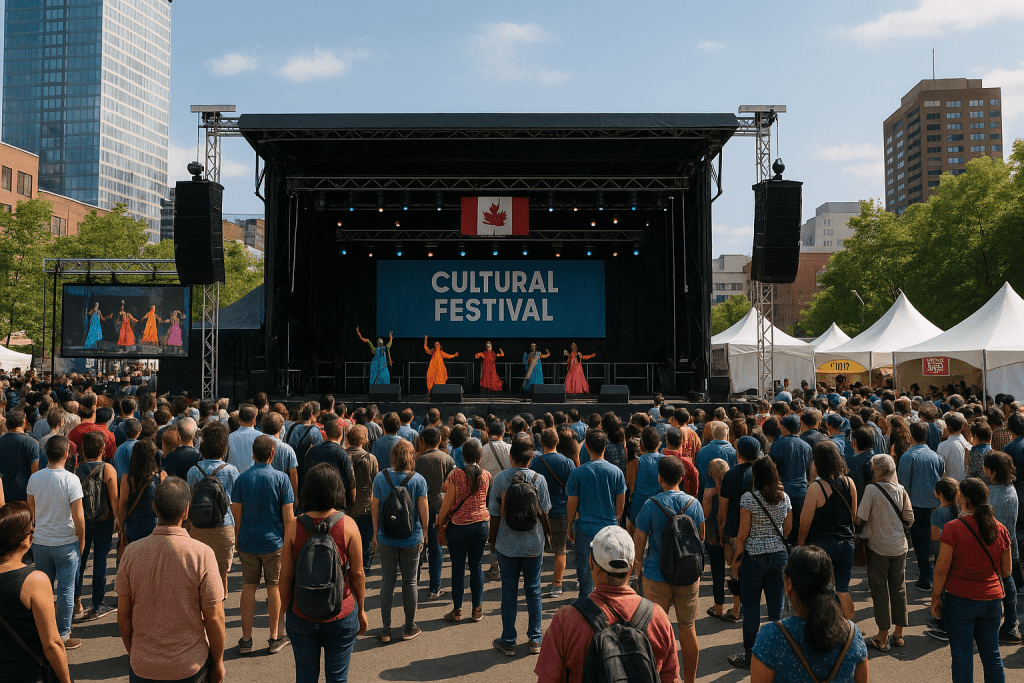
Canada’s live events sector continues to lean on cultural festivals and tourism-focused gatherings as key drivers of in-person engagement and regional economic activity. As provinces refine their event calendars, organizers are using festivals to reconnect communities, attract visitors, and test new production approaches.
In this context, events such as UFest Edmonton Ukrainian Festival, Festival Franco-Ontarien, and Rendez-vous Canada provide a snapshot of current trends in programming, audience development, and event operations across the country.
These events span community-focused outdoor festivals and business-to-business tourism showcases, illustrating how different segments of the industry are adapting to evolving audience expectations and logistical realities.
Key announcement
Recent editions of UFest Edmonton Ukrainian Festival, Festival Franco-Ontarien in Ontario, and Rendez-vous Canada—a national tourism marketplace—have underscored how organizers are prioritizing cultural authenticity, streamlined attendee experiences, and hybrid-ready infrastructure.
UFest Edmonton Ukrainian Festival, held in Alberta’s capital, centers on Ukrainian music, food, and cultural programming. The festival continues to position itself as both a cultural celebration and a platform for the Ukrainian diaspora, with outdoor staging, live performances, and family-oriented activities that rely on robust sound, lighting, and site management.
Festival Franco-Ontarien, one of Ontario’s long-running francophone festivals, maintains its focus on French-language music, arts, and community programming. The event’s format typically combines main-stage concerts with smaller activations, requiring coordinated audio, staging, and crowd-flow planning to accommodate diverse age groups and programming types.
Rendez-vous Canada functions as a key business event for the Canadian tourism sector, connecting domestic suppliers with international travel buyers. The marketplace-style event emphasizes scheduled meetings, presentations, and destination showcases, supported by AV-heavy plenary sessions and exhibitor environments. More information on participating destinations and program details is available through the official Rendez-vous Canada website at https://rendezvouscanada.travel/.
Industry impact
Together, these events reflect a broader pattern: festivals and tourism marketplaces are being used as testbeds for operational resilience, technology deployment, and new audience engagement strategies.
-
Community and cultural festivals are leaning on scalable staging, sound, and lighting solutions that can adapt to fluctuating attendance and weather conditions.
-
Tourism-focused events like Rendez-vous Canada are reinforcing the importance of face-to-face business meetings, even as digital tools support scheduling, lead management, and follow-up.
-
All three types of events are placing a premium on clear wayfinding, concise on-site communications, and flexible technical setups that can support live performance, presentations, and content capture.
For suppliers and production teams, these gatherings continue to generate demand for reliable AV systems, temporary connectivity, and modular staging that can serve both public audiences and industry delegates.
Why this matters
The latest activity around UFest Edmonton Ukrainian Festival, Festival Franco-Ontarien, and Rendez-vous Canada highlights how different parts of Canada’s event ecosystem are moving forward at the same time.
For event technology and production professionals, these events underscore a few practical considerations:
-
Diverse programming—from concerts to B2B meetings—requires flexible AV and staging packages that can be rapidly reconfigured.
-
Cultural and language-specific festivals remain critical touchpoints for communities and are likely to continue receiving municipal and regional support, creating ongoing opportunities for local production partners.
-
Tourism marketplaces illustrate the continued need for robust presentation environments, live translation support, and content-sharing tools that can bridge international participants.
As Canadian organizers refine their festival and tourism portfolios, the emphasis on reliable on-site infrastructure, streamlined attendee experience, and culturally relevant programming is expected to play a central role in shaping production decisions over the coming seasons.