Tour Guide Systems in Events: Delivering Clear Communication, Control, and Engagement in Dynamic Environments
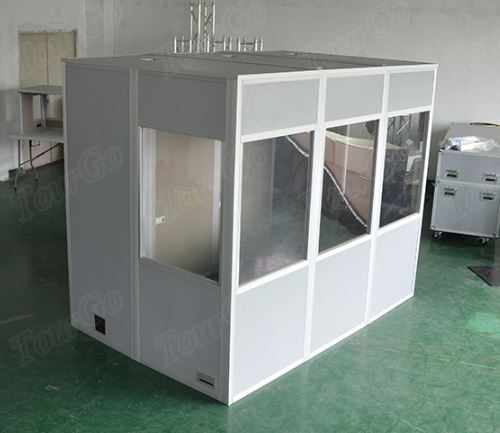
Tourgo 3-person Interpretation Booth
In events where movement is constant and environments are unpredictable, communication becomes the defining factor between confusion and clarity. From exhibitions and factory tours to campus visits, cultural programs, site inspections, and large guided walkthroughs, tour guide systems play a vital yet often overlooked role in event technology infrastructure.
Modern tour guide systems are no longer simple audio transmitters. They have evolved into intelligent, wireless communication platforms that enhance participant experience, ensure message clarity, and allow organizers to manage groups efficiently in noisy, complex, or outdoor environments.
This article explores what tour guide systems are, how they are used in events, the technology behind them, and why they are increasingly essential for organized, high-quality guided experiences.
Understanding Tour Guide Systems
A tour guide system is a wireless audio communication setup that allows a guide or presenter to speak to a group while participants listen through personal receivers and headsets. The system ensures that every participant hears the guide clearly—regardless of distance, background noise, or movement.
Unlike public address systems, tour guide systems:
-
Are personal and directional
-
Do not disturb surrounding areas
-
Allow groups to move freely
-
Maintain audio clarity in challenging environments
They are particularly valuable in venues where traditional sound reinforcement is impractical or restricted.
Why Tour Guide Systems Matter in Modern Events
As events expand beyond conference halls into real-world environments, organizers face recurring challenges:
-
High ambient noise
-
Dispersed or moving audiences
-
Multilingual participants
-
Limited use of loudspeakers
-
Need for focused, distraction-free communication
Tour guide systems address all these challenges while supporting inclusivity, professionalism, and operational control.
Common Event Use Cases for Tour Guide Systems
Exhibitions, Trade Shows, and Expos
Large exhibition halls are acoustically chaotic. Tour guide systems allow guided groups to move through booths while receiving uninterrupted explanations.
Benefits include:
-
Clear communication without shouting
-
Minimal disruption to other exhibitors
-
Improved engagement and comprehension
-
Professional, organized group management
Exhibitor-led tours and VIP walkthroughs benefit significantly from such systems.
Factory Visits and Industrial Tours
Manufacturing plants, refineries, and industrial facilities are among the noisiest environments.
Tour guide systems enable:
-
Safe communication without stopping operations
-
Compliance with hearing protection requirements
-
Clear explanations of processes and safety instructions
-
Controlled group movement
In these settings, tour guide systems are often safety-critical.
Campus Tours and Institutional Visits
Universities, corporate campuses, research facilities, and hospitals use tour guide systems to manage visitor groups efficiently.
They help:
-
Maintain orderly movement
-
Deliver consistent messaging
-
Reduce guide fatigue
-
Support outdoor and indoor transitions seamlessly
This improves visitor perception and overall experience quality.
Museums, Heritage Sites, and Cultural Events
Tour guide systems are widely used in cultural contexts where ambient noise must be minimized.
Applications include:
-
Guided museum tours
-
Heritage site walkthroughs
-
Religious or ceremonial visits
-
Art exhibitions
They preserve atmosphere while ensuring every participant receives the narrative.
Conferences with Site-Based or Field Sessions
Modern conferences increasingly include:
-
Site inspections
-
City tours
-
Infrastructure walkthroughs
-
Field demonstrations
Tour guide systems ensure that these sessions match the professionalism of main conference programming.
Key Components of a Tour Guide System
Although simple in appearance, tour guide systems rely on carefully coordinated components.
Transmitter (Guide Unit)
The guide wears or holds a transmitter with a microphone.
Features typically include:
-
Lightweight design
-
Long battery life
-
Secure channel selection
-
Adjustable audio levels
The guide can speak naturally while moving freely.
Receiver (Participant Units)
Each participant receives a wireless receiver with an earphone or headset.
Modern receivers offer:
-
Clear digital audio
-
Minimal latency
-
Simple controls
-
Comfortable, hygienic design
Some systems allow participants to adjust volume independently.
Wireless Transmission Technology
Tour guide systems use various wireless methods, including:
-
Radio frequency (RF)
-
Infrared (IR)
-
Digital Wi-Fi–based transmission
Choice of technology depends on:
-
Range requirements
-
Indoor vs outdoor use
-
Interference considerations
-
Group size
Accessories and Charging Infrastructure
Professional deployments include:
-
Multi-unit charging cases
-
Spare batteries
-
Hygiene accessories
-
Storage and transport solutions
Operational readiness depends heavily on logistics planning.
Digital and App-Based Tour Guide Systems
Modern tour guide systems increasingly support bring-your-own-device (BYOD) models.
In these setups:
-
The guide speaks into a microphone connected to a mobile device
-
Participants listen through smartphones using an app
-
Audio is streamed over local networks or the internet
Advantages include:
-
Reduced hardware distribution
-
Multilingual channel support
-
Integration with event apps
-
Analytics on participation and usage
However, BYOD systems depend on device compatibility and network reliability.
Multilingual Support and Interpretation Integration
Tour guide systems often integrate with interpretation workflows.
Advanced setups allow:
-
Multiple language channels
-
Simultaneous interpretation for tours
-
Easy switching between languages
This is especially valuable for international delegations, diplomatic visits, and global conferences.
Experience and Operational Benefits
Improved Engagement
Participants are more attentive when they can hear clearly without effort. This directly improves information retention and satisfaction.
Reduced Guide Fatigue
Guides no longer need to raise their voice repeatedly, enabling longer tours with consistent delivery quality.
Better Group Control
Clear communication reduces confusion, lag, and group fragmentation—especially in crowded environments.
Professional Brand Perception
Well-managed tours reflect organizational competence and attention to detail.
Technical and Planning Considerations
Successful deployment requires thoughtful planning.
Range and Coverage
Organizers must assess:
-
Maximum distance between guide and participants
-
Indoor obstructions
-
Outdoor terrain
System selection should match the environment.
Battery Management
Tour guide systems must last the entire session without interruption.
Best practices include:
-
Fully charged units
-
Backup batteries
-
Charging rotation plans
Interference and Channel Management
Large venues may host multiple tour groups simultaneously.
Professional systems support:
-
Multiple channels
-
Secure transmission
-
Interference avoidance
This prevents cross-talk and confusion.
Hygiene, Accessibility, and Inclusivity
Modern tour guide systems must account for:
-
Sanitization of shared equipment
-
Compatibility with hearing aids
-
Comfortable earphone options
-
Accessibility for elderly or differently abled participants
Attention to these details enhances inclusivity and compliance.
Data, Monitoring, and Insights
Advanced digital systems provide insights such as:
-
Number of active listeners
-
Duration of participation
-
Drop-off points
-
Language preferences
These insights help improve tour design and resource allocation.
Cost and ROI Considerations
Tour guide systems are generally cost-effective, especially when:
-
Used across multiple events
-
Integrated into permanent visitor programs
-
Combined with interpretation or engagement platforms
The ROI comes from:
-
Improved experience quality
-
Reduced staffing strain
-
Enhanced reputation
-
Greater message clarity
The Future of Tour Guide Systems in Events
Tour guide systems are evolving toward:
-
App-based, device-agnostic platforms
-
Integration with event analytics and AI
-
Personalized audio experiences
-
Seamless multilingual delivery
-
Integration with smart venue infrastructure
They are becoming a core component of guided experience technology.
Skills Event Teams Should Develop
Event professionals should understand:
-
Basic wireless audio principles
-
System setup and troubleshooting
-
Hygiene and logistics planning
-
Integration with interpretation and engagement tools
This ensures smooth execution and professional delivery.
Final Perspective
Tour guide systems may not be the most visible event technology—but they are among the most impactful. By ensuring clarity, focus, and inclusion in dynamic environments, they enable events to extend beyond stages and screens into real-world exploration.
As events become more experiential and mobile, tour guide systems will continue to play a critical role in delivering organized, engaging, and human-centered experiences.
At EventTechnology.org, we view tour guide systems as quiet enablers—technology that stays out of the spotlight while ensuring every message reaches its audience clearly and effectively.