AI Translation vs. Human Interpreters: Finding the Hybrid Sweet Spot for Global Summits

Global events have never been more international. Major conferences, industry summits, trade shows, governmental forums, and multinational corporate gatherings routinely attract participants from dozens of countries speaking multiple languages. As organizations seek to expand audience reach and create more inclusive event experiences, multilingual communication has become a strategic priority rather than a logistical afterthought.
For decades, professional human interpreters have served as the foundation of language access at international events. Simultaneous interpretation systems, interpreter booths, wireless receivers, and highly trained language professionals have enabled delegates from different linguistic backgrounds to communicate effectively during high-stakes discussions.
However, advances in artificial intelligence are rapidly changing the interpretation landscape. Real-time AI translation platforms now offer live speech recognition, neural machine translation, multilingual captioning, and synthetic voice generation capable of delivering near-instant language support at unprecedented scale.
This evolution has sparked a debate across the event industry: will AI translation replace human interpreters?
The reality emerging in 2026 is more nuanced. Rather than choosing between human expertise and machine efficiency, leading global summits are increasingly adopting hybrid interpretation models that combine both approaches. The goal is not replacement, but optimization—leveraging the strengths of each technology to deliver more scalable, accessible, and reliable multilingual experiences.
Why Language Access Matters More Than Ever
Global audiences expect language inclusivity.
International events increasingly serve attendees who may speak:
- English
- Spanish
- Mandarin
- Arabic
- French
- German
- Japanese
- Portuguese
- Korean
and dozens of other languages.
Without effective interpretation services, organizers risk:
- Reduced participation
- Lower engagement
- Miscommunication
- Accessibility challenges
- Decreased attendee satisfaction
Language access is now directly linked to audience experience and event success.
The Expansion of Hybrid Events
Hybrid and virtual participation have further increased translation demands.
Remote attendees often expect:
- Live captions
- Real-time translation
- Multilingual streams
- On-demand language options
Providing these services at scale presents significant operational challenges.
The Traditional Strength of Human Interpreters
Professional interpreters remain one of the most sophisticated communication resources available to event organizers.
Contextual Understanding
Human interpreters excel at understanding:
- Cultural references
- Humor
- Industry terminology
- Speaker intent
- Emotional nuance
- Diplomatic language
This contextual awareness is particularly important during complex discussions.
High-Stakes Communication
Global summits frequently involve:
- Government officials
- Executives
- Subject matter experts
- Legal professionals
- Policy leaders
In these environments, precision is critical.
Human interpreters can identify ambiguity and adapt translations accordingly.
Managing Unpredictability
Speakers often deviate from prepared scripts.
Humans are better equipped to handle:
- Interruptions
- Accents
- Rapid speech
- Audience interactions
- Unexpected terminology
without compromising meaning.
The Rise of AI Translation Systems
Artificial intelligence has made extraordinary progress in language technology.
Neural Machine Translation
Modern systems use large-scale neural networks trained on vast multilingual datasets.
These platforms can:
- Recognize speech
- Translate content
- Generate captions
- Produce synthesized audio
within seconds.
Real-Time Scalability
Unlike traditional interpretation teams, AI systems can support dozens of languages simultaneously.
This dramatically expands accessibility.
For organizers, scalability is one of the most compelling advantages of AI-powered translation.
Lower Marginal Costs
Once infrastructure is deployed, adding additional languages often involves significantly lower costs than hiring additional interpreter teams.
This makes AI particularly attractive for large-scale international events.
Where AI Translation Excels
AI translation performs especially well in structured communication environments.
Keynote Presentations
Prepared keynote sessions often involve:
- Predictable content
- Controlled pacing
- Presentation materials
- Technical rehearsal
These conditions improve AI translation accuracy.
Large Audience Accessibility
AI enables organizers to provide multilingual support to thousands of attendees simultaneously.
This would often be impractical using only human interpreters.
Live Captioning
Real-time captions have become a major use case for AI translation.
Benefits include:
- Accessibility support
- Improved comprehension
- Searchable content
- On-demand translations
These features enhance both in-person and virtual experiences.
Where Human Interpreters Still Lead
Despite rapid improvements, AI remains limited in several important areas.
Cultural Nuance
Language is more than words.
Human interpreters understand:
- Idioms
- Sarcasm
- Regional expressions
- Cultural sensitivities
which AI systems may interpret incorrectly.
Diplomatic and Executive Communication
High-level discussions often involve subtle wording choices.
In these situations, a minor translation error can have significant consequences.
Human expertise remains essential.
Interactive Sessions
Panel discussions, audience Q&A sessions, and debates introduce unpredictability that AI systems may struggle to manage consistently.
Human interpreters often deliver superior results in dynamic environments.
The Emergence of Hybrid Interpretation Models
Leading global events are increasingly combining AI and human expertise.
AI for Scale, Humans for Precision
A common model involves:
- AI-generated captions for broad audiences
- Human interpreters for critical languages
- Human oversight of machine output
This balances cost efficiency with translation quality.
Human-in-the-Loop Systems
Many modern platforms allow interpreters to monitor and correct AI-generated translations in real time.
Benefits include:
- Faster delivery
- Greater consistency
- Reduced workload
- Improved accuracy
The combination often outperforms either approach independently.
Tiered Language Support
Some events prioritize human interpretation for major audience segments while using AI translation for secondary language groups.
This allows broader language coverage without proportional cost increases.
Infrastructure Requirements for Hybrid Interpretation
Successful hybrid deployments require more than translation software.
Audio Quality Matters
Both AI systems and human interpreters depend on high-quality audio inputs.
Poor sound quality reduces accuracy significantly.
Critical infrastructure includes:
- Professional microphones
- Noise suppression
- Clean audio routing
- Reliable network connectivity
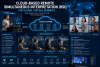
Cloud-Based Language Platforms
Many translation systems now operate through cloud infrastructure.
Benefits include:
- Rapid deployment
- Scalable processing
- Global accessibility
- Continuous model improvements
Interpreter Integration
Human interpreters increasingly work alongside AI systems through integrated platforms rather than isolated booths.
This creates more efficient workflows.
Cost Considerations
Budget discussions often drive translation decisions.
Human Interpretation Costs
Professional interpretation typically involves:
- Interpreter fees
- Travel expenses
- Accommodation
- Technical equipment
- Booth infrastructure
Costs increase as language requirements expand.
AI Translation Economics
AI solutions generally offer:
- Lower scaling costs
- Faster deployment
- Expanded language coverage
However, implementation still requires investment in software, infrastructure, and support services.
Evaluating Total Value
The lowest-cost solution is not always the most effective.
Organizers must consider:
- Audience expectations
- Event objectives
- Communication risk
- Content complexity
when determining appropriate language support strategies.
Challenges Facing Hybrid Models
While promising, hybrid approaches are not without challenges.
Accuracy Monitoring
Organizations need mechanisms to evaluate translation quality continuously.
Data Privacy
AI translation platforms may process sensitive conversations.
Data governance and compliance remain important considerations.
Technical Reliability
Translation systems depend on:
- Stable connectivity
- Cloud availability
- Audio integrity
Backup plans remain essential.
The Future of Interpretation Technology
Several emerging developments are expected to shape the next generation of multilingual events.
These include:
- Personalized translation streams
- AI voice cloning
- Speaker-preserving translations
- Real-time terminology adaptation
- Context-aware language models
- Spatial audio interpretation channels
- Mixed-reality language overlays
As these capabilities mature, language barriers will continue to diminish.
Conclusion
The debate between AI translation and human interpreters is increasingly becoming the wrong question for global event organizers. Rather than competing technologies, they are evolving into complementary components of a broader multilingual communication ecosystem.
AI translation provides scalability, accessibility, and cost efficiency that would be difficult to achieve through human interpretation alone. Human interpreters contribute contextual understanding, cultural intelligence, and precision that remain essential for high-stakes communication.
The most successful global summits in 2026 are finding a hybrid sweet spot—using AI to expand language access while relying on human expertise where accuracy, nuance, and trust matter most.
As translation technology continues advancing, the future of multilingual events will likely be defined not by choosing between humans and machines, but by integrating both in ways that create richer, more inclusive, and more effective global conversations.