Sennheiser Group reports stable performance amid shifting pro audio markets
Background and context
Sennheiser Group has released an update on its most recent financial year, highlighting how the company is responding to ongoing shifts in the global audio market. The family-owned manufacturer, known for its professional and consumer audio solutions, reported that the past year continued to be shaped by economic uncertainty, supply chain challenges, and changing customer demand across regions.
The company has undergone a notable transformation in recent years, focusing its activities around professional audio, business communications, and automotive audio partnerships, while its former consumer division now operates under a different structure. This strategic shift has placed greater emphasis on products and services used in live events, installed sound, and enterprise communication environments.
According to Sennheiser Group, the broader pro audio and AV industry has faced slower project cycles, cautious corporate spending, and varying levels of recovery in live events and touring. Within this context, the company positions its results as evidence of resilience, even as some segments grew more slowly than in previous post-pandemic rebound years.
Key announcement
In its latest report, Sennheiser Group outlined key financial and operational metrics, noting that revenue remained relatively stable year on year, with differences between regions and business units. While some areas experienced softer demand, others showed signs of solid growth, particularly in professional applications and business communications.
The manufacturer highlighted continued investment in research and development, with a focus on networked audio, digital workflows, and solutions tailored for hybrid work and education. Sennheiser also pointed to ongoing partnerships in the automotive sector, where it collaborates with vehicle manufacturers on in-car audio systems.
Management reiterated that the company will continue to prioritize its core professional markets, including live sound, studio, broadcast, and installed systems. This includes product lines used for conferences, corporate events, and performance venues, as well as tools that support content creation and production. Further details on products and initiatives are available via the company’s official website at sennheiser.com.
Industry impact
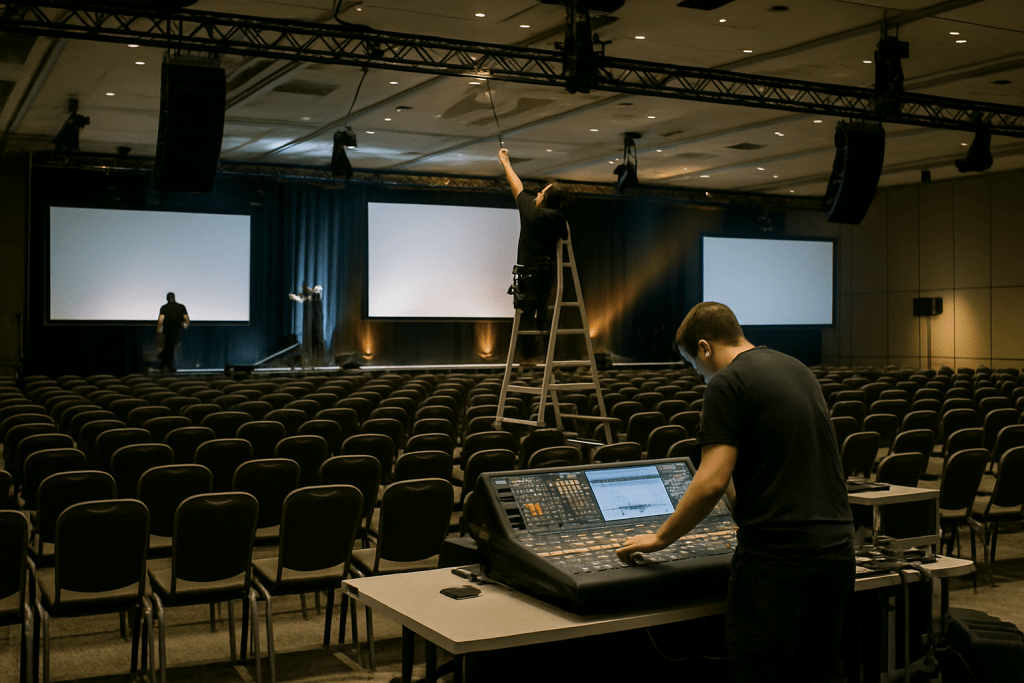
For event technology professionals, Sennheiser’s update offers a snapshot of how a major audio brand is navigating slower growth and shifting customer behaviour. The report suggests that, while large-scale capital projects may be delayed in some regions, demand remains for reliable audio solutions that support hybrid meetings, live events, and broadcast-style production.
Sennheiser’s emphasis on networked and software-integrated tools aligns with broader industry trends toward AV-over-IP, remote management, and scalable systems. This is particularly relevant for integrators and rental companies working across corporate, education, and government projects, where long-term planning and interoperability are increasingly important.
- In live sound, the company’s focus on professional wireless and stage solutions reflects the continued return of touring, festivals, and corporate shows.
- In installed sound, the push toward flexible, networked microphones and conferencing tools supports evolving meeting and collaboration formats.
- In automotive audio, Sennheiser’s work with car manufacturers underscores the growing crossover between consumer, mobility, and immersive listening experiences.
Why this matters
For the events and pro AV sectors, the Sennheiser Group update reinforces two key points: recovery is uneven, but long-term investment in professional audio remains a priority. Venues, enterprises, and production companies continue to look for solutions that can adapt to hybrid work patterns, flexible event formats, and tighter operating budgets.
Sennheiser’s decision to focus on professional, business, and automotive segments signals that manufacturers are rebalancing their portfolios toward areas with more stable and predictable demand. For event technology buyers, this could mean continued development of tools built specifically for conferencing, live production, and installed systems, rather than purely consumer-oriented products.
As global conditions remain changeable, the company’s results suggest that manufacturers with diversified professional offerings and strong service networks may be better positioned to support the evolving needs of rental, staging, and integration partners. For the wider industry, Sennheiser’s performance serves as one indicator of how resilient the professional audio market can be, even when broader economic conditions are uncertain.