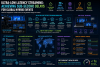
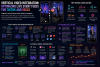
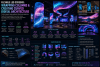
Video Solutions in Events: Architecting Visual Delivery Across Physical and Digital Channels
Introduction: Video as the Experience Layer
In modern events, video is no longer confined to screens—it is the primary layer through which content is delivered, amplified, and extended across audiences. From keynote presentations and live performances to hybrid streaming and on-demand content, video systems define how attendees see, interpret, and engage with an event.
As event formats expand beyond physical venues into hybrid and virtual ecosystems, video solutions must operate as integrated systems. They are responsible not only for capturing visuals, but also for processing, synchronizing, distributing, and adapting them across multiple channels in real time.
Core Components of Event Video Systems
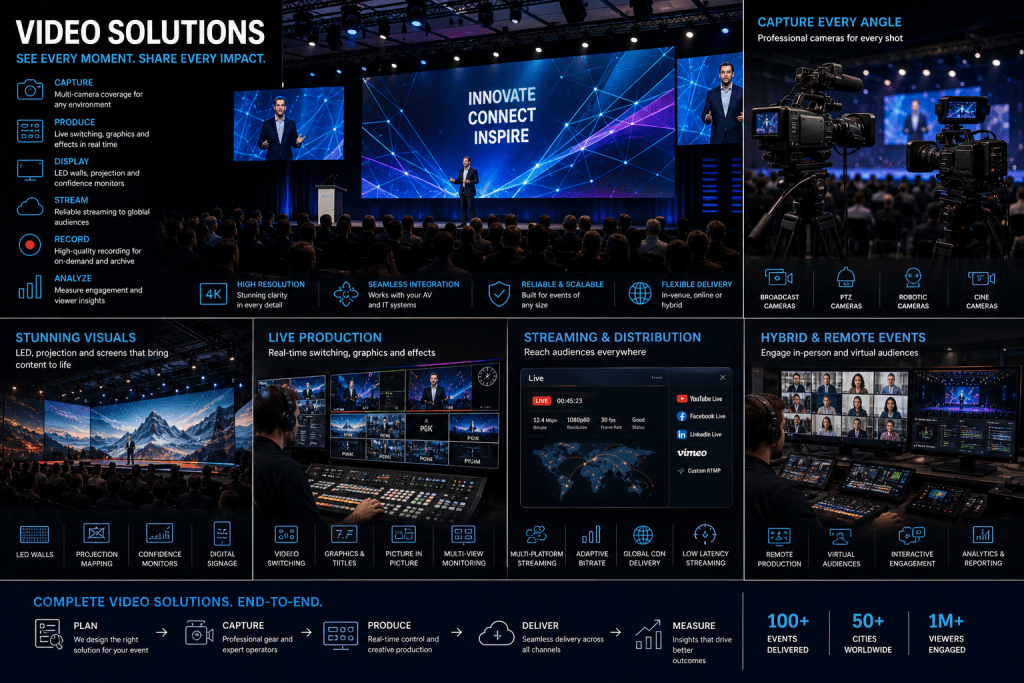
Capture Layer: Cameras and Inputs
Video systems begin with capture devices that acquire visual content.
These include:
- Broadcast cameras for stage coverage
- PTZ (pan-tilt-zoom) cameras for automated tracking
- Mobile and handheld cameras for dynamic shots
- Screen capture inputs for presentations and media
Multi-camera setups are common, enabling diverse perspectives and dynamic storytelling.
Processing Layer: Switching and Encoding
Captured video feeds are processed through switching and encoding systems.
Video switchers allow operators to:
- Select and transition between camera feeds
- Add overlays such as graphics and titles
- Manage picture-in-picture and multi-view layouts
Encoders convert video into formats suitable for streaming and distribution, balancing quality and bandwidth.
Rendering and Display Layer
Video content is rendered and displayed across various surfaces:
- LED walls for large-scale, high-brightness displays
- Projection systems for flexible visual mapping
- Confidence monitors for speakers
- Digital signage across venues
Display systems must maintain color accuracy, resolution consistency, and synchronization.
Distribution Layer: Multi-Channel Delivery
Modern event video systems distribute content across multiple channels simultaneously:
- In-venue displays
- Live streaming platforms
- Broadcast feeds
- Recording systems for on-demand access
This requires coordinated routing and low-latency delivery to ensure consistency.
Architectural Models: On-Premise and Cloud Video Systems
On-Premise Production
Traditional video production relies on on-site control rooms and hardware-based systems.
Advantages include:
- High reliability and control
- Low latency for live environments
However, scalability can be limited, particularly for global distribution.
Cloud-Based and Hybrid Video Architectures
Modern systems increasingly leverage cloud infrastructure.
Capabilities include:
- Remote production and switching
- Scalable streaming to global audiences
- Integration with content delivery networks (CDNs)
Hybrid models combine on-site capture with cloud-based processing and distribution, balancing performance and scalability.
Integration with Event Technology Ecosystems
Video systems are deeply interconnected with other event technologies.
Audio systems must be tightly synchronized with video to maintain coherence. Event data platforms integrate video analytics, enabling insights into viewer engagement and behavior.
Personalization systems can adapt video content based on audience profiles, while orchestration systems coordinate video playback with lighting, stage automation, and interactive elements.
In advanced environments, video integrates with XR systems and digital twins, creating immersive and interactive experiences.
Operational Considerations
Latency and Synchronization
Maintaining synchronization across audio, video, and interactive systems is critical, particularly in hybrid events.
Resolution and Bandwidth Management
High-resolution video requires significant bandwidth. Systems must balance quality with network constraints.
Redundancy and Reliability
Failover systems and backup feeds are essential to ensure uninterrupted delivery.
Scalability
Large events require systems that can handle multiple streams, formats, and audiences simultaneously.
Experience and Business Impact
Video solutions directly influence how events are perceived and experienced.
For in-person attendees, high-quality visuals enhance engagement and comprehension. For remote audiences, video is the primary medium of participation.
For organizers, video enables reach beyond physical limitations, supporting global audiences and extended event lifecycles through recorded content.
For sponsors, video provides opportunities for branding, storytelling, and measurable engagement.
Technical Challenges
Event video systems must address several challenges:
- Managing multiple camera feeds and formats
- Ensuring compatibility across devices and platforms
- Handling network variability in live streaming
- Maintaining consistent quality across environments
These challenges require robust system design and skilled operation.
Future Outlook: Intelligent and Immersive Video Systems
The future of event video lies in intelligent, adaptive systems.
AI-driven production tools will enable:
- Automated camera switching and framing
- Real-time content personalization
- Enhanced analytics and viewer insights
Advances in immersive technologies—such as volumetric video and XR—will expand how video is experienced.
Cloud-native architectures will further enable scalable, distributed production models.
Conclusion: Video as a System, Not a Component
Video solutions in events are no longer isolated tools—they are integrated systems that define how content is captured, processed, and experienced.
From stage displays to global streaming, every layer must operate cohesively to deliver consistent, high-quality visuals.
For event technology leaders, investing in advanced video solutions is essential to creating scalable, engaging, and future-ready event experiences.