Event Tech Atlas 2.0 refines discovery for event planners
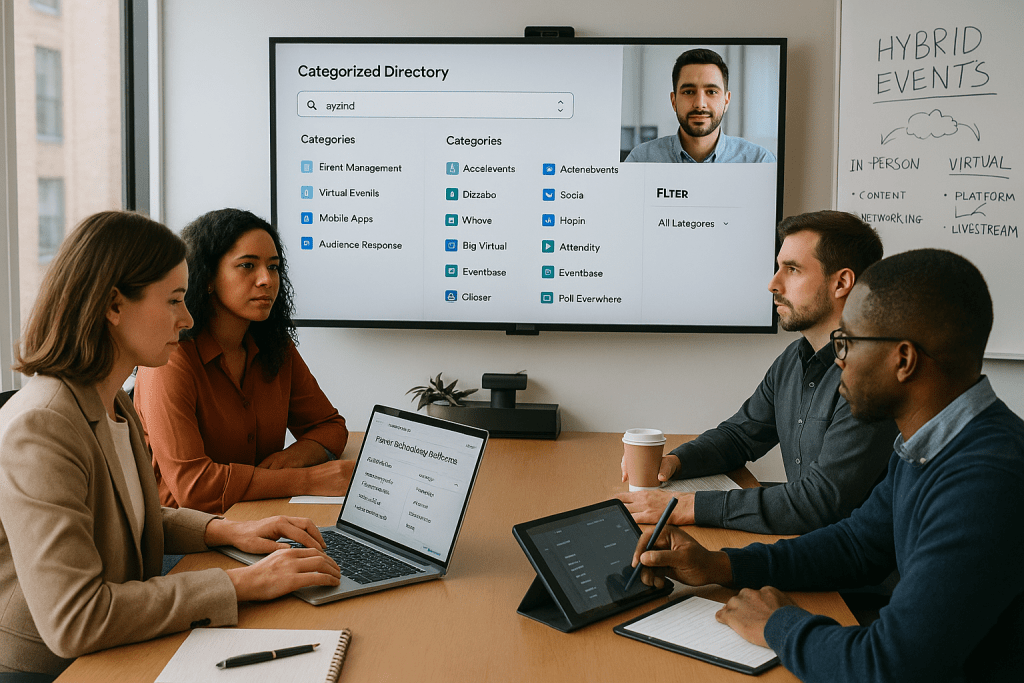
As the number of digital tools for meetings, conferences, exhibitions and hybrid experiences continues to grow, event professionals are under pressure to make faster, better-informed technology decisions. Event Tech Atlas (ETA), a decision-support platform built for the business events sector, has released a 2.0 update designed to simplify how planners and suppliers connect and evaluate solutions.
The latest version aims to tackle a familiar challenge in the sector: how to navigate an increasingly crowded marketplace of software providers, hardware vendors and service specialists without losing time or overlooking relevant options. Event Tech Atlas positions itself as a structured, searchable environment where organisers can identify technologies that fit their needs and suppliers can reach targeted buyers.
Background or industry context
In recent years, the event technology ecosystem has expanded rapidly, driven by virtual and hybrid adoption, data-driven marketing and changing attendee expectations. Planners now confront a fragmented landscape that spans registration platforms, mobile apps, audience engagement tools, streaming and production services, data analytics, and on-site hardware.
For many organisers, the volume of choice complicates procurement. Comparing capabilities, understanding integrations and verifying references can be resource-intensive, especially for teams managing multiple events or operating on compressed timelines. At the same time, suppliers must compete for visibility in a saturated market, where differentiation is often difficult to communicate through traditional sales and marketing channels.
Industry stakeholders have increasingly turned to curated directories, marketplaces and benchmarking tools to bridge this gap. Event Tech Atlas emerged in this context as a platform intended to centralise information about event technology offerings and connect buyers and sellers in a structured way.
Key developments in Event Tech Atlas 2.0
The 2.0 update refines Event Tech Atlas as a decision-support environment for both sides of the market. While the platform continues to function as a directory of event technology providers, the latest release places greater emphasis on guided discovery and practical comparison.
- Enhanced search and filtering: The platform offers more granular filters tailored to the event lifecycle, helping planners narrow results by use case, event format, geographic focus, and other operational requirements. This is intended to reduce time spent scanning broad lists of solutions.
- Structured solution profiles: Supplier listings are organised to highlight core capabilities, target customer segments, and typical deployments, supporting easier side-by-side evaluation. This structure is aimed at helping planners quickly determine whether a product aligns with their event type and scale.
- Decision-support orientation: Event Tech Atlas positions its environment less as a static directory and more as a tool for decision-making. The 2.0 iteration focuses on providing enough structured detail for planners to shortlist solutions and initiate more informed conversations with vendors.
- Dual value proposition: The platform continues to serve both planners and suppliers, aiming to make it easier for buyers to find relevant solutions and for vendors to appear in front of decision-makers who are actively researching event technology.
Event Tech Atlas co-founder Tess Vismale, CMP Fellow, has underscored that event professionals must leverage technology to streamline planning, but that the breadth of available tools can be overwhelming. The 2.0 update is intended to provide a clearer path through that complexity by tightening how information is presented and accessed.
Industry impact
The refinement of platforms like Event Tech Atlas reflects a broader industry shift toward specialised procurement aids in the events sector. Rather than relying solely on word-of-mouth recommendations, trade shows or cold outreach, planners increasingly seek consolidated, digital environments where they can survey the market and form an initial understanding of their options.
For suppliers, presence on a structured platform can support lead generation and brand positioning, especially for niche providers that may not have the resources for large-scale marketing campaigns. Being listed alongside peers in defined categories can also highlight differentiation on features, integrations or service models.
Industry observers note that such decision-support tools can contribute to more transparent competition by making it easier to compare solution types and understand where vendors overlap or diverge. Over time, this can influence how event technologies are packaged, priced and communicated, as suppliers respond to the way buyers discover and evaluate their offerings.
As the events industry continues to move between in-person, hybrid and fully digital formats, the need for reliable information on technology choices is unlikely to diminish. Platforms that surface relevant options quickly may help reduce the risk of misaligned purchases or fragmented tech stacks, particularly for planners managing portfolios of events across different regions and audience profiles.
Why this matters for event professionals and technology providers
For planners, the Event Tech Atlas 2.0 update is relevant on several levels:
- Time savings in research: Centralised, filterable information can shorten the initial discovery phase, allowing teams to spend more time on strategy, design and stakeholder engagement.
- Better-aligned shortlists: By focusing on use case and event type, planners can generate vendor shortlists that more closely match operational needs, which can improve the quality of demos and RFP processes.
- Support for evolving formats: As requirements shift between virtual, hybrid and on-site events, planners need to reassess their tech stacks regularly. A decision-support platform can serve as a recurring reference point when evaluating whether to extend, replace or consolidate tools.
For technology providers and service suppliers, the platform’s evolution offers:
- Targeted visibility: Vendors can present themselves to an audience already seeking event technology solutions, which may improve the efficiency of marketing and sales efforts.
- Clearer positioning: Structured profiles encourage suppliers to articulate their core use cases and ideal customer profiles, potentially leading to more relevant inbound enquiries.
- Market feedback signals: As planners search and filter within categories, suppliers can gain a better understanding of how their offerings are perceived and where there may be unmet demand.
For both sides, platforms like Event Tech Atlas can complement traditional channels such as industry events, peer recommendations and direct outreach, providing an additional layer of market intelligence when planning technology investments.
Conclusion
The release of Event Tech Atlas 2.0 underscores the growing need for structured decision-support in the event technology marketplace. By refining how planners discover and assess potential solutions, and how suppliers present their capabilities, the platform aims to reduce friction in a market that has expanded significantly in scope and complexity.
While the long-term impact will depend on adoption across both planners and providers, the update reflects a broader movement in the business events sector toward tools that prioritise clarity, comparability and efficient discovery. As event organisations continue to modernise their technology stacks, platforms built specifically to support those decisions are likely to become a more regular part of the planning toolkit.