Rise AV reveals 2026 APAC cohort for women in AV mentoring
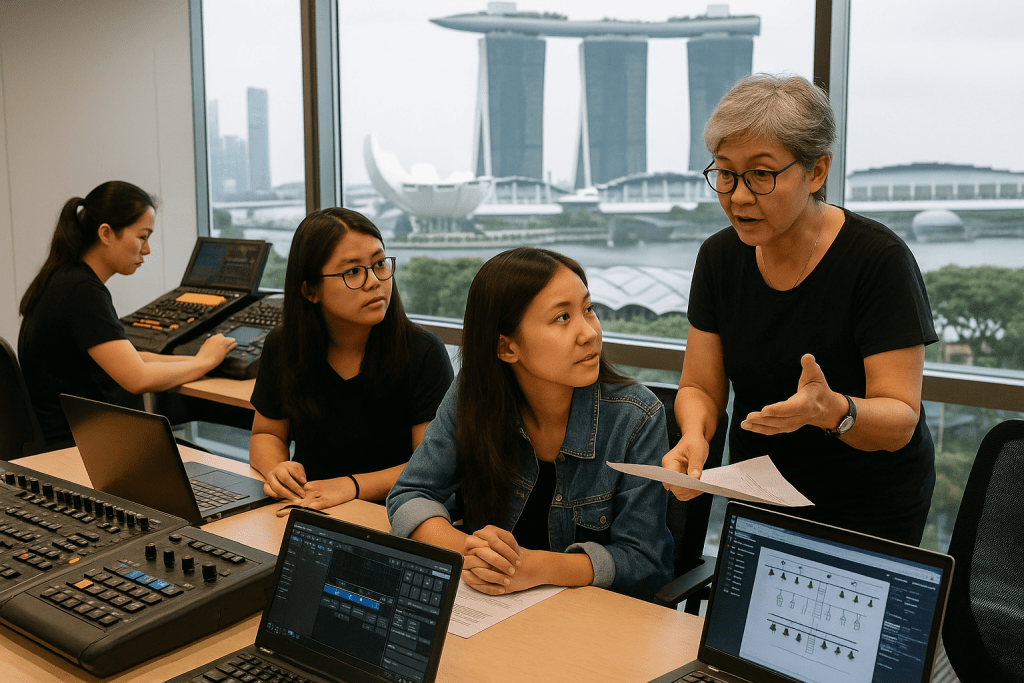
Rise AV has confirmed the first mentor–mentee cohort for its 2026 APAC Mentoring Programme, extending its structured support for women in the audiovisual (AV) and live events sector beyond its initial UK rollout. The initiative aims to strengthen career pathways, leadership development and retention for women across the region’s rapidly expanding AV ecosystem.
Background and industry context
The mentoring programme builds on the organisation’s earlier launch in the UK in January 2025, where a structured pairing model connected senior AV professionals with women at earlier or transitional stages in their careers. That model is now being adapted for the Asia-Pacific market, where demand for AV and event technology skills is rising in line with growth in conferences, experiential marketing, live entertainment and hybrid events.
Women continue to be under-represented in technical and leadership roles across AV integration, live production, broadcast, and venue technology operations. Industry surveys and anecdotal evidence from employers often highlight challenges such as limited access to role models, informal networks dominated by men, and fewer visible progression routes into senior posts.
In this context, structured mentoring is increasingly being used as a practical tool to address talent gaps and promote more diverse leadership pipelines. By pairing mentees with experienced industry figures, programmes such as Rise AV’s seek to provide targeted guidance on technical skills, stakeholder management, project delivery and career navigation specific to the AV and event technology environment.
Key developments in the 2026 APAC programme
For the 2026 APAC edition, Rise AV has confirmed mentor–mentee pairings drawn from a cross-section of the region’s AV and event technology community. While individual pairings and company affiliations have not been disclosed in detail, the cohort is understood to span areas including live event production, systems integration, venue operations, content delivery and enterprise AV.
The APAC programme has been enabled through financial and in-kind backing from supporters of Rise AV’s broader mission. This support has allowed the organisation to extend its operational reach, adapt its mentoring frameworks to regional needs, and coordinate programme logistics such as mentor recruitment, matching, and ongoing cohort management.
The structure of the APAC mentoring initiative is expected to broadly mirror the UK blueprint, typically involving:
- One-to-one mentoring relationships running over a defined term
- Regular scheduled meetings between mentors and mentees, often monthly
- Goal-setting at the outset, covering both technical competencies and career progression
- Supplementary group sessions, workshops or networking opportunities where feasible
Participants are usually drawn from a range of career stages, from early-career professionals and those moving into AV from adjacent disciplines, through to mid-level managers seeking to progress to leadership roles. Mentors typically include senior technical specialists, operations leaders, project directors and executives from across the AV and events value chain.
Industry impact and regional relevance
Asia-Pacific is among the fastest-growing regions globally for AV and live event technology. Large-scale exhibitions, corporate events, festivals and hybrid productions are driving demand for advanced audio, video, lighting and control systems, as well as for professionals who can design, deploy and operate these solutions.
However, many employers report persistent skills shortages, particularly in complex integration projects, broadcast-grade production for hybrid events, and large venue operations. At the same time, many organisations have set public diversity and inclusion objectives but lack structured mechanisms to support under-represented groups into senior roles.
Programmes that focus on women’s progression within AV can contribute to addressing both issues: expanding the available talent pool and supporting more inclusive leadership structures. When integrated into broader workforce strategies that include training, flexible work patterns and inclusive hiring practices, mentoring schemes may help organisations improve retention of skilled staff and reduce the costs associated with high turnover in technical roles.
For the APAC region, there are additional nuances, including varying cultural expectations around leadership, differing levels of industry maturity between markets, and a mix of local and multinational employers. A regionally focused mentoring programme can respond to these specifics more effectively than a purely global or generic scheme, by matching mentees with mentors who understand local market conditions, client expectations and regulatory frameworks.
Why this matters for event professionals and technology providers
For event organisers, agencies and venue operators, the development of targeted mentoring infrastructure in AV has several practical implications:
- More resilient technical teams: Structured development support can help ensure continuity of skills across busy event calendars, especially as hybrid and immersive formats increase complexity.
- Improved client outcomes: Diverse teams bring a wider range of perspectives to event design and problem-solving, which can translate into more creative and robust technical solutions.
- Stronger talent pipelines: Partnerships with initiatives like Rise AV’s mentoring programme can supplement in-house training, making it easier to attract and retain high-potential staff.
For AV manufacturers, integrators and platform providers selling into the events sector, the growth of mentoring programmes signals not only a social responsibility trend but also a market-shaping factor. Companies that align with such initiatives may find it easier to build relationships with skilled practitioners, gather user feedback, and demonstrate their commitment to the long-term health of the industry.
Vendors and service providers may engage by encouraging staff to participate as mentors, supporting mentees with access to training resources or demo environments, or collaborating on knowledge-sharing sessions that address emerging technologies such as IP-based production, advanced collaboration tools, extended reality (XR) in live events and data-driven audience engagement.
Conclusion
The confirmation of mentor–mentee pairings for the inaugural 2026 APAC Mentoring Programme marks a notable expansion of structured support for women across the region’s AV and event technology ecosystem. Building on a model first deployed in the UK, the initiative is designed to address both representation and skills challenges at a time when live, virtual and hybrid events are placing new demands on technical teams.
As the APAC cohort progresses, its outcomes—whether in the form of career progression, cross-company collaboration or new approaches to technical leadership—will be watched closely by event organisers, venues, AV suppliers and technology partners seeking practical strategies to strengthen and diversify their workforces. For an industry that relies heavily on specialist expertise and agile teamwork, the development of targeted mentoring infrastructure may become an increasingly important part of long-term planning.