New research exposes gaps in accessibility for business events
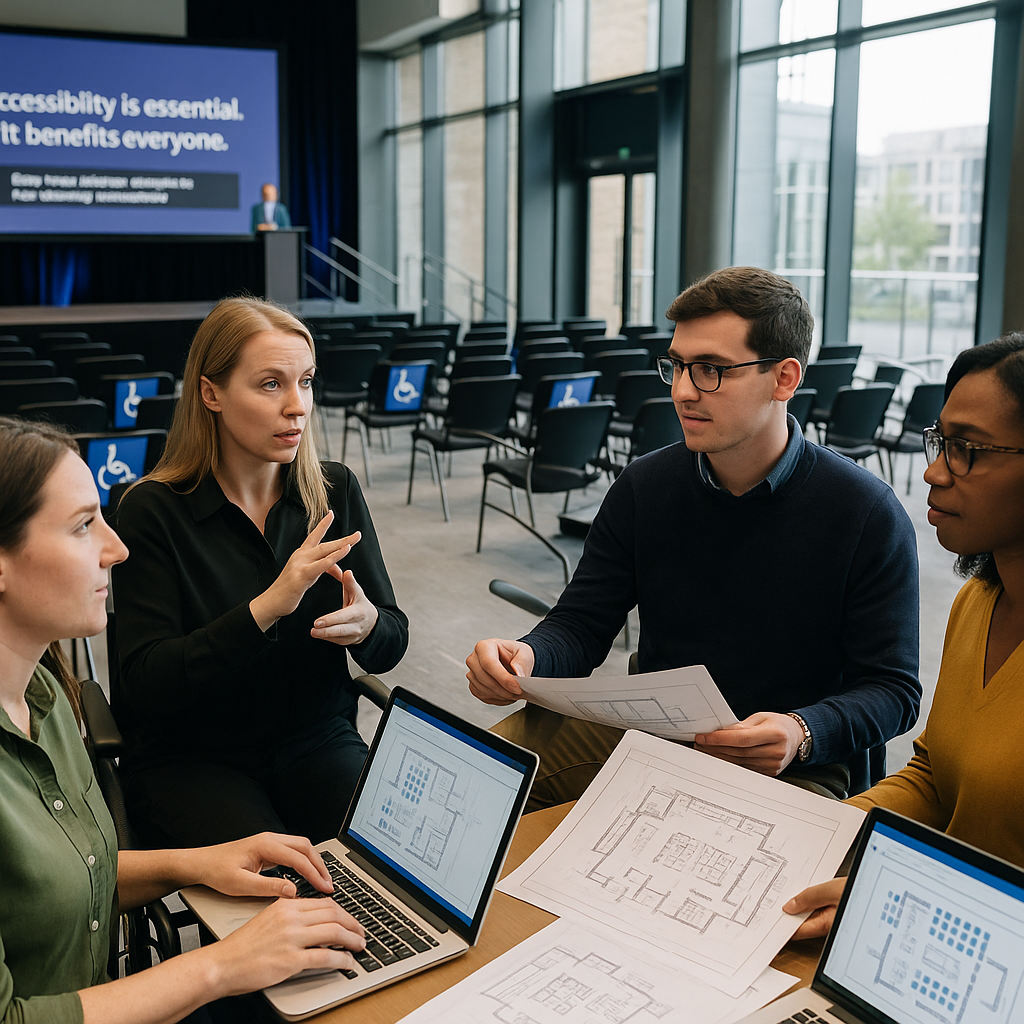
Many event planners are committed to making their conferences and meetings more inclusive, but a combination of uncertainty, limited expertise and constrained budgets is holding back progress on accessibility, new research indicates.
The study, released by The Business of Events in partnership with ICC Wales and accessibility specialist Dr Shani Dhanda, highlights a distinct gap between intention and implementation when it comes to creating accessible business events. The work is supported by the All-Party Parliamentary Group for Events and forms the latest phase of the ongoing “Access All Areas” initiative.
Drawing on feedback from more than 50 event planners gathered last month, the research suggests that while accessibility is widely recognised as a priority, many organisers still feel ill-equipped to deliver it consistently across in-person, hybrid and digital event formats.
Background and industry context
Accessibility has moved steadily up the agenda for the global events sector in recent years, driven by a combination of legislative requirements, diversity and inclusion strategies, and changing attendee expectations. Venues and technology providers have begun to introduce more inclusive design features, from step-free access and improved signage to captioning, sign-language services and assistive technologies in virtual platforms.
Despite this momentum, accessibility provision remains uneven. Large international conferences often have better resourcing and specialist support, while smaller meetings, association events and corporate programmes may lack the budget or internal capability to respond comprehensively to a wide range of accessibility needs.
The new findings suggest that, even where organisers are motivated to improve, they can struggle to navigate fragmented advice, interpret legal obligations and understand how to prioritise investment across physical, digital and content-related accessibility measures.
Key findings from the research
The latest phase of the “Access All Areas” work focuses on the practical experiences and concerns of event professionals responsible for planning and delivering business events in the UK. Based on responses from more than 50 planners, several themes emerge:
- Low confidence despite strong intent: Respondents broadly accepted that accessibility should be an integral part of event planning, yet many reported feeling uncertain about how to translate that principle into specific actions and standards across different event formats.
- Lack of clarity on requirements: Planners expressed confusion about what constitutes an appropriately accessible event, how far their responsibilities extend, and how to interpret guidance in areas such as communications, registration, content delivery and on-site logistics.
- Budget constraints: Financial pressure was cited as a major barrier, with some organisers indicating that accessibility-related costs, such as specialist support, additional staffing or adaptive technologies, are difficult to justify within existing budgets or to stakeholders focused on short-term return.
- Need for practical support: Respondents signalled a demand for clearer frameworks, checklists, training and supplier guidance that move beyond high-level statements and into repeatable, operational steps.
While the sample size is relatively modest, the responses provide a snapshot of systemic challenges facing organisers who are attempting to embed accessibility more deeply into their programmes.
Implications for venues and event technology providers
For venues, the research reinforces the need to move beyond basic compliance to a more collaborative approach with planners. Organisers are looking not only for physical accessibility, but also for proactive advice on layout options, signage, quiet spaces, accessible accommodation and transport links. Venues that can offer clear, structured information and ready-to-use resources may reduce the burden on planners who lack specialist knowledge.
Event technology providers face a similar challenge. Accessibility features now extend far beyond simple captioning or font adjustments; platforms are expected to support screen readers, keyboard navigation, multiple audio channels, flexible viewing options and accessible networking tools. The research suggests that many planners are not fully aware of what is possible, or how to configure tools effectively, leaving capabilities underused.
As a result, technology partners who can provide transparent documentation, accessibility statements and configuration guidance are likely to be better positioned to support clients. Integrations with assistive technologies, robust testing with diverse user groups and clear labelling of accessibility features can help bridge the confidence gap identified by planners.
Industry impact and policy considerations
The involvement of the All-Party Parliamentary Group for Events indicates that accessibility is increasingly being considered within wider policy discussions about the future of the events sector. Insights from the “Access All Areas” project may inform dialogue around best practice, potential incentives and the role of standards or accreditation schemes.
From an industry standpoint, there is a commercial dimension as well. Insufficiently accessible events risk excluding potential delegates, speakers and sponsors, and may expose organisers and venues to reputational or legal risks. Conversely, events that demonstrably accommodate a diverse range of needs can attract broader audiences and support corporate objectives around inclusion and social impact.
The research underscores that accessibility is no longer a specialist add-on but an operational consideration that touches every component of event design, from registration forms and customer service scripts to stage sets and streaming infrastructure.
Why this matters for event professionals and technology partners
For event planners, the findings highlight the importance of embedding accessibility into the earliest stages of event design rather than treating it as a late-stage checklist item. This may involve:
- Building accessibility requirements into RFPs for venues, production companies and technology platforms.
- Allocating dedicated budget lines for accessibility and communicating their strategic value to internal stakeholders.
- Seeking training or guidance on inclusive design, either through professional associations, specialist consultants or industry initiatives.
For technology providers and vendors, the research signals a need not just to develop accessible products, but to communicate their capabilities in clearer, more practical ways. Documentation, support teams and sales materials may all need to evolve so that non-specialist planners can understand what is available, how it works in real-world scenarios and what additional services may be required.
Both groups have a role to play in gathering feedback from attendees with disabilities and lived experience of accessibility barriers. Structured surveys, user testing and ongoing forums can help ensure that future investments in technology, venue modification and staff training are aligned with actual needs rather than assumptions.
Conclusion
The latest research from The Business of Events, ICC Wales and Dr Shani Dhanda confirms a persistent tension in the events sector: a strong desire to deliver accessible, inclusive experiences, offset by gaps in knowledge, confidence and financial resources. While the study focuses on a relatively small sample, it mirrors concerns heard more widely across the industry.
As business events adapt to evolving attendee expectations and hybrid formats, accessibility is emerging as a defining measure of quality and professionalism. Closing the gap between intention and delivery will require collaboration across planners, venues, technology providers and policymakers, alongside clearer guidance and practical tools.
The “Access All Areas” initiative is set to remain a reference point in this discussion, offering ongoing insight into where the sector is making progress and where further support is needed to ensure that accessible events become the norm rather than the exception.