WTM London marks first year under new event director
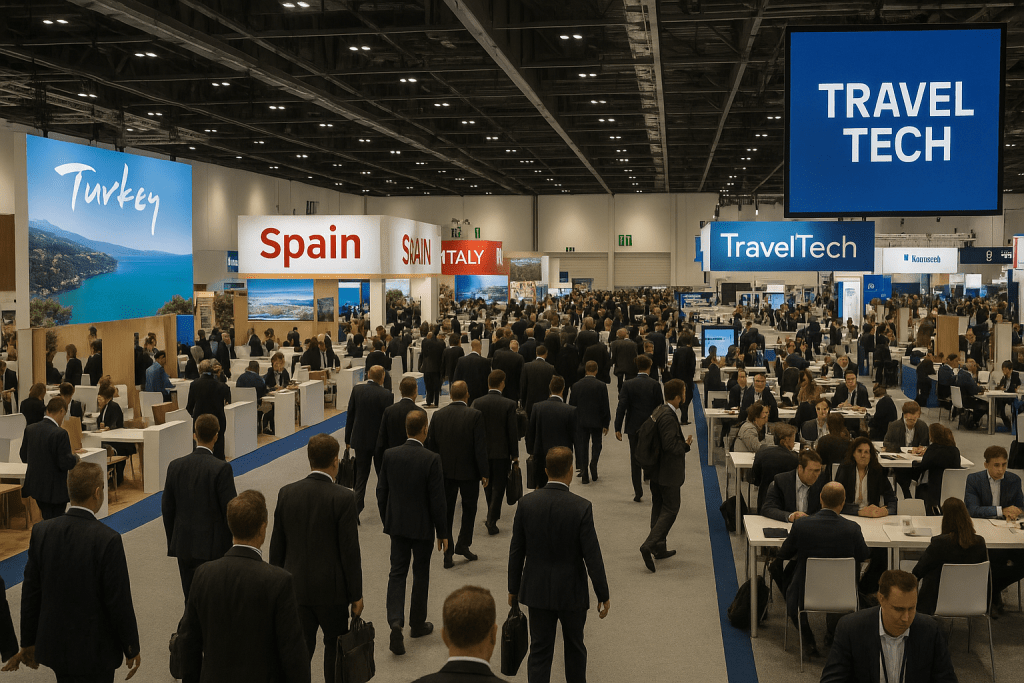
World Travel Market (WTM) London, one of the travel and tourism sector’s largest global marketplaces, has completed its first full show cycle under the leadership of event director Chris Carter‑Chapman at RX Global. His first year has focused on balancing the event’s long-established scale and heritage with a renewed emphasis on travel technology, innovation, and data-led visitor planning.
As the flagship London edition of the WTM portfolio, the show continues to play a central role in the international travel calendar, drawing exhibitors and buyers from across the world to ExCeL London each year. Under its current leadership, WTM London has been refining how attendees navigate the event, how technology is showcased on the floor, and how the show’s economic contribution is measured and communicated.
Background and industry context
WTM London operates in a period of rapid change for both the travel and events industries. Destination marketing organisations, tour operators, airlines and technology providers are under pressure to digitise services, personalise customer experience and respond to shifting traveller expectations. At the same time, large-scale B2B trade shows are evolving to offer more structured matchmaking, data insights and hybrid participation options.
Within this context, the travel technology segment has become a core driver of both content and commercial activity at major industry gatherings. Exhibitors increasingly seek platforms that not only showcase destinations but also enable them to present booking tools, distribution platforms, analytics, AI solutions and sustainability tech directly to decision-makers. For organisers, the challenge is to reconfigure large, traditional exhibition formats into experiences that support targeted meetings, measurable outcomes and smoother visitor journeys.
Key developments and new initiatives
Over the past year, the WTM London team has introduced and expanded several elements designed to reflect these shifts. A key focus has been the development of the WTM Travel Tech area and adjacent innovation zones, providing a dedicated environment for technology providers within the broader show.
The WTM Travel Tech hub brings together suppliers specialising in distribution, revenue management, booking and payment systems, marketing tools, CRM, data platforms and emerging AI-driven applications. Adjacent innovation spaces offer visibility for start-ups and early-stage solutions, enabling them to connect with established travel brands, investors and partners. This structure allows buyers and visitors interested in technology to navigate more efficiently to relevant products and services.
Alongside the exhibition floor, new and existing content streams around digital transformation, automation, sustainability technology and customer experience design have been positioned to complement the tech zones. Sessions in these areas aim to give attendees practical insights while reinforcing the role of WTM London as a convenor of debate on the future of the travel industry.
Visitor experience has been another area of focus. The event team has worked on refining the attendee journey through a combination of planning tools and on-site wayfinding. Digital scheduling features, agenda builders and improved exhibitor search functions seek to help buyers and visitors maximise their time at ExCeL London, while clearer zoning and signage aim to reduce friction once on the show floor.
On a logistical level, organising a show of WTM London’s size continues to require coordination across venues, transport and city infrastructure. ExCeL London’s location in east London, public transport links and surrounding hospitality options all play a role in how participants move between hotels, meetings and networking events. The event director’s first year has included close work with venue partners and local stakeholders to fine-tune these elements and maintain reliable access during peak show days.
Economic impact and strategic positioning
WTM London is widely regarded as a significant contributor to business generation in the global travel and tourism sector. While specific figures were not disclosed in the summary of the event director’s first year, the show is traditionally associated with substantial volumes of meetings between buyers and suppliers, which translate into future bookings, contracts and destination marketing activity.
The event also contributes to London’s visitor economy through accommodation, transport, hospitality and ancillary spending linked to the show. For RX Global, ensuring that this impact is recognised and sustained is a key part of the event’s positioning. The focus on technology, structured networking and curated zones is designed to reinforce WTM London’s status as a place where both long-term partnerships and tactical deals originate.
Strategically, the development of the travel tech and innovation offer is intended to secure WTM London’s relevance as more travel companies centralise technology decisions at senior levels. By offering both exhibition space and content dedicated to digital tools and platforms, the show positions itself as a meeting point where product, distribution, marketing and operations teams can evaluate solutions side by side.
Industry impact
The initiatives introduced during Carter‑Chapman’s first year underscore how major trade events are adapting to the digital and data demands of exhibitors and attendees. For technology vendors, having a clearly defined tech and innovation zone within a large, multi-sector travel show can influence where they allocate budgets and which events they prioritise in their annual calendars.
For destinations and travel brands, the tightening link between traditional tourism exhibitors and technology providers helps support conversations that go beyond brochure-led promotion. Discussions now increasingly cover integration with booking systems, content distribution, marketing automation, loyalty programmes and sustainability reporting tools.
The focus on attendee journey and logistics also reflects broader B2B event trends. Organisers are expected not only to provide space and content but also to actively reduce complexity in how visitors plan meetings, move through venues and discover new companies. The changes at WTM London align with a wider industry shift toward more data-informed event design, where insight from registration systems, app usage and dwell-time analysis feeds into layout and programming decisions.
Why this matters for event professionals and tech providers
For event professionals working on large-scale exhibitions and conferences, WTM London’s evolution offers a reference point for managing heritage events in fast-changing markets. The emphasis on dedicated technology zones, combined with a clear narrative around innovation, illustrates how sector-specific shows can reposition without alienating their traditional exhibitor base.
Operationally, the work on attendee planning tools and city-wide logistics highlights the need to coordinate closely with venues and local infrastructure, especially when events draw global audiences. Lessons around transport planning, time-slot management, lead generation tools and floorplan optimisation are increasingly transferable across sectors.
For technology providers in the travel and hospitality space, WTM London’s direction confirms that dedicated tech areas within broader industry shows remain valuable. These spaces allow vendors to reach both specialised technology buyers and senior commercial leaders who may not attend standalone tech conferences. The presence of innovation zones and start-up showcases also indicates ongoing demand for early-stage solutions addressing distribution, payments, personalisation and sustainability.
Conclusion
One year into his role as event director, Chris Carter‑Chapman has begun to put a clearer technology and innovation framework around WTM London while maintaining the event’s established role as a global marketplace for travel and tourism. The development of WTM Travel Tech, the introduction of innovation zones, and greater attention to attendee journey and logistics signal how legacy trade shows are reconfiguring to meet new expectations.
As the travel sector continues to navigate digital transformation, shifting traveller behaviour and economic uncertainty, WTM London’s organisers are positioning the event as both a barometer of industry sentiment and a platform for practical deal-making. For event organisers and technology suppliers alike, the show’s recent adjustments provide insight into how large-scale B2B events can evolve without losing the scale and international reach that make them influential in the first place.