Immersive dining and storytelling shape production of Robin Hood’s 2026 gala in New York
Background and context
The Robin Hood Foundation’s annual gala has long been one of New York City’s largest fundraising events, drawing high-profile donors and corporate leaders in support of anti-poverty initiatives. The 2026 edition continued that tradition, but placed an unusually strong emphasis on New York’s food culture and personal storytelling as core elements of the event design.
Instead of treating dinner as a backdrop to speeches and performances, the nonprofit and its production partners used the meal itself as a primary storytelling device. The approach reflects a broader shift in the fundraising and corporate event sectors, where organizers are looking for ways to build deeper emotional connections through immersive, multi-sensory experiences.
Alongside staging, lighting, and audiovisual production, culinary programming and narrative structure became central tools to explain Robin Hood’s mission and the communities it serves across the city’s five boroughs.
Key announcement
The 2026 gala showcased a production strategy that integrated New York food culture into nearly every aspect of the evening. Rather than a standard plated dinner, the event featured a curated selection of dishes, vendors, and flavors linked to the city’s diverse neighborhoods and immigrant communities.
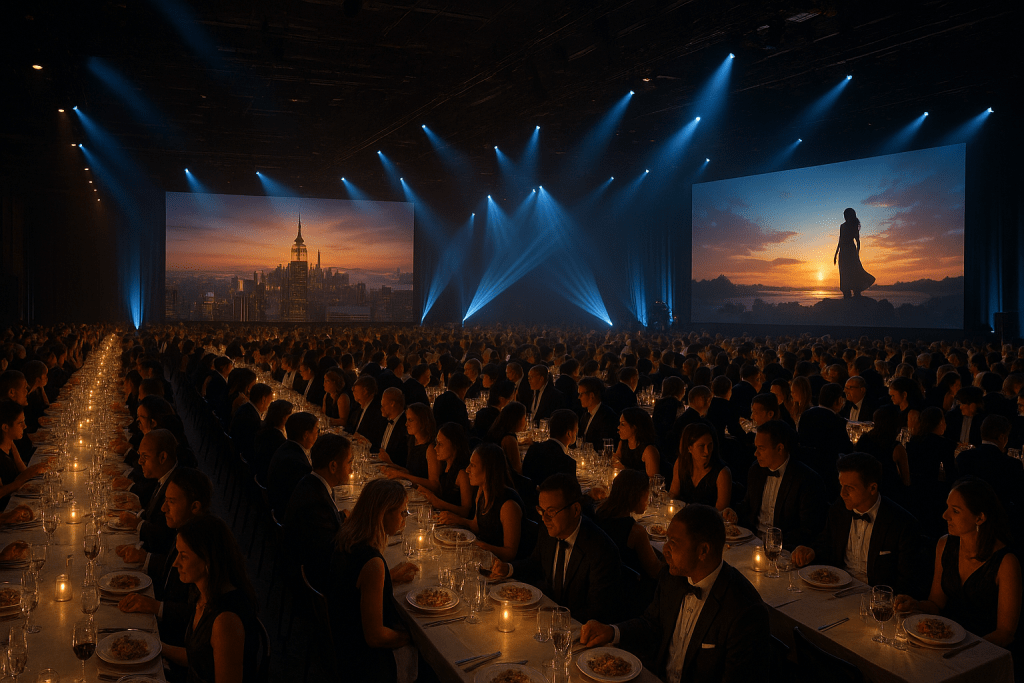
Throughout the night, guests moved through spaces designed to feel more like an immersive exhibit than a traditional banquet. Video content, ambient sound, and lighting cues were coordinated with the culinary timeline, aligning specific courses and food stations with stories of individuals and families affected by poverty and supported by Robin Hood–funded programs.
The event also made use of large-format LED displays, live camera feeds, and tightly scripted transitions to keep focus on the nonprofit’s impact while maintaining a sense of informality and discovery for attendees. According to materials shared on Robin Hood’s official site, the gala aimed to make the experience of poverty in New York feel immediate and personal, rather than abstract or purely data-driven.
Industry impact
For event producers, the gala offers a clear example of how immersive food experiences and narrative design can be integrated into large-scale fundraising environments. The format moves away from the predictable pattern of cocktails, dinner, speeches, and entertainment, toward a more fluid structure where story and setting evolve together over the course of the evening.
This approach has implications beyond the nonprofit sector. Corporate meetings, brand launches, and association conferences are increasingly exploring similar methods—using localized culinary themes, staged vignettes, and synchronized media to communicate complex messages in more accessible ways.
- Technical teams are asked to coordinate lighting, audio, and video with the pacing of service and guest movement.
- Catering partners become core collaborators in narrative planning, not just service providers.
- Content producers must think spatially, designing stories that unfold across multiple touchpoints rather than a single main stage.
The Robin Hood 2026 gala illustrates how these elements can be executed at scale for a high-stakes fundraising objective.
Why this matters
As audiences grow more accustomed to immersive entertainment and experiential retail, expectations for live events are changing. Organizers are under pressure to deliver formats that feel distinctive and emotionally resonant, particularly when asking attendees to support a cause or invest in a brand.
The 2026 Robin Hood gala underscores several trends likely to influence event planning over the next few years:
- Local culture as content: Cities and communities are becoming raw material for storytelling, with food, music, and neighborhoods used as narrative anchors.
- Hybrid roles for suppliers: AV, catering, and decor providers are increasingly part of a single, integrated creative strategy rather than separate workstreams.
- Impact-driven design: Especially in the nonprofit space, production decisions are judged not only by aesthetics but by how well they convey mission and outcomes.
For event professionals, the gala serves as a case study in how to blend hospitality, technology, and storytelling to deepen engagement. As budgets and stakeholder expectations evolve, this kind of integrated, mission-aligned design is likely to become less of a novelty and more of a standard for large-scale experiential events.