Wine tasting data powers smarter sales at major London showcase
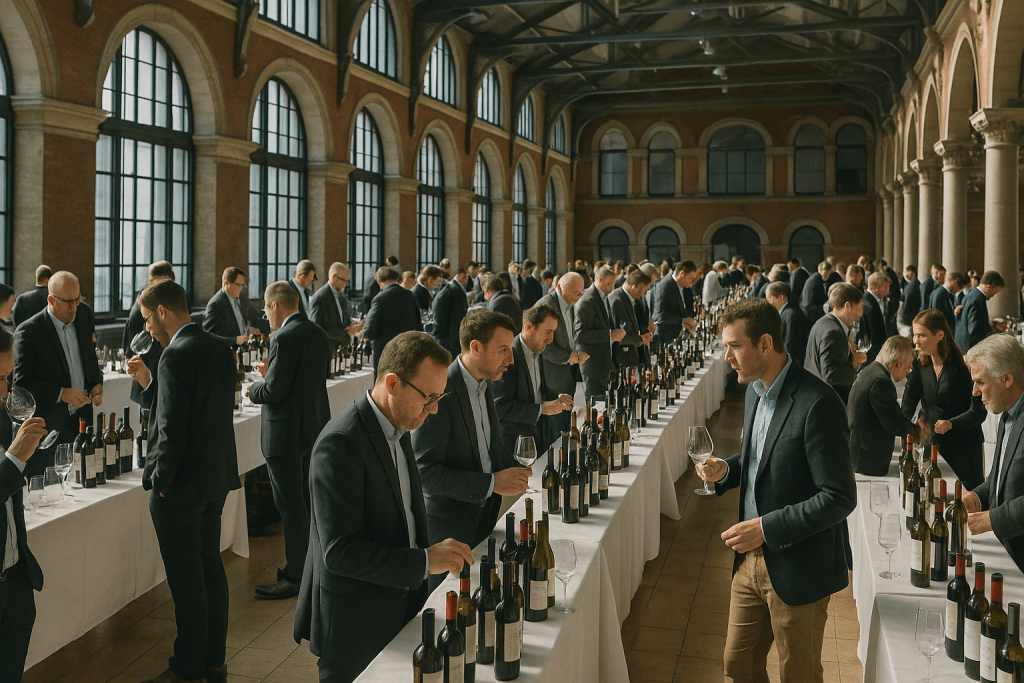
For UK wine importer Hallgarten & Novum Wines, the annual portfolio tasting in London has evolved from a traditional showcase into a critical source of commercial insight. Rather than treating the event as a stand-alone hospitality exercise, the company has built it into a structured data and feedback mechanism that informs sales, buying and marketing activity long after the doors close.
Staged each February at Old Billingsgate, the two-day tasting brings together trade buyers, hospitality operators, producers and selected media. The event operates at scale, with hundreds of wines poured and a high concentration of decision-makers on the floor. That intensity has pushed Hallgarten & Novum Wines to adopt more disciplined ways of capturing what happens at each table – and connecting it back to revenue.
Background: tastings under pressure to prove value
Across the events and exhibition landscape, organisers are under growing pressure to demonstrate measurable outcomes. For B2B tastings, roadshows and showcases in particular, the traditional metrics of footfall and anecdotal feedback no longer satisfy commercial teams or finance leaders.
In the drinks sector, portfolio tastings remain an important route to market, but they are resource-intensive and highly competitive. Suppliers and importers host their own events while also exhibiting at broader trade fairs, making it harder to stand out. In parallel, buyers are more data-driven, benchmarking products and suppliers against performance and consumer demand.
This shift mirrors a wider pattern across business events. Organisers are moving from measuring engagement in broad terms to tying individual interactions – such as a stand visit, tasting, or meeting – to future purchasing behaviour, pipeline movement and customer retention. As a result, event data collection, analytics and integration with CRM systems have become core considerations in event design.
Key developments at Hallgarten & Novum Wines’ portfolio tasting
Within this context, Hallgarten & Novum Wines has reframed its flagship tasting as a structured intelligence-gathering exercise. While the event retains all the elements of a classic wine portfolio showcase – producers on hand, themed tables, and a broad spectrum of styles and regions – the operational focus has expanded to include robust data capture.
Pre-event registration is used not only for capacity planning but also to profile attendees by segment, such as on-trade, off-trade, regional group, or independent buyer. This segmentation allows the team to prepare targeted tasting routes and ensure key accounts engage with relevant producers and ranges.
During the event, staff and representatives collect feedback from buyers on specific wines, pricing, and potential listings. While the exact toolset and platforms employed are not publicised in detail, the process is designed to ensure that feedback is attached to individual contact records rather than retained only in the memories of sales teams.
Post-event, the information is consolidated and shared across commercial and buying functions. Wines that generate significant interest at the tasting, or that consistently receive positive feedback from particular buyer segments, are flagged within the sales pipeline. Similarly, producers gain a clearer picture of which markets and channels show the strongest potential for their ranges.
From showcase to sales intelligence engine
The portfolio tasting now plays a defined role in Hallgarten & Novum Wines’ annual sales calendar. Instead of acting solely as a hospitality touchpoint, the two-day gathering serves as a concentrated testing ground for new listings and a barometer for how existing wines are performing in the trade.
Because the event is positioned early in the year, the intelligence gathered helps shape buying decisions and promotional planning for subsequent months. Insights into varietals, price points and regions that resonate with different buyer profiles can inform allocation strategies and marketing focus.
The company also benefits from seeing macro-level patterns across the event. Comparing attendance and engagement by category or country of origin, for example, can highlight where education, repositioning or portfolio adjustments may be required. Over multiple years, this data becomes more powerful, allowing teams to identify trends rather than relying solely on one-off impressions.
Industry impact for business events and tastings
Hallgarten & Novum Wines’ approach illustrates how sector-specific events can be re-engineered as data-rich environments without undermining the attendee experience. For the wine trade, this can mean moving beyond basic tasting notes and order forms to a more structured collection of preference and intent signals.
For the broader events industry, it provides a case study in how live, in-person interactions can feed digital systems in a way that supports long-term commercial strategy. The model aligns with practices in other B2B verticals where exhibitors use lead retrieval, badge scanning and behavioural analytics to track which content, products and conversations correlate with subsequent deals.
The use of a single, recurring venue such as Old Billingsgate also simplifies operational planning, allowing the organiser to refine floor plans, traffic flows and staffing patterns based on historical data. Over time, this can improve the quality of interactions and the density of relevant meetings per attendee.
Why this matters for event professionals and technology providers
For event organisers working with corporate or trade clients, the Hallgarten & Novum Wines example underscores several priorities:
- Designing events around decision points: Structuring programmes so that key decision-makers are supported to sample, compare and discuss products in a way that can be captured and acted upon.
- Integrating data with CRM and sales workflows: Ensuring that feedback from tastings, demos or showcases flows directly into existing customer systems rather than sitting in spreadsheets or personal notes.
- Measuring event impact over time: Using repeat events to build longitudinal data sets on preferences, demand and engagement, rather than treating each edition in isolation.
For event technology vendors, the case highlights ongoing demand for tools that can operate seamlessly in busy, informal environments like tastings. Solutions that enable quick identification of attendees, simple feedback capture at product level, and robust offline functionality are particularly relevant where Wi-Fi conditions may be variable.
There is also scope for platforms that can map event behaviour – such as which tables or zones were visited, and for how long – against subsequent purchasing data. This type of linkage is increasingly important for organisers seeking to justify investment in larger venues, multi-day formats and international travel.
Conclusion
Hallgarten & Novum Wines’ London portfolio tasting demonstrates how a long-established event format can be rethought as a strategic data asset. By embedding feedback collection and follow-up processes into the fabric of the event, the company turns each pour into a potential signal about future sales.
As budgets tighten and expectations for demonstrable ROI grow, more organisers are likely to follow a similar path – using technology and process design to capture the value of live interactions. For the event technology ecosystem, that trend creates ongoing opportunities to build tools that translate on-site engagement into clear, commercially relevant intelligence.