Bombay Sapphire Distillery elevates experiential event design
Corporate and brand events are increasingly expected to offer more than a room, a stage and a schedule. As attendees return to in-person and hybrid formats, organisers are looking for spaces that can deliver immersive environments, strong storytelling and a sense of place. One example of this trend is the Bombay Sapphire Distillery in Hampshire, which has positioned itself as an experiential setting for meetings, product launches and incentive programmes in addition to its core role as a working distillery.
Background: experiential venues in a changing event landscape
The shift towards experience-led events has accelerated in recent years as organisations compete for delegate attention and justify travel. Traditional conference centres still play a central role, but more planners are exploring destinations that offer distinctive architecture, built-in narratives and on-site activities that go beyond standard hospitality.
At the same time, attendees are more conscious of environmental impact and authenticity. Venues with a demonstrable commitment to sustainability, adaptive reuse of historic buildings and integration with their local surroundings are gaining traction with event buyers who need to align programmes with corporate ESG policies.
Within this context, operational sites such as distilleries, breweries and production facilities have become attractive alternatives. They can provide ready-made storytelling about craft, process and innovation, and they often sit within architecturally interesting or repurposed industrial settings that lend themselves to creative event design.
Key developments at the Hampshire distillery
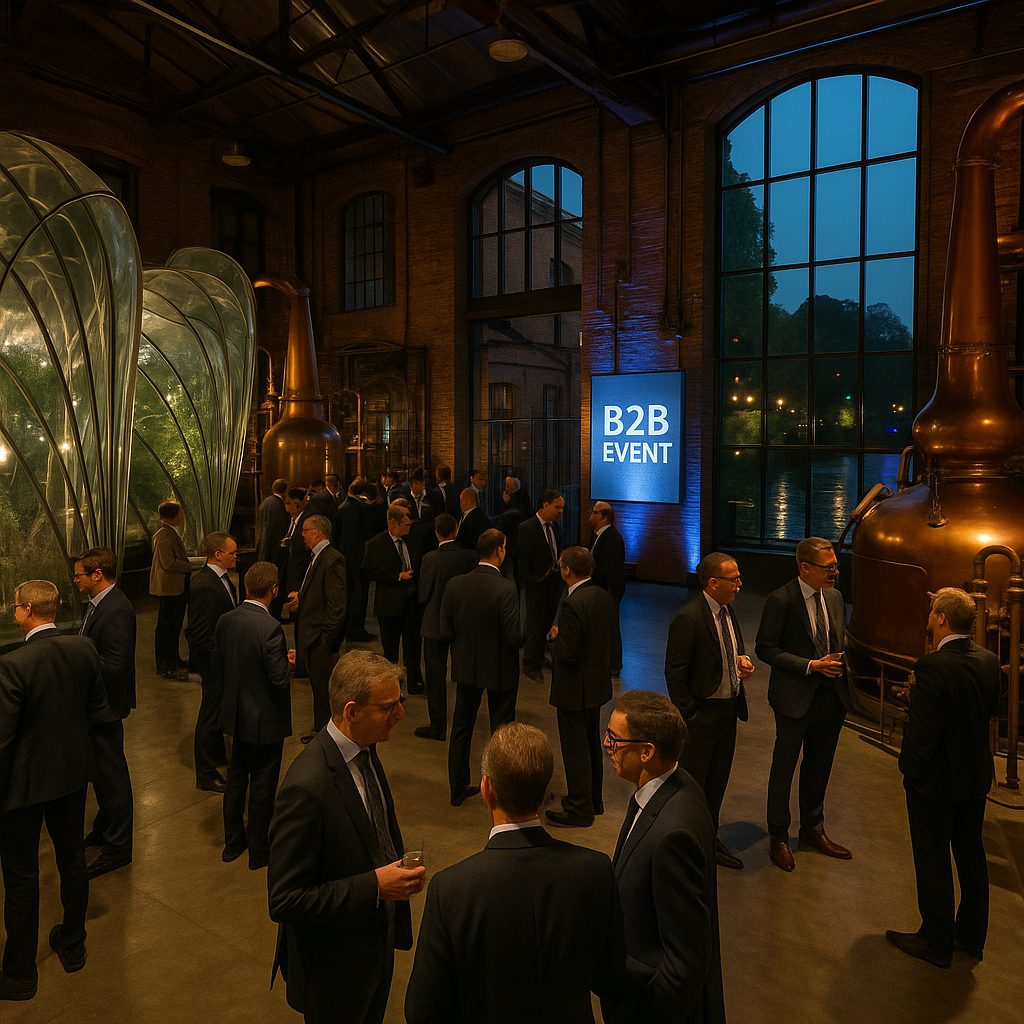
Located at Laverstoke Mill in rural Hampshire, the Bombay Sapphire Distillery has evolved into a multi-purpose destination that blends visitor experience, brand education and private events. The site, set along the River Test, incorporates restored historic mill buildings and contemporary glass structures that house the distillery’s botanical glasshouses.
For event professionals, the location offers a range of flexible spaces that can be configured for corporate meetings, dinners, product demonstrations and team-building sessions. While precise capacities and technical specifications can vary by layout, the venue’s portfolio typically includes:
- Meeting and presentation rooms in refurbished mill buildings suitable for briefings, workshops and small conferences.
- Hospitality areas that can host receptions, networking sessions and private dining, incorporating views of the distillery and surrounding countryside.
- Access to the distillery experience, which can be integrated into event programmes as guided tours or curated brand storytelling sessions.
The venue’s design emphasises the connection between the manufacturing process and the surrounding natural environment. Glasshouses showcase the botanicals used in production, and water from the River Test flows through parts of the site. For events, this combination of working facility and designed landscape can support narratives around craftsmanship, innovation and sustainability.
Industry impact: blending production sites with event infrastructure
The development of the distillery as an event-ready destination highlights a broader industry move towards activating non-traditional venues for B2B and brand experiences. For organisers, such locations offer:
- Built-in content: The production story and heritage of the site provide natural material for keynotes, workshops and product storytelling without requiring extensive set-building.
- Distinctive aesthetics: Architectural features, such as restored brickwork, glasshouse structures and water features, can reduce the need for heavy theming and create recognisable visuals for marketing and social media.
- On-site experiences: Tours, tastings and interactive sessions can be layered into agendas to keep delegates engaged throughout the event day.
For venue owners and brands, investing in event infrastructure can open additional revenue streams and deepen relationships with trade partners, distributors and corporate clients. It also allows them to control how their production stories are told, turning the venue itself into a live brand asset.
The Bombay Sapphire Distillery’s approach illustrates how a manufacturing site can double as an event platform without compromising day-to-day operations. By aligning visitor and event flows with production schedules, and by designing spaces that work both for tours and for private hire, the site demonstrates a model that other producers in food and beverage, design and manufacturing may choose to follow.
Why this matters for event professionals and technology providers
For planners, the rise of experiential production venues has several practical implications. Programme design must consider how to integrate the site’s core narrative into the event agenda, rather than simply using it as a backdrop. This can mean aligning keynote themes with the venue’s focus on craft or innovation, scheduling factory or distillery tours between content sessions, and using tasting or demonstration experiences as networking tools.
Event technology providers also have a role to play in making these complex sites work for hybrid and digitally augmented formats. Non-traditional venues often have constraints around connectivity, floor loading or rigging that differ from purpose-built conference centres. Robust Wi-Fi, reliable power distribution and flexible AV setups are essential to support live streaming, interactive sessions and data capture within heritage or industrial buildings.
In settings like the Hampshire distillery, technology can extend the impact of the physical environment. Examples include:
- Augmented or virtual tours for remote participants, allowing them to explore production areas alongside in-person delegates.
- Second-screen experiences that provide ingredient details, sustainability data or process information while participants move through the site.
- Capture and distribution of high-quality video and photography that show both the event content and the venue’s distinctive features for post-event amplification.
Aligning technical delivery with venue storytelling requires early collaboration between organisers, in-house venue teams and external production partners. Understanding load-in routes, noise restrictions, lighting limitations and heritage considerations is crucial to prevent technical surprises on site.
Conclusion
The Bombay Sapphire Distillery’s evolution into an event-ready destination underlines how heritage locations and working production sites can be reimagined as strategic platforms for business events. By combining restored industrial architecture, an operational distillery and curated visitor experiences, the site offers organisers a way to move beyond standard venue formats and deliver programmes that embed brand narratives into the physical environment.
As demand grows for differentiated in-person and hybrid experiences, more brands are likely to explore similar models, transforming their own facilities into places where events can double as live, immersive expressions of their identity. For the wider event ecosystem, this trend will continue to reshape expectations around venue selection, technical planning and the role of place in event design.