Inflatable structures reshape temporary event spaces

Introduction
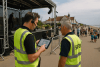
Inflatable structures, once seen as niche or novelty installations, are increasingly being specified as serious alternatives to traditional temporary venues at trade shows, conferences and outdoor events. At Confex 2026, Evolution Dome’s co-founder and director Ash Austin discussed the company’s 15-year journey in the sector, outlining how advances in design, safety, and operations are changing how organisers think about temporary space.
In conversation with interviewer James Dickson, Austin highlighted the practical benefits of inflatable venues—ranging from rapid deployment and improved acoustics to wind performance and climate control—alongside new resources and products aimed at clarifying standards in a still-evolving segment of the event infrastructure market.
Background or industry context
Temporary structures are a core component of the global events industry, spanning everything from basic marquees to complex modular pavilions. As event organisers seek faster builds, reduced onsite disruption, and more sustainable options, non-traditional formats such as inflatables have gained traction. Their appeal is rooted in portability, reduced transport volumes and the ability to create enclosed, branded spaces within existing venues or in outdoor locations.
Over the past decade and a half, Evolution Dome has specialised solely in inflatable structures for events, exhibitions and brand activations. The company’s portfolio has been deployed across conferences, outdoor festivals, corporate roadshows and trade fairs. During that period, the market has become more demanding around compliance, safety assurance and environmental performance, pushing providers to document and standardise their approaches.
What was once regarded as a visually striking, but perhaps secondary, option is now being assessed alongside more conventional structures on criteria such as structural calculations, wind ratings, fire certification, accessibility and energy consumption for heating or cooling. This shift is prompting suppliers to invest in education and transparency to help event buyers understand where inflatables fit within their infrastructure strategies.
Key developments and announcements
At Confex 2026, Austin outlined several developments within Evolution Dome’s business and the wider inflatable structures category, including new educational material and product innovation.
- Operational advantages in deployment – Austin emphasised the speed with which inflatable structures can be installed and de-rigged. Most systems are transported in compact form and inflated on site, reducing the number of vehicle movements and allowing structures to be built in tight time windows between tenancy periods or overnight changeovers. This can be critical for busy exhibition centres or venues with limited loading access.
- Acoustic and climate considerations – Modern inflatable designs incorporate double-skinned walls and internal air chambers that can help manage sound spill and reverberation. According to Austin, this allows planners to create quieter meeting rooms, theatres or content stages within otherwise noisy exhibition halls. The air-filled skin can also offer insulation properties, supporting temperature control strategies when combined with appropriate HVAC equipment.
- Wind ratings and safety credentials – One of the recurring questions around inflatables is their performance in challenging weather. Austin highlighted that current models are engineered and rated to specific wind speeds and are supplied with documentation and anchoring systems to meet regulatory requirements. He stressed that adherence to manufacturer guidelines and appropriate risk assessments are essential, particularly for outdoor events.
- The “Pink Book” educational guide – To address ongoing uncertainty among organisers, venues and safety officers, Evolution Dome has launched a reference guide informally known as the “Pink Book”. The publication is designed to explain how inflatable structures are constructed, the standards they are tested against, and the documentation available for event planners, including structural calculations, fire certifications and wind-loading data. The aim is to give stakeholders a single resource they can share with operations, health and safety teams, and local authorities.
- Introduction of the Nexus Pod – Austin also announced a new product, the Nexus Pod, positioned as a private inflatable space that can be used for meetings, breakout sessions or content capture. The design focuses on privacy, acoustics and comfort, offering a contained environment that can be deployed quickly within larger halls or outdoor compounds. The Nexus Pod adds to the company’s catalogue of domes, tunnels and modular inflatable rooms.
Industry impact
The developments outlined at Confex 2026 reflect a broader professionalisation of the inflatable structures market. As organisers and venues become more familiar with inflatable solutions, expectations are rising around detailed technical information and consistency of delivery.
The publication of the “Pink Book” is likely to support smoother pre-event planning by providing evidence and terminology aligned with the way local authorities, venue operations teams and independent safety consultants work. This could reduce friction in approvals processes where inflatable structures are still relatively new compared with conventional marquees or modular builds.
The focus on documented wind ratings and safety performance is also part of a wider industry conversation about risk management at outdoor events. With weather patterns becoming more unpredictable, organisers are being pressed to demonstrate thorough planning for structures of all types. Clear data and guidance specific to inflatables may help integrate them more seamlessly into these plans.
Product developments such as the Nexus Pod additionally suggest that inflatables are moving beyond simple open domes into more specialised use cases. Dedicated pods for private meetings, studios or hybrid broadcast spaces could become a common feature at exhibitions and conferences seeking flexible, short-term infrastructure that can scale up or down between editions.
Why this matters for event professionals and technology providers
For event organisers, agencies and production companies, the evolution of inflatable event structures offers several practical considerations:
- Flexibility in venue design – Inflatables can be deployed rapidly to create theatres, breakout rooms or branded environments within existing halls, reducing the need to source additional venue space. This may be particularly relevant as events adapt to fluctuating attendee numbers and evolving programme formats.
- Operational efficiency – Lower transport volumes and faster installation can help contain labour costs and shorten build schedules. This is significant for organisers working within tight tenancy slots or with limited access to loading bays at city-centre venues.
- Support for hybrid and content-led formats – Enclosed pods such as the Nexus Pod can be used for live-streaming studios, podcast recording, sponsor-led content hubs or VIP meeting spaces—functions that have grown in importance as hybrid and on-demand content models mature.
- Compliance and stakeholder confidence – Resources like the “Pink Book” make it easier to brief internal teams and external authorities on how inflatable structures meet safety and structural standards. This can reduce uncertainty when introducing newer infrastructure types into established event plans.
For technology providers and suppliers, the growth of inflatable venues creates adjacent opportunities. AV and production companies can design packages specifically tailored to acoustic and structural characteristics of inflatables. Event tech vendors might also consider how check-in, access control or analytics tools integrate with temporary spaces that can be deployed or reconfigured late in the planning cycle.
Conclusion
Fifteen years after Evolution Dome entered the market, inflatable structures are emerging as a credible, documented component of the temporary infrastructure toolkit for events. The combination of educational initiatives, such as the “Pink Book”, and product innovations like the Nexus Pod signals a maturing sector that is responding to the operational and compliance demands of organisers, venues and safety regulators.
As event formats continue to evolve—driven by hybrid delivery, sustainability pressures and cost management—the appetite for flexible, quickly deployable structures is likely to remain strong. Inflatables will not replace all traditional temporary venues, but they are increasingly positioned as a practical option where speed, acoustics, and adaptable space are priority considerations.