Immersive 1890s Paris Experience Showcases AV-led Storytelling
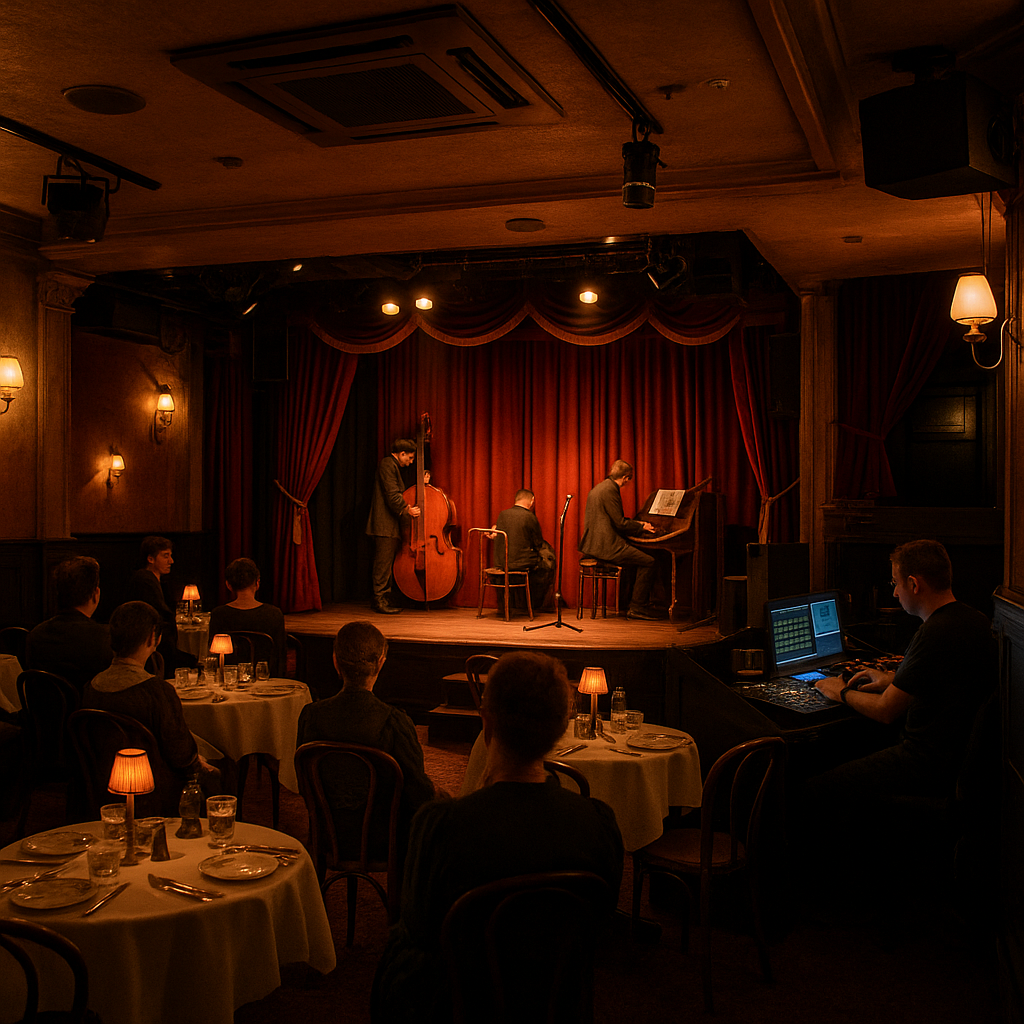
A new London-based immersive production is using advanced audio-visual design to transport audiences to the cabaret world of 1890s Paris, underlining how theatrical storytelling, experiential dining and event technology are converging in live entertainment.
The experience, titled CHAT NOIR!, is the latest large-scale production from The Lost Estate, an organisation known for staging narrative-led, multi-sensory shows that blend performance, food, and environmental design. The company has previously recreated eras such as 1950s Cuba, 1930s New York and Victorian Christmas settings through its immersive formats.
Background: immersive dining and theatrical worlds
Immersive dining concepts have become a growing segment within live events, as producers seek new ways to hold attention and increase dwell time while commanding premium ticket prices. The format typically merges storytelling, set design, live performance and hospitality, demanding a tightly integrated technology backbone.
The Lost Estate has built its reputation around these hybrid experiences, positioning each production as a fully realised world rather than a conventional stage show with food. Each environment requires discreet but highly coordinated use of sound, lighting, projection and show control so that audiences feel part of the narrative rather than observers seated outside it.
Past productions have taken audiences to historic and fictionalised locations: a 1950s Havana-style setting in Paradise Under the Stars, a jazz-age Manhattan environment in 58th Street, and a period Christmas experience in The Great Christmas Feast. Each has relied on evolving AV techniques to deliver a consistent sense of place throughout the entire guest journey, from arrival to finale.
Key developments in the CHAT NOIR! production
With CHAT NOIR!, the creative team set out to capture the atmosphere of fin-de-siècle Paris, drawing on the city’s cabaret culture and bohemian nightlife of the 1890s. While specific technical specifications have not been formally detailed, the production builds on established approaches The Lost Estate has used across previous shows:
- 360-degree scenic and lighting design: The audience is seated within the environment rather than facing a single front-of-house stage, requiring lighting and scenic elements that play to multiple sightlines while remaining sympathetic to the dining service.
- Integrated soundscapes: Music, performance audio and environmental sound effects are typically layered to support the dramatic arc without overwhelming conversation at the table. Zonal audio and careful speaker placement are often required in these formats.
- Subtle use of projection and media: Where used, digital content is generally woven into set pieces or architectural features, helping to extend the physical space and support transitions between scenes.
- Show control for hospitality and performance: Time-sensitive cues for lighting, sound and service tend to be synchronised, ensuring that courses, musical numbers and story beats land together.
For CHAT NOIR!, London-based technical solutions provider White Light has been engaged to help realise the creative vision. The company is an established supplier of lighting, audio, video and production services to theatre, live events and experiential projects, and has a track record in supporting immersive and site-specific shows.
Working with producers on projects of this type typically involves balancing three competing demands: maintaining the integrity of the period setting, ensuring technical reliability over a long run, and designing systems that can be adapted for future productions once the show closes.
Industry impact of hybrid theatre-hospitality formats
Productions such as CHAT NOIR! are indicative of a wider shift in live experiences, where the distinctions between theatre, themed hospitality, and corporate events continue to blur. For technology providers, this creates demand for solutions that can operate at theatrical quality but within flexible, hospitality-led environments.
Immersive dining projects present constraints that differ from black-box theatre or conference venues. Sightlines must accommodate table layouts, cabling needs to be unobtrusive, and equipment must stand up to intense daily use, often across multiple seatings. These shows can run for extended seasons, turning what might once have been a short-term installation into a semi-permanent venue fit-out.
The involvement of an experienced technical partner also reinforces how suppliers are repositioning themselves: not just as rental providers, but as consultative collaborators helping shape the experience from early design stage through to operation and potential touring or reconfiguration.
Why this matters for event professionals and technology providers
While CHAT NOIR! is an entertainment-first project, its approach has direct relevance for organisers, agencies and venues working on conferences, exhibitions, and brand experiences:
- Experience design expectations are rising: Audiences exposed to richly themed theatrical dining events are likely to expect higher production values and more cohesive storytelling at corporate and public events.
- Multi-sensory integration is becoming standard: Coordinating lighting, sound, content and F&B service is not limited to theatre; similar frameworks can be used in gala dinners, awards nights and high-end hospitality at exhibitions.
- Operational resilience is critical: Long-running immersive shows highlight the need for robust infrastructure, redundancy planning and maintainable systems—considerations increasingly relevant for permanent and semi-permanent event spaces.
- Opportunities for hybrid usage: Venues built or adapted for immersive productions can potentially be repurposed for private hire, corporate takeovers or brand activations, giving event planners access to ready-made experiential environments.
- Data and iteration potential: With repeated performances and consistent audience journeys, producers and technology partners can gather feedback and performance data to refine timing, content and technical setups—an approach that can translate directly into large-scale business events.
For AV and production technology companies, projects like this underscore the value of cross-sector expertise. Skills developed in theatre—cue-based show control, intricate lighting design, and narrative-led sound—are increasingly applicable to trade shows, conferences and experiential marketing.
Conclusion
The launch of CHAT NOIR! reflects how immersive theatre and dining continue to evolve as sophisticated, technology-enabled experiences. By recreating 1890s Paris through tightly integrated lighting, sound and scenic design, the production demonstrates what is possible when creative concepts and technical delivery are aligned from the outset.
For the wider event technology community, the project serves as a case study in how narrative, hospitality and AV infrastructure can be fused to create high-impact environments that feel both theatrical and commercially viable. As audiences become more familiar with this level of immersion in leisure settings, expectations across conferences, exhibitions and corporate events are likely to follow suit, pushing organisers and suppliers to explore similarly ambitious uses of technology in their own programmes.