Introduction
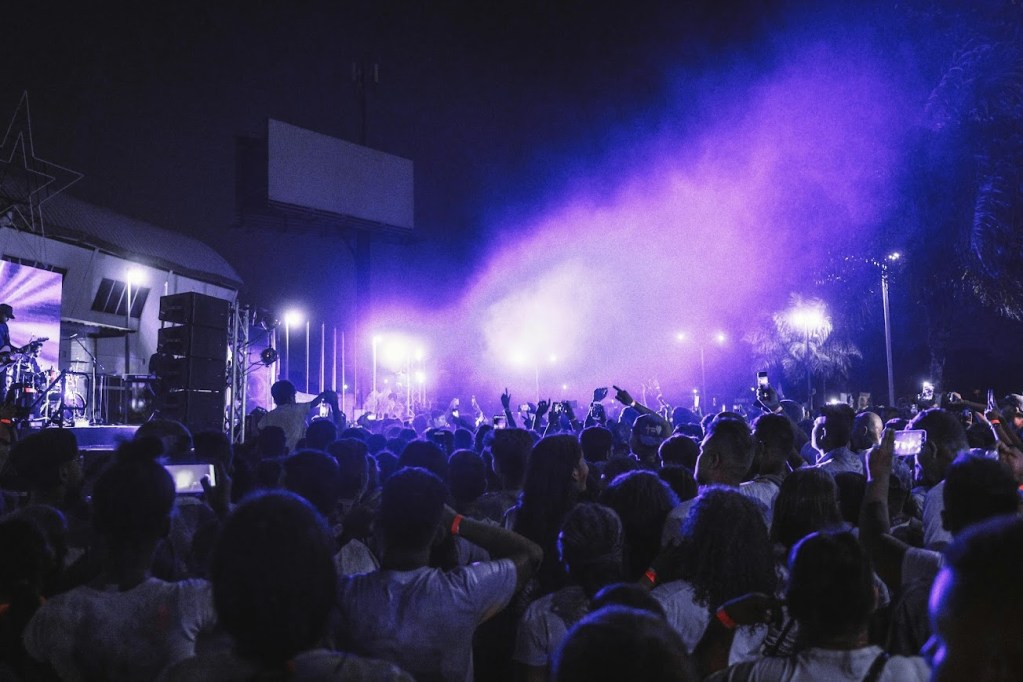
There is a recurring tension in large event design between scale and relevance. The larger the event, the richer the programme — more sessions, more exhibitors, more networking opportunities, more activations. But richness at scale creates its own problem: the 2,000-delegate conference with eight simultaneous tracks and 150 exhibitor booths offers so many possibilities that the average attendee’s ability to navigate it usefully is overwhelmed. They default to the talks they knew about before they arrived, the booths they planned to visit in advance, and the connections they had already arranged. The serendipitous discovery — the session they didn’t know they needed, the exhibitor whose product is exactly right for their current project, the speaker whose adjacent-field expertise would have reframed their thinking — goes unmade because nobody and nothing pointed them toward it at the right moment.
Beacon technology is the infrastructure that closes this gap. By using Bluetooth Low Energy (BLE) transmitters positioned throughout an event venue, beacon systems detect the physical location of attendees ’ smart devices and badges to within a few metres, and use that location signal to trigger contextually relevant, individually personalized interactions at the exact moment that physical proximity makes them meaningful. A notification that a session perfectly matched to an attendee’s registered interests begins in fifteen minutes — delivered when the attendee is already near the right room, not when they’re on the other side of the venue. An exhibitor’s product demonstration invitation is delivered to an attendee who has already spent ten minutes in the adjacent zone, indicating a category interest. A wayfinding prompt for the networking reception — at the exact moment the breakout session they just attended has ended.
The global beacon technology market, driven by applications across retail, healthcare, and events, is projected to reach USD 395.9 billion by 2032. At events specifically, beacon deployments are moving from novelty to standard infrastructure as the technology matures and the implementation frameworks become more accessible. This article explains how beacon technology works in the event context, the specific use cases where it delivers the strongest results, and the implementation considerations that determine whether a beacon deployment fulfils its personalization potential or becomes an expensive notification system that attendees mute after the first alert.
How Beacon Technology Works: The Technical Foundation
A BLE beacon is a small, battery-powered wireless transmitter — roughly the size of a thick coin or a small wall-mounted unit — that broadcasts a continuous, low-power radio signal at fixed intervals. The signal contains a unique identifier (typically formatted as a UUID, major, and minor number) but nothing else. The beacon itself does not collect data; it does not know who is nearby or what action should be taken. It simply transmits its identifier persistently, waiting to be heard.
The intelligence is in the receiving end. When an attendee’s smartphone (running the event app with Bluetooth enabled) detects a beacon signal above a defined signal strength threshold, the app registers the detection event and sends it — typically via WiFi or cellular — to the event’s backend platform. The backend platform knows:
- Which beacon was detected (from the UUID), which maps to a specific physical location in the venue
- Which attendee detected it (from the device and app account identifier)
- What the attendees’ registered profile includes: their job title, industry, registered interests, the sessions they have already attended, and any prior beacon interaction history during the event
From this combination — who is where, given what we know about them — the platform applies personalization logic to determine what action to trigger: a push notification, a content update in the app, a connection suggestion, a navigation prompt, or a sponsor-configured interaction. The whole sequence from beacon detection to notification delivery typically completes in two to five seconds.
Apple’s iBeacon protocol, defined in 2013, established the foundational standard that most event beacon deployments use. Android devices support the same BLE standard through Google’s Eddystone protocol. Most professional event beacon deployments are compatible with both, ensuring the system works irrespective of which mobile platform the attendee uses.
Use Cases: Where Beacon Personalization Delivers at Events
1. Contextual Session Recommendations
The most direct application of beacon personalization at conferences is real-time session recommendation — delivering content suggestions to attendees based on the intersection of their registered interests and their current physical location in the venue.
A session recommendation beacon trigger might work as follows: an attendee finishes a session and exits the room. Their smart badge or device is detected by a beacon positioned at the session room exit. The platform registers the exit, notes that the next session in that room is on a different topic, looks at the attendee’s registered interest profile, and identifies that a session beginning in eight minutes in a room thirty metres away matches their profile strongly. The attendee’s event app delivers a notification: ‘Based on your interests, you might want to catch [session title] starting shortly in Hall C. Here’s how to get there.’
This kind of contextual recommendation requires no active effort from the attendee — no app navigation, no programme browsing, no schedule lookup. It delivers the right suggestion at the right moment based on location and profile data that has already been collected. For events with dense, parallel programming where the cost of a poor session selection is an entire timeslot wasted, this active guidance has tangible value.
2. Indoor Wayfinding and Navigation
GPS navigation does not work inside buildings. The satellite signal cannot penetrate the structure with sufficient accuracy to be useful for indoor positioning, and standard WiFi positioning provides rough location but not the metre-level precision needed for useful navigation guidance in a conference centre with dozens of rooms, multiple floors, and thousands of simultaneous occupants.
Beacon networks provide the indoor positioning infrastructure that makes venue navigation possible through the event app. By triangulating the signal strength from three or more beacons, the system can determine an attendee’s position within two to three metres. The event app can then render a map of the venue with the attendee’s current position and provide turn-by-turn routing to their selected destination — a specific session room, an exhibitor booth, a catering area, or a networking zone.
For first-time visitors to large, complex convention centres, this navigation capability reduces the disorientation that wastes time and generates frustration. For international attendees in an unfamiliar city, it extends the value of the event app beyond programme management into practical venue intelligence. For people with mobility considerations who need to know the accessible route to a session room, it provides information that a printed map or static digital display cannot personalize to their specific needs.
3. Proximity Marketing and Exhibitor Engagement
For trade shows and conferences with significant exhibition floors, beacon-triggered proximity marketing is the use case that generates the most direct commercial value for exhibitors and the most immediately measurable ROI evidence for event organizers who need to demonstrate the value of their beacon infrastructure investment.
The mechanism is targeted: an exhibitor defines a beacon zone around their booth. When an attendee passes within a defined proximity of the booth — say, within ten metres — and that attendee’s registration profile indicates a match with the exhibitor’s target audience, the system triggers a personalized beacon interaction:
- A push notification inviting the attendee to visit the booth, with a brief description of what the exhibitor is demonstrating today and a personalized hook referencing the attendee’s industry or interest area
- A product information card delivered directly to the event app, visible to the attendee without requiring them to visit the booth physically — reducing the barrier to initial engagement
- A booth demonstration invitation with a specific time slot, reducing the cold-approach dynamic that makes many trade show booth conversations stilted
From the exhibitor’s perspective, the beacon proximity trigger transforms passive floor traffic into active, qualified engagement. The trigger only fires for attendees whose profiles match defined criteria — meaning the notification is not noise for unqualified visitors, and the qualified leads who do receive it are being contacted at the precise moment spatial proximity makes the invitation most natural. The data captured — how many qualified attendees passed within range, how many received notifications, how many visited the booth, how long they stayed — provides the exhibitor engagement analytics that sponsor ROI reporting requires.
4. Location-Based Attendee Notifications
Beyond session recommendations and exhibitor engagement, beacon systems support a range of operational notifications that improve the attendee experience through contextual timing:
- Welcome interactions: when an attendee enters the event venue for the first time, a beacon at the main entrance triggers a personalized welcome notification with their name, the day’s highlights curated to their interest profile, and a quick-access link to their personalized schedule
- Session start reminders: as an attendee’s next registered session approaches, a beacon near their current location triggers a reminder with the room location relative to where they currently are — not a generic alert from the programme, but a contextually aware nudge that acknowledges they might need to start moving
- Schedule change alerts: when a speaker change, room reassignment, or timing adjustment affects a session an attendee is registered for, a beacon trigger ensures the alert reaches them at a time when they are in the venue and in a position to act on it — not in the abstract hours before the event
- Special access or exclusive content unlocks: for premium ticketing tiers or VIP zones, beacons at the zone perimeter detect eligible badge holders and automatically unlock restricted content, premium session recordings, or exclusive networking introductions in the event app without the attendee needing to present credentials or interact with staff
- End-of-event personalized summaries: when an attendee exits the venue at the end of the day, an exit beacon trigger fires a personalized daily summary: sessions attended, connections made, exhibitors engaged with, and recommendations for tomorrow based on today’s activity
5. Crowd Management and Real-Time Flow Optimization
At the aggregate level, beacon network data enables the event operations team to monitor crowd distribution and flow across the venue in real time, without requiring fixed camera infrastructure or manual observation rounds:
- Zone occupancy dashboards showing live headcount estimates in each measured area, alerting the operations team when specific zones approach their defined capacity thresholds
- Flow direction data identifying where traffic is moving, enabling the operations team to proactively signal underutilized zones as relief capacity before overcrowding becomes a safety or comfort issue
- Dwell time patterns that update dynamically during the event, identifying which spaces are retaining attendees and which are functioning as throughput corridors — informing same-day decisions about staffing, signage, or session timing that improve the programme’s operation before the day ends
Read here about Touchless Check-In and Contactless Payments and Lead Capture and Exhibitor ROI Tracking with Smart Badge Technology.
Implementation Framework: Making Beacons Work in Practice
| Implementation Phase | Key Activities | Common Pitfalls to Avoid |
| Venue survey and beacon placement | Map venue zones; identify beacon positions for 3-point triangulation; test signal range and overlap | Insufficient beacon density creates dead zones; signal bleed between adjacent zones causes inaccurate location detection |
| Backend platform configuration | Map beacon UUIDs to physical locations; build personalization logic per trigger type; set notification frequency limits per attendee | Over-triggering: sending too many notifications degrades experience and drives app notification opt-outs |
| Event app integration | Integrate beacon SDK into event app; configure Bluetooth permission request with clear user-facing explanation; test on both iOS and Android | Failing to explain why Bluetooth is needed — attendees decline permission requests they don’t understand |
| Attendee profile data integration | Connect registration data (interests, session selections, company, job title) to the personalization engine; define trigger criteria per exhibitor and zone | Generic triggers that ignore profile data — sending the same notification to every attendee near a zone removes the personalization value entirely |
| Privacy and consent framework | Obtain explicit Bluetooth and location tracking consent; publish a clear data use policy; provide an opt-out mechanism in app settings | Assuming the app Bluetooth permission covers all beacon data uses without specific disclosure |
| Live monitoring and adjustment | Monitor notification delivery rates and opt-out rates in real time; adjust trigger frequency if notification fatigue appears; monitor beacon hardware uptime | Deploying and leaving unmonitored, beacon hardware failures and configuration errors go undetected without live monitoring |
The Next Layer: AI-Enhanced Beacon Personalization
Standard beacon deployments operate on rule-based personalization logic: if attendee profile matches criterion X and location is zone Y, trigger notification Z. This is effective for defined use cases but limited by the explicitness of the rules — it can only act on patterns that a human has anticipated and encoded in advance.
AI-enhanced beacon systems add a predictive layer that learns from behavioural patterns across the full attendee population to identify personalization opportunities that rule-based logic would miss. An AI-powered personalization engine observing beacon data in real time can identify:
- That attendees who visit Zone A early in the day and then Zone C are highly likely to find Zone F valuable — and proactively route them there before they make the exploratory walk that would have taken them there anyway, saving navigation time and reducing randomness in their experience
- That a specific session is attracting an unusually high proportion of attendees from a particular industry segment, suggesting it is outperforming its programme description in relevance for that segment, triggering targeted recommendations to other attendees from that segment who have not yet registered for the session
- That crowd concentration in a specific zone is building at a rate that suggests it will reach capacity in twenty minutes, allowing a proactive intervention before the problem becomes visible to attendees, rather than reactive management after complaints begin
Industry analysts describe the integration of AI with beacon technology as the transformation of events into ‘intelligent, predictive, and hyper-personalized ecosystems’ — a description that captures the directional shift from event technology as operational infrastructure to event technology as experiential intelligence.
Globibo and Beacon Technology for International Conferences
Globibo integrates beacon-triggered personalization within its international conference management framework, with specific capability in multilingual event contexts where personalization must operate effectively across the linguistic diversity of the attendee population. For international conferences, the personalization logic that beacon systems apply must account not only for professional profile and interest data but for language preference — ensuring that session recommendations, wayfinding notifications, and exhibitor engagement triggers are delivered in the attendee’s working language rather than only in the event’s primary language.
For a conference where simultaneous interpretation is running across four language channels and where different language groups have distinct session interest profiles, Globibo’s beacon integration connects language preference data from the registration system to the personalization engine. An attendee registered for English-language simultaneous interpretation receives session recommendations from the English-channel content stream. A delegate registered for the French channel receives French-language notifications and recommendations from the French-language session programme. This language-aware personalization ensures that the beacon system enhances the conference experience for every language community present, rather than delivering a personalized experience only to the majority-language population.
Summary of Beacon-Triggered Personalized Experiences
Beacon technology answers one of the most persistent design problems in large-scale event management: how to give 2,000 individual attendees an experience that feels curated for them specifically, not one that feels like they are navigating a generic programme catalogue the same way everyone else is. The answer is spatial context — knowing where each person is, matching that location to what is around them, and combining it with what you already know about their professional interests to deliver a suggestion or interaction that is relevant at that exact moment.
The implementation is achievable at a range of scales and budget levels. A simple beacon deployment with a few dozen devices and rule-based notification logic can deliver meaningful personalization value at a fraction of the cost of full RFID infrastructure. An AI-enhanced deployment with fine-grained attendee profiling, predictive recommendation, and real-time crowd intelligence represents the more ambitious end of the spectrum — and is where the technology is clearly heading.
The organizations that will benefit most from beacon personalization are those that treat the attendee’s experience during the event as something that can be actively curated — not left entirely to the attendee’s own navigational ability and pre-formed programme choices, but gently guided by a system that has the information to know what they haven’t yet found but should. Done well, that guidance is not intrusive; it is the digital equivalent of a knowledgeable conference host who knows the programme, knows the attendee, and makes exactly the right suggestion at exactly the right moment.
Ready to Create Personalized Experiences for Every Attendee at Your Next Conference?
Globibo provides beacon infrastructure design, personalization engine integration, and multilingual delegate experience management for international conferences and large-scale corporate events worldwide.
Contact Globibo today to discuss how beacon-triggered personalization can transform your conference from a programme attendees navigate to an experience that actively curates itself to their needs. Visit globibo.com to speak with our event technology team.