Rozie Synopsis secures four wins at 16th Eventex Awards
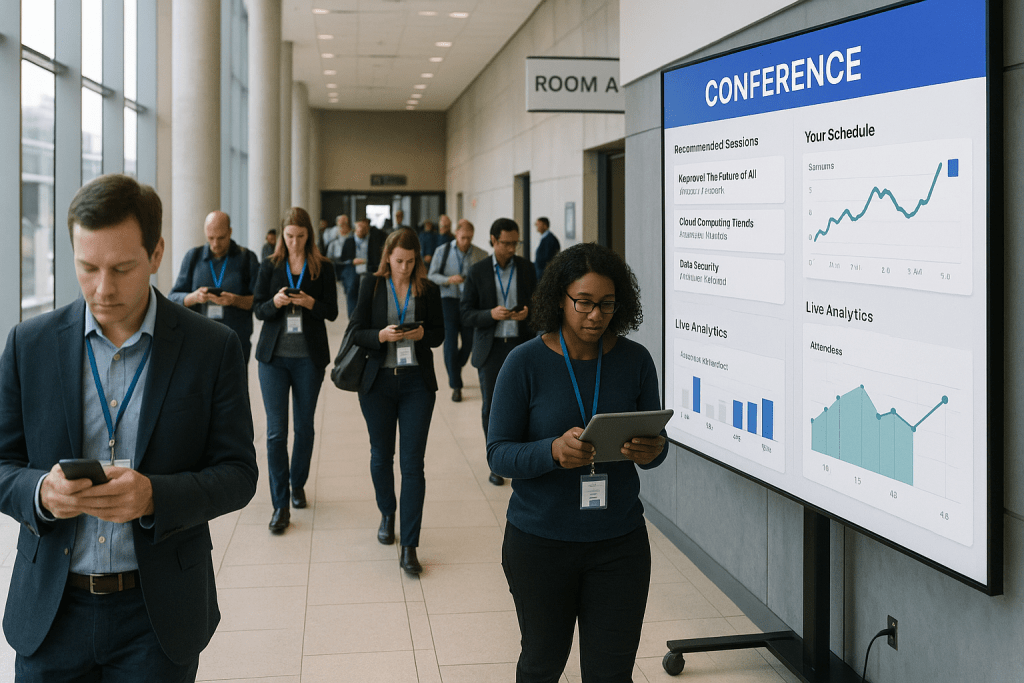
AI-native event experience platform Rozie Synopsis has been recognised with four accolades at the 16th edition of the Eventex Awards, underscoring the growing role of artificial intelligence and language technologies in how events are designed, delivered and measured.
The international awards programme, established in 2009, showcases innovation and best practice across events, experiential marketing and related technologies. The latest results position Rozie Synopsis among the platforms to watch as organisers continue to rethink attendee engagement and content delivery in both physical and hybrid formats.
Background and industry context
Eventex has become a reference point for the global events community, attracting entries from agencies, corporate organisers, venues and technology providers worldwide. The programme evaluates projects and products on criteria such as creativity, innovation, effectiveness and overall experience, with a jury drawn from senior industry practitioners.
In recent years, the awards have mirrored wider sector trends: increased adoption of data-driven tools, an emphasis on personalised journeys, and the integration of AI to manage complexity at scale. Platforms that blend event operations with intelligent recommendation engines, real-time analytics and language processing have been gaining visibility in the submissions.
Rozie Synopsis sits within this shift as an AI-native offering focused on understanding and shaping the event experience through data, content and automation. Its recognition in multiple categories at the same edition of Eventex highlights the appetite within the market for tools that can interpret large volumes of attendee interactions and content across sessions, exhibitors and digital channels.
Key developments and award recognition
At the 16th Eventex Awards, Rozie Synopsis received four separate honours. While specific category titles were not detailed, the platform was cited for its work in event technology, artificial intelligence and language technology, indicating a broad assessment of both its core engine and applied use cases for organisers.
The platform’s AI-native positioning suggests its features are built around machine learning and natural language processing rather than having these capabilities bolted on after the fact. In practice, this typically covers areas such as:
- Semantic understanding of event content (sessions, speaker bios, exhibitor information, abstracts).
- Personalised recommendations for attendees based on interests, behaviour and profiles.
- Automated summarisation or synthesis of sessions and discussions.
- Support for multilingual audiences through language technology.
- Analytics that surface insights from attendee questions, surveys and interactions.
The Eventex jury’s decision to honour Rozie Synopsis across four awards indicates that the platform demonstrated impact beyond a single feature set, spanning both the underlying AI technology and the end-user experience. For a relatively specialised category such as AI-driven event experience, multi-category recognition can serve as a signal to organisers assessing which vendors are moving beyond pilots into more mature, scalable offerings.
Industry impact
Recognition at a global awards programme can influence perception among event organisers, agencies and corporate stakeholders who rely on peer benchmarking when evaluating technology investments. In a crowded and fragmented event tech landscape, external validation can help differentiate platforms that promise advanced AI capabilities from those delivering measurable outcomes.
For the AI and language technology segment specifically, Rozie Synopsis’s performance at Eventex may add momentum to ongoing conversations around how generative and analytical tools should be embedded in event workflows. Instead of being used in isolation, AI is increasingly expected to underpin the entire experience layer, from pre-event discovery and scheduling through to live engagement and post-event content reuse.
The awards also highlight how language technology is moving from a support feature to a strategic asset. As events become more global and hybrid, the ability to serve multilingual audiences, capture sentiment across languages, and extract structured insights from text and speech can influence an organiser’s choice of platform. Recognition in this area suggests that evaluation panels are weighing linguistic intelligence alongside traditional metrics such as reliability and feature breadth.
Why this matters for event professionals and technology providers
For event professionals, the success of Rozie Synopsis at the 16th Eventex Awards reinforces several practical themes that are shaping technology roadmaps:
- AI as infrastructure, not add-on: Platforms built around AI from the outset may offer deeper personalisation and analytics than those that integrate AI only at the surface level. Organisers evaluating tools for complex conferences or large-scale exhibitions may want to probe how AI is architected within their shortlisted platforms.
- Content and knowledge reuse: Language technology can help extend the life of event content through automated summaries, topic clustering and search. For organisations under pressure to justify event ROI, the ability to repurpose sessions into ongoing knowledge assets is increasingly important.
- Data-informed experience design: Solutions that turn attendee interactions, questions and feedback into actionable insights can support continuous improvement across event editions. Recognition for platforms working in this space suggests that data utilisation is becoming a core success metric.
- Accessibility and inclusivity: Language-aware features can support accessibility, from subtitling and translation to interfaces that respond to natural language queries. As regulators and corporate stakeholders place more emphasis on inclusive experiences, this may move from desirable to expected.
For technology providers, the four awards serve as a reminder that the market is watching not only functionality but also differentiated, AI-led innovation. Vendors competing in adjacent categories—such as registration, mobile apps, matchmaking or exhibitor tools—may need to consider how AI and natural language capabilities are integrated into their own roadmaps, whether through in-house development or partnerships.
Conclusion
The fourfold recognition of Rozie Synopsis at the 16th Eventex Awards illustrates how AI-native event experience platforms are gaining prominence within mainstream industry benchmarking. While awards alone are not a guarantee of long-term market adoption, they do signal where juries and peers see meaningful progress in applying AI and language technology to real event challenges.
As budgets remain under scrutiny and attendee expectations continue to rise, event professionals are likely to intensify their assessment of platforms that can combine operational reliability with intelligent, data-driven experiences. Rozie Synopsis’s performance in this year’s awards cycle suggests that AI-powered experience orchestration will be an increasingly important axis of competition across the event technology sector.