Optima 1 targets leaner, smarter exhibition stands for 2026
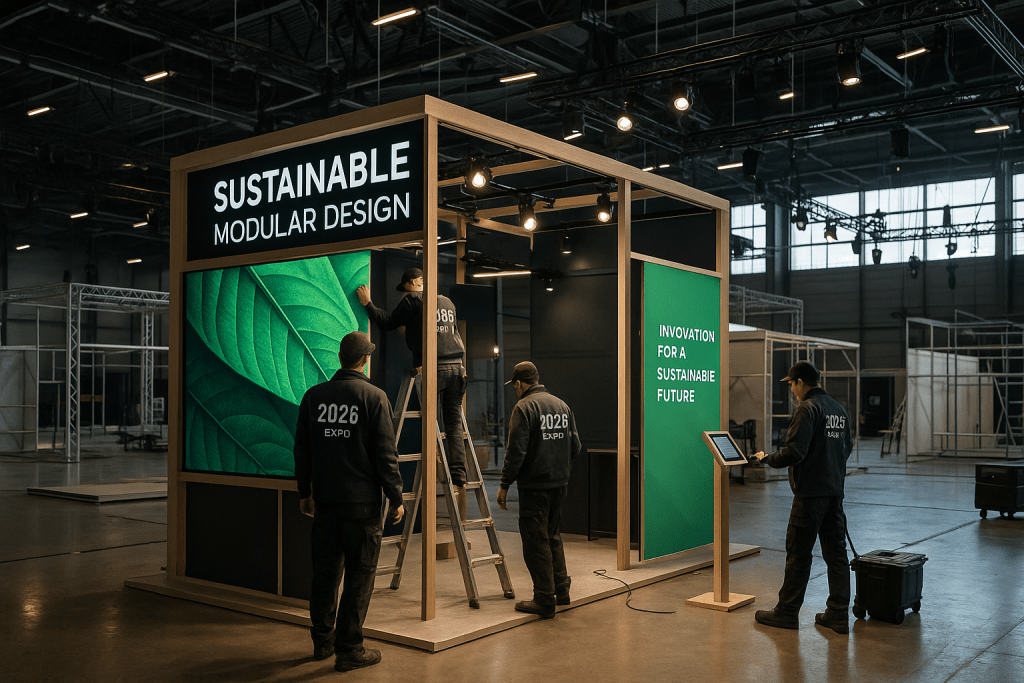
By 2026, the exhibition and trade show environment is expected to be more demanding than ever for organisers, exhibitors and their suppliers. Against this backdrop, Optima 1 has been introduced as a new approach to stand design and delivery, positioned to help brands respond to rising expectations around budget control, sustainability and content-driven experiences.
The concept sits at the intersection of modular stand architecture, practical logistics and a growing need for measurable outcomes. While details of the platform and its commercial roll-out remain limited, the rationale behind Optima 1 reflects many of the pressures shaping the next phase of the exhibitions market.
Background: a tightening exhibition landscape
Across global trade shows and exhibitions, organisers report that exhibiting is becoming more complex, not less. Marketing and event teams are operating with budgets under closer scrutiny, while still being asked to deliver larger impact and richer engagement. At the same time, procurement and compliance functions are paying far greater attention to sustainability credentials, from stand materials and shipping to waste management and reusability.
Visitor behaviour is also shifting. Attendee attention spans are shorter and decision-making cycles are often compressed. Brands are therefore under pressure to create environments that immediately communicate value, clearly articulate purpose and support an ongoing content strategy long after the show closes. For many exhibitors, this means their stands must function as both a high-impact physical presence and a versatile content studio.
In this context, suppliers and stand builders are exploring new models that go beyond one-off builds. There is a growing emphasis on modular systems, circular design principles and repeatable formats that can travel across multiple events with minimal rework.
Key developments: why Optima 1 was created
Optima 1 has been developed in direct response to these converging pressures. Although technical specifications have not been fully disclosed, the initiative is framed around a few recurring exhibitor requirements: doing more with less, delivering a premium aesthetic, and generating quantifiable business results.
The project is understood to focus on three core exhibition challenges:
- Budget efficiency: Exhibitors are looking to extend the lifespan of stand investments across multiple shows and regions. Optima 1 aims to support repeat usage through modular components, reducing design and build costs per event.
- Sustainability expectations: With stakeholders examining carbon impact and material waste, the framework is geared towards reusable elements and reduced single-use construction, aligning with corporate sustainability goals.
- Performance and content: Stands are increasingly seen as platforms for lead generation and content capture. Optima 1 is positioned to support integrated technology, from live demos and product storytelling to onsite filming and social content creation.
Seasoned event professionals are familiar with the mandate to “do more with less” and to continuously demonstrate return on investment. Optima 1 is intended to formalise a methodology and toolkit that address this mandate for exhibitors regularly participating in large-scale trade shows.
Industry impact: evolving expectations for stand solutions
The arrival of solutions like Optima 1 underscores a broader shift in how the exhibition industry views stand design. Rather than commissioning bespoke structures for each event, many brands are moving towards strategic stand portfolios designed for multi-year use, flexible footprints and rapid reconfiguration.
This evolution has several industry implications:
- More data-driven planning: As stands become more modular and repeatable, it becomes easier to standardise measurement across events. Marketers can compare engagement, leads and content output from one show to the next, making more informed decisions about layout, messaging and technology integrations.
- Closer collaboration between teams: Trade show stands are now touchpoints for marketing, sales, sustainability, procurement and IT. Approaches like Optima 1 require closer internal alignment, as decisions about structure, digital tools and measurement frameworks need cross-functional input.
- New expectations of suppliers: Stand builders and event technology providers face growing pressure to deliver solutions that are not only visually impressive but also modular, sustainable and analytically robust. Platforms that can pre-empt these needs are likely to gain traction.
For exhibition organisers, these developments may also affect how they structure floorplans, offer sponsorship opportunities and design event-wide digital infrastructure. Stands that double as content production environments could drive higher demand for reliable connectivity, flexible rigging options and on-site media support.
Why this matters for event professionals and technology providers
For event professionals, Optima 1 is another signal that the market is moving firmly towards integrated, data-aware exhibition environments. Exhibitors are looking for ways to standardise their presence across multiple events without sacrificing creativity or impact. A framework that addresses structural design, sustainability and performance measurement in a joined-up way can provide a template for future planning.
Technology providers operating in areas such as lead capture, attendee analytics, engagement apps and AV infrastructure have a particular stake in these changes. Modular stand systems with built-in consideration for digital workflows open up opportunities for tighter integration of:
- Lead capture tools embedded directly into stand architecture
- Interactive demos and product showcases supported by robust AV
- On-stand recording setups for interviews, presentations and social media content
- Measurement layers that track dwell time, interactions and conversion paths
As brands seek to justify event spend, the ability to connect stand activity to wider marketing and sales ecosystems becomes critical. Platforms like Optima 1 may help create a more consistent technical and design foundation on which these integrations can be built.
On the sustainability front, reusable stand frameworks can help organisations align their exhibition programmes with broader ESG strategies. This may influence venue selection, logistics partners and the choice of materials, nudging the wider ecosystem towards more responsible practices.
Conclusion
The exhibition landscape heading into 2026 is defined by higher expectations and tighter constraints. Budgets are being examined in more detail, sustainability is moving from optional to essential, and stands are increasingly evaluated on the business outcomes they enable rather than purely on visual impact.
Optima 1 has been introduced as a response to this environment, aiming to combine modular stand design, sustainable thinking and performance-focused planning in a single approach. While further details on implementation and adoption are yet to emerge, its creation reflects an industry-wide recognition that exhibitors must balance premium brand expression with operational efficiency and measurable results.
For event professionals, organisers and technology providers, the direction of travel is clear: exhibition solutions will need to be smarter, more adaptable and more accountable. How quickly the sector embraces frameworks like Optima 1 will help determine how ready the exhibition ecosystem is for the realities of 2026 and beyond.