Open-air live music boosts local UK visitor economies
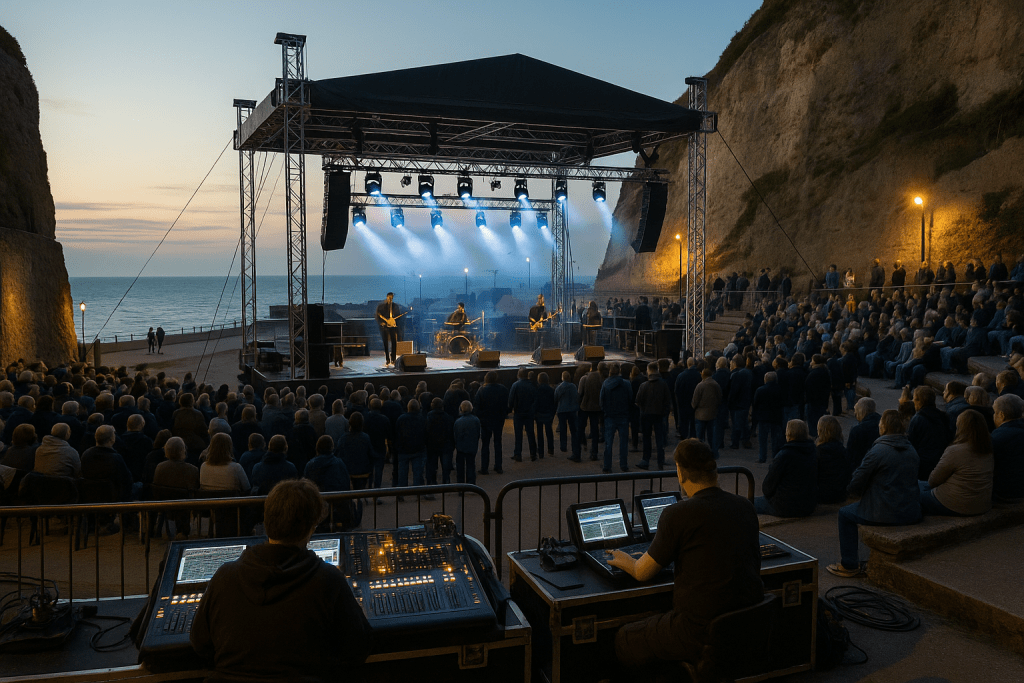
A coastal town in the north of England is providing a notable case study in how outdoor live music infrastructure can help reshape local visitor economies and seasonal tourism patterns. Once reliant on traditional holiday trade, the town has seen a shift in profile and revenue streams following sustained investment in an open-air music venue that now attracts major touring artists and large audiences each summer.
For event professionals and technology providers, the venue illustrates how permanent outdoor stages, integrated production facilities and coordinated destination marketing can combine to create a repeatable, high-value live events calendar in a regional location.
Background or industry context
Coastal resorts across the UK and Europe have long faced structural challenges as consumer travel habits changed and low-cost flights opened up international holiday options. Many towns that once relied on domestic visitors have had to diversify, seeking new reasons for people to visit beyond traditional beach and family attractions.
Against this backdrop, live entertainment has emerged as a strategic tool for destination renewal. Concerts, festivals and cultural programming can extend the tourist season, bring in younger demographics and encourage overnight stays. However, the delivery of high-profile shows in seaside locations presents operational hurdles: noise management, weather risk, infrastructure constraints and the need for local stakeholder alignment.
In this northern coastal town, entertainment has historically been part of the local identity, from orchestra performances and ballroom dances to later family-oriented holiday attractions. As visitor patterns evolved through the post-war era and into the 21st century, the town increasingly needed a contemporary draw that could compete with city-based arenas and international destinations.
Key developments or announcement
The establishment and development of a dedicated outdoor music venue on the town’s seafront has become central to that strategy. Built into the coastal landscape with a permanent stage and fixed seating, the venue has been progressively upgraded to support modern live production standards, including amplified concerts, multimedia shows and touring-level infrastructures.
Over time, the venue has succeeded in attracting well-known domestic and international artists, typically during the late spring and summer months. For touring production teams, the site offers a fixed, repeatable platform where stage dimensions, power distribution, rigging points and access logistics remain consistent from show to show, simplifying advance planning and technical riders.
The town’s local authority and tourism stakeholders have treated the venue as a core element of their economic development approach. A regular programme of concerts helps drive spikes in hotel occupancy, restaurant trade and secondary spending in retail and hospitality. The venue’s operations have been refined to balance resident needs, transport flows and visitor experience within a compact coastal setting.
Technological upgrades over successive seasons have focused on sound reinforcement suitable for an exposed coastal site, lighting systems that remain effective in late-evening natural light, and weather-resilient staging infrastructure. The venue’s design allows for relatively fast turnarounds between events, supporting a busy summer calendar while maintaining safety and compliance with local regulations.
Industry impact
The steady success of this outdoor venue has had several implications for the wider event and live entertainment sector:
- Proof of concept for regional outdoor venues: The town demonstrates that a permanent open-air venue in a non-metropolitan setting can attract major tours if technical specifications and audience demand align.
- Seasonal risk managed through infrastructure: Investments in weather-tolerant staging, drainage, and protection for equipment have enabled the venue to operate reliably during the UK summer, giving promoters and production firms a higher degree of confidence.
- Integration with destination marketing: Concerts are marketed not just as standalone events but as part of a broader visitor experience, reinforcing the role of live events within tourism strategies.
- Data and operational learning: Multiple seasons of operation have generated insight on audience flows, noise levels, transport demand and security requirements, enabling continuous refinement of site layouts and operating procedures.
For production suppliers and touring crews, the venue has become a familiar stop on certain summer runs. Its permanent infrastructure reduces some of the complexity associated with greenfield festival sites, while still delivering an open-air audience experience and scenic backdrop.
Why this matters for event professionals and technology providers
For organisers, promoters and technology partners, the trajectory of this seaside venue highlights several strategic considerations when planning or supporting outdoor event infrastructure:
- Long-term planning over one-off builds: A permanent or semi-permanent open-air venue can spread capital expenditure on staging, power, cabling and audience facilities over many seasons, rather than rebuilding from scratch each year.
- Technical standardisation: Consistent stage dimensions, rigging capacity and loading arrangements make it easier for touring productions to plug into an established framework, reducing on-site adaptation and engineering time.
- Local ecosystem development: Sustained programming supports the growth of a local skills base in areas such as audio engineering, lighting, rigging, security and crowd management, lowering reliance on fully imported crews.
- Neighbour and stakeholder relations: Outdoor venues embedded within residential or mixed-use areas must invest in sound control, clear communication and agreed operating windows. Technology such as directional sound systems and real-time monitoring can be critical.
- Climate resilience and contingency: Coastal and outdoor environments require careful attention to weather resilience, from stage coverings and drainage to backup power and clearly defined thresholds for delays or cancellations.
Technology vendors and platform providers can also find opportunities around such venues, including ticketing systems designed to cope with seasonally concentrated demand, access control for large but time-limited audiences, and data platforms that integrate event metrics with tourism and economic indicators.
Conclusion
The experience of this northern seaside town underlines how a focused commitment to outdoor live music infrastructure can influence a destination’s economic trajectory. While no single venue can resolve all the challenges facing traditional holiday resorts, a well-specified open-air stage, combined with consistent programming and collaborative planning, can become a central asset in regional regeneration.
For the wider events industry, the venue’s evolution offers a real-world example of how permanent outdoor sites can coexist with arenas, theatres and pop-up festivals. As towns and cities reassess their cultural and entertainment strategies, the lessons learned on this stretch of coastline will be closely watched by planners, promoters and technology suppliers looking to build resilient, experience-led visitor economies.