Digital Swag & Wearable NFTs: Why Your Next “Gift Bag” Will Live in a Digital Wallet
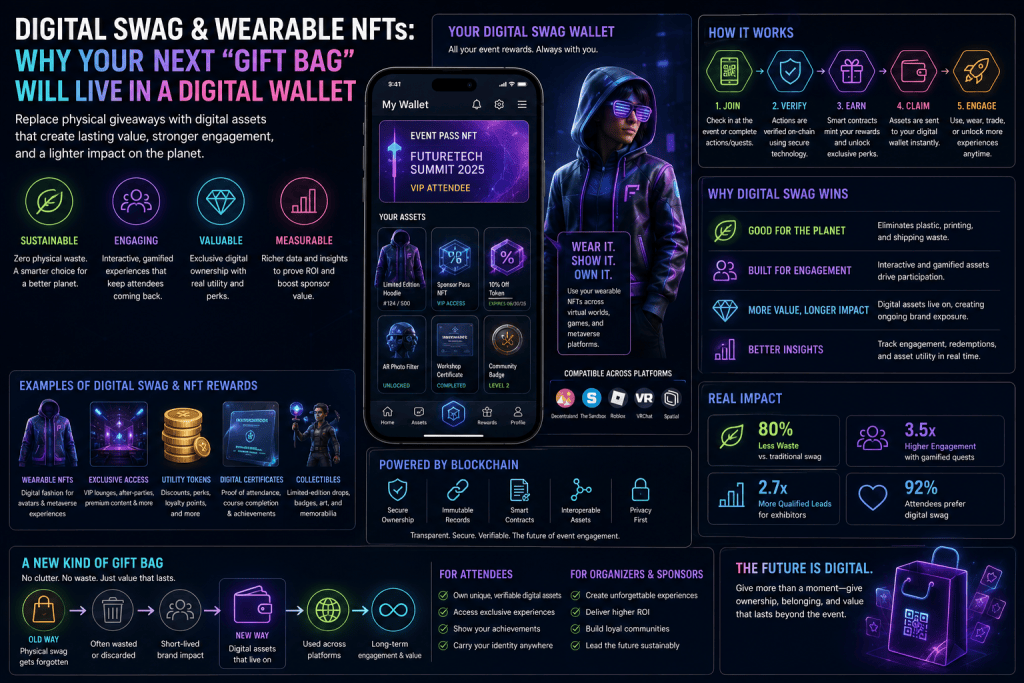
Event swag has long been a staple of conferences, trade shows, festivals, product launches, and brand activations. Tote bags filled with branded merchandise, promotional samples, brochures, apparel, and sponsor giveaways have traditionally served as physical extensions of attendee engagement and sponsor visibility.
However, the economics and expectations surrounding event gifting are changing rapidly.
Attendees are increasingly less interested in accumulating disposable promotional items, while organizers face growing pressure to reduce event waste, improve sustainability metrics, and deliver more measurable sponsor ROI. At the same time, the rise of digital identity systems, blockchain infrastructure, virtual communities, gaming culture, and Web3 technologies is reshaping how audiences perceive ownership, exclusivity, and collectible experiences.
This convergence is driving the emergence of digital swag and wearable NFTs — blockchain-backed digital assets designed to replace or augment traditional event giveaways.
Instead of receiving physical gift bags filled with temporary promotional products, future attendees may receive tokenized digital assets stored in mobile wallets that unlock exclusive content, virtual apparel, loyalty rewards, memberships, experiences, and persistent digital identity benefits.
For the event industry, this evolution represents more than a novelty trend. It signals a broader shift toward programmable engagement economies where digital ownership, gamification, community participation, and brand interaction extend far beyond the event itself.
Why Traditional Event Swag Is Losing Relevance
Conventional swag distribution creates several operational and environmental challenges.
Excessive Material Waste
Large-scale events generate substantial waste through:
- Single-use promotional products
- Printed marketing materials
- Plastic packaging
- Branded merchandise
- Disposable tote bags
Many attendees discard swag items shortly after events conclude, creating sustainability concerns and disposal costs.
As environmental accountability becomes a larger industry priority, organizers are reevaluating the value of physical giveaway models.
Limited Long-Term Engagement
Traditional swag typically provides short-lived brand exposure.
Physical items often fail to create:
- Ongoing attendee interaction
- Measurable engagement
- Persistent community participation
- Long-term loyalty mechanisms
Once attendees leave the venue, sponsor visibility rapidly declines.
Rising Logistics Costs
Physical swag programs require significant operational coordination involving:
- Manufacturing
- Shipping
- Storage
- Customs handling
- On-site distribution
- Waste management
For global events, logistics complexity can become substantial.
Digital alternatives eliminate many of these operational burdens.
What Are Digital Swag and Wearable NFTs?
Digital swag refers to virtual assets distributed to attendees through digital platforms, mobile applications, or blockchain-based wallets.
These assets may include:
- Digital collectibles
- Tokenized memberships
- Exclusive content access
- Virtual apparel
- AR filters
- Gamified rewards
- Discount tokens
- VIP experiences
- Community credentials
Wearable NFTs specifically refer to blockchain-backed digital fashion items or identity assets that attendees can use across virtual environments, gaming ecosystems, metaverse platforms, and digital communities.
Unlike traditional event giveaways, these assets can remain functional, tradable, and interactive long after the event concludes.
The Technology Infrastructure Behind Digital Swag
Modern digital swag ecosystems rely on interconnected technologies including:
- Blockchain networks
- NFT minting platforms
- Digital wallets
- Smart contracts
- Event mobile applications
- RFID and QR integrations
- AR and VR platforms
- Identity verification systems
- Community engagement platforms
These systems collectively create programmable engagement experiences linked to attendee participation.
NFTs as Persistent Event Identity Assets
One of the most important differences between physical swag and NFT-based assets is persistence.
Verifiable Ownership
Blockchain-backed assets provide cryptographically verified ownership records.
Attendees can permanently retain proof of:
- Event attendance
- VIP participation
- Session completion
- Sponsor interaction
- Community achievements
This creates more durable digital engagement histories.
Cross-Platform Portability
Wearable NFTs can function across multiple digital ecosystems including:
- Virtual event platforms
- Gaming environments
- Metaverse spaces
- Online communities
- Social identity systems
For example, an attendee receiving a branded NFT jacket during a technology conference may later use that item within a virtual networking environment or gaming platform.
Scarcity and Exclusivity
NFT infrastructure allows organizers to create limited-edition digital assets with controlled scarcity.
Examples include:
- VIP-only collectibles
- Speaker-exclusive digital wearables
- Sponsor collaboration drops
- Achievement-based unlocks
- Time-limited rewards
This increases perceived value and engagement intensity.
Wearable NFTs and Virtual Identity
Digital identity is becoming increasingly important in online communities and virtual experiences.
Avatar-Based Engagement
As immersive digital platforms expand, attendees are increasingly represented through avatars and digital personas.
Wearable NFTs allow brands and events to provide:
- Virtual apparel
- Accessories
- Interactive skins
- Branded digital identity items
These assets function similarly to fashion within physical environments.
Community Signaling and Status
Digital collectibles often serve social signaling functions.
Attendees may display NFT assets to demonstrate:
- Industry affiliation
- Event participation
- VIP status
- Community membership
- Professional credibility
This creates stronger long-term identity connections between attendees and event brands.
Gamification and Reward Systems
Wearable NFTs are increasingly integrated into gamified engagement systems.
Attendees may unlock digital rewards by:
- Visiting exhibitor booths
- Completing event quests
- Participating in workshops
- Attending keynotes
- Engaging with sponsors
This transforms swag distribution into interactive participation ecosystems.
Sponsor and Exhibitor Opportunities
Digital swag creates new monetization and engagement opportunities for sponsors.
Persistent Brand Visibility
Unlike physical promotional items, digital assets can remain visible and interactive across digital environments long after the event ends.
Sponsors gain extended engagement windows through:
- Branded virtual wearables
- Tokenized loyalty systems
- NFT-enabled memberships
- Interactive digital experiences
Behavioral Analytics
Blockchain-based engagement systems generate measurable interaction data regarding:
- Redemption activity
- Trading behavior
- Community participation
- Secondary market engagement
- Content interaction patterns
This provides sponsors with richer engagement intelligence than traditional giveaway programs.
Dynamic Reward Logic
Smart contracts allow sponsors to create programmable reward systems.
Examples include:
- Unlockable experiences
- Tiered access privileges
- Community achievement incentives
- Referral rewards
- Cross-event loyalty benefits
This increases long-term attendee retention and sponsor engagement.
Integration with Hybrid and Virtual Events
Digital swag is particularly valuable within hybrid and virtual event ecosystems.
Unified Physical and Digital Engagement
NFT-based rewards can connect physical event participation with ongoing digital community engagement.
Attendees may receive assets that unlock:
- Post-event content
- Community access
- Virtual networking rooms
- Future event discounts
- Exclusive webinars
This extends engagement beyond event dates.
Virtual Merchandise Economies
Some event platforms are experimenting with fully digital merchandise ecosystems where attendees purchase, trade, or collect branded digital items during virtual experiences.
This creates entirely new sponsor and commerce models.
Sustainability and Environmental Impact
Sustainability is one of the strongest arguments supporting digital swag adoption.
Reduced Physical Waste
Digital assets eliminate the need for:
- Plastic merchandise
- Printed materials
- Excess packaging
- Shipping waste
- Disposable promotional items
This significantly reduces event waste generation.
Lower Logistics Footprint
Digital distribution removes many operational requirements associated with physical swag fulfillment, reducing transportation and storage emissions.
Concerns About Blockchain Energy Usage
Earlier blockchain systems faced criticism regarding energy-intensive operations.
However, many modern NFT ecosystems now operate on proof-of-stake networks with substantially lower environmental impact than older proof-of-work systems.
Challenges and Adoption Barriers
Despite growing interest, several challenges remain.
User Onboarding Complexity
Wallet setup and blockchain terminology can create friction for mainstream attendees unfamiliar with Web3 systems.
Successful implementations increasingly prioritize simplified user experiences.
Perceived Value Questions
Not all attendees currently view digital collectibles as meaningful or desirable.
Adoption depends heavily on utility, exclusivity, and long-term value creation.
Platform Fragmentation
Wearable NFT compatibility across virtual ecosystems remains inconsistent.
Lack of interoperability limits usability in some environments.
Regulatory and Intellectual Property Issues
Digital asset ecosystems raise evolving legal questions involving:
- Ownership rights
- Securities regulation
- Brand licensing
- Consumer protection
- Data privacy
Organizers and sponsors must navigate these carefully.
The Future of Digital Event Gifting
The next generation of digital swag ecosystems is expected to become increasingly immersive and utility-driven.
Emerging developments include:
- AI-generated personalized digital collectibles
- AR-enabled wearable experiences
- Cross-event digital loyalty systems
- Smart contract-powered memberships
- Biometric-linked identity assets
- Metaverse-integrated event economies
- Interoperable virtual fashion ecosystems
As digital identity systems mature, event gifting may increasingly focus on persistent digital experiences rather than disposable physical products.
Conclusion
Digital swag and wearable NFTs are redefining how events approach attendee gifting, sponsor engagement, and long-term community participation. By combining blockchain-backed ownership, programmable rewards, virtual identity systems, and persistent digital engagement, these technologies offer a more sustainable and interactive alternative to traditional physical swag.
Their significance extends beyond novelty collectibles. Digital assets create ongoing sponsor visibility, richer behavioral analytics, reduced operational waste, and stronger attendee identity connections that continue long after events conclude.
Most importantly, this evolution reflects a larger transformation within the event industry where engagement is becoming increasingly digital, persistent, and community-driven. In the future, the most valuable event “gift bag” may no longer be something attendees carry home physically, but something they continue using, displaying, and interacting with across interconnected digital ecosystems.