The Security Mechanics of RFID Access Control at High-Profile VIP Events

Security has always been one of the most critical components of high-profile events. Whether hosting world leaders, Fortune 500 executives, celebrities, professional athletes, investors, or government officials, organizers must carefully balance stringent security measures with a seamless guest experience. Long queues, repeated identity checks, and manual credential verification not only reduce operational efficiency but can also undermine the premium experience expected at exclusive events.
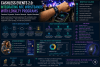
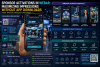
Radio Frequency Identification (RFID) technology has emerged as the preferred access control solution for modern VIP events. Initially adopted to accelerate attendee check-in and reduce ticket fraud, RFID systems have evolved into sophisticated security ecosystems that integrate credential authentication, identity management, real-time monitoring, artificial intelligence, and venue analytics.
In 2026, RFID access control is no longer simply about opening gates. It functions as an intelligent security platform capable of controlling movement throughout a venue, detecting unauthorized access attempts, monitoring crowd behavior, and providing security teams with real-time situational awareness.
For organizers of high-profile events, RFID has become an essential technology for protecting guests while maintaining the smooth, frictionless experience expected at premium venues.
Why VIP Events Demand Advanced Access Control
Unlike public events, VIP gatherings involve significantly higher security risks.
Organizers must protect against:
- Credential fraud
- Unauthorized entry
- Tailgating through secure entrances
- Counterfeit invitations
- Insider threats
- Restricted-area breaches
- Identity impersonation
- Crowd congestion
Traditional paper credentials and manual security checks struggle to meet these increasingly complex requirements.
RFID systems provide automated authentication that is both faster and substantially more secure.
Understanding RFID Access Control
RFID uses radio frequency communication to exchange information between credentials and electronic readers.
Each RFID credential contains a unique digital identifier associated with an attendee profile stored within the event management platform.
Common RFID credential formats include:
- Smart badges
- VIP wristbands
- Embedded access cards
- Smart credentials
- Wearable passes
When presented to an RFID reader, credentials are authenticated within milliseconds.
Access decisions are made automatically based on predefined security policies.
Multi-Level Access Authorization
VIP events rarely operate with a single access level.
Instead, organizers create multiple security zones.
Typical zones include:
- Public event areas
- VIP lounges
- Executive hospitality suites
- Media centers
- Backstage production
- Security operations
- Broadcast control rooms
- Speaker preparation areas
Each credential contains permissions defining exactly which areas the holder may access.
This minimizes unauthorized movement while simplifying security operations.
Real-Time Credential Authentication
Modern RFID platforms authenticate credentials continuously rather than simply validating them once.
Instant Verification
Each scan verifies:
- Credential authenticity
- User authorization
- Event validity
- Time restrictions
- Location permissions
Expired or unauthorized credentials are rejected immediately.
Dynamic Permission Updates
One major advantage of digital credentials is flexibility.
Security administrators can:
- Grant temporary access
- Remove permissions instantly
- Lock compromised credentials
- Activate emergency protocols
without physically replacing badges.
This capability is particularly valuable during high-security events.
Preventing Credential Fraud
Counterfeit credentials remain a significant concern at exclusive events.
RFID technology incorporates multiple protective mechanisms.
Encrypted Credential Data
Modern RFID credentials typically use encrypted communication protocols that make duplication significantly more difficult than traditional printed passes.
Unique Digital Identities
Each credential carries a unique identifier that cannot simply be replicated by copying visual information.
Even if counterfeit badges resemble authentic credentials, backend authentication prevents unauthorized access.
Anti-Cloning Technology
Many enterprise RFID systems employ cryptographic authentication methods that verify the credential itself before granting access.
This provides strong protection against cloning attacks.
AI-Enhanced Security Monitoring
Artificial intelligence is increasingly integrated into RFID access platforms.
Behavioral Analytics
AI continuously analyzes attendee movement patterns.
Potential anomalies include:
- Repeated denied access attempts
- Unexpected location changes
- Simultaneous credential usage
- Restricted-area activity
- Unusual movement behavior
These indicators can trigger automated alerts for security personnel.
Predictive Risk Detection
Machine learning models identify emerging security risks before incidents occur.
By analyzing historical access data alongside live activity, AI can prioritize investigations and recommend interventions.
Automated Incident Response
Some platforms automatically trigger predefined security workflows when suspicious activity is detected.
Responses may include:
- Credential suspension
- Security notifications
- Camera activation
- Access lockdowns
This reduces response times significantly.
Integration with Biometric Verification
High-profile VIP events increasingly combine RFID with biometric technologies.
Multi-Factor Authentication
Rather than relying solely on RFID credentials, access systems may also verify:
- Facial recognition
- Fingerprint authentication
- Palm vein recognition
- Mobile identity credentials
This layered approach strengthens security without significantly increasing processing time.
Identity Confidence
Biometric verification helps ensure that valid credentials are being used by their authorized holders rather than unauthorized individuals.
This is particularly valuable in executive and government environments.
Crowd Intelligence Through RFID Data
RFID systems provide valuable operational intelligence beyond access control.
Occupancy Monitoring
Security teams gain real-time visibility into:
- Room occupancy
- Zone capacity
- Entry rates
- Exit patterns
This supports both safety and operational planning.
Emergency Management
During emergencies, RFID data can help determine:
- Who remains inside secure areas
- Evacuation progress
- Crowd distribution
- Access point activity
This improves emergency coordination.
Traffic Optimization
Live movement analytics enable organizers to reduce congestion by adjusting entry procedures and directing attendees toward less crowded routes.
Cybersecurity Considerations
As RFID systems become increasingly connected, cybersecurity is becoming equally important.
Secure Communications
Modern platforms protect data using:
- End-to-end encryption
- Secure authentication protocols
- Network segmentation
- Tokenized credential management
These measures reduce the risk of unauthorized system access.
Cloud Security
Many RFID platforms now operate through cloud-based event management systems.
Strong cloud security practices include:
- Identity and access management
- Continuous monitoring
- Secure API integration
- Automated threat detection
Data Privacy
RFID systems collect movement and access information that may be considered sensitive.
Organizers should implement:
- Transparent privacy policies
- Role-based data access
- Data minimization practices
- Regulatory compliance procedures
to protect attendee information.
Challenges of RFID Deployment
Despite its advantages, RFID implementation requires careful planning.
Infrastructure Investment
Reliable deployments require:
- RFID readers
- Secure networking
- Credential production
- Management software
- Backup power systems
Large venues may require hundreds of reader locations.
System Integration
RFID platforms often integrate with:
- Registration systems
- Ticketing platforms
- CRM software
- Security operations centers
- Video surveillance
- Mobile applications
Achieving seamless interoperability requires careful system design.
Staff Training
Security personnel must understand:
- Credential workflows
- Exception handling
- Emergency procedures
- Technical troubleshooting
Technology alone cannot guarantee effective security.
The Future of RFID Access Control
Several emerging technologies are expected to further strengthen VIP event security.
These include:
- AI-powered threat prediction
- Blockchain-based credential verification
- Mobile digital identities
- Wearable biometric authentication
- Ultra-wideband location tracking
- Autonomous security analytics
- Digital twin security monitoring
Together, these innovations will create increasingly intelligent access control ecosystems capable of adapting dynamically to evolving security conditions.
Conclusion
RFID access control has become a cornerstone of security at high-profile VIP events. By replacing manual credential verification with encrypted digital authentication, intelligent access management, and AI-powered monitoring, organizers can significantly improve both security and attendee experience.
The technology extends well beyond gate entry. Modern RFID platforms provide real-time visibility into venue activity, strengthen fraud prevention, support emergency response, and integrate seamlessly with broader event security ecosystems.
As premium events continue growing in complexity and security expectations rise, RFID access control will remain one of the most important technologies enabling organizers to deliver exclusive, efficient, and highly secure experiences. The future of VIP event security lies not in adding more checkpoints, but in creating intelligent systems that authenticate, monitor, and protect seamlessly in the background.