Apple
Apple 🇺🇸
Company & Platform Overview
Apple Inc. has fundamentally reimagined the virtual and augmented reality landscape by introducing the concept of “Spatial Computing.” Rather than isolating users in enclosed virtual reality, Apple’s architecture seamlessly blends high-fidelity digital content with the physical world.
At the center of this ecosystem is the Apple Vision Pro—a revolutionary spatial computer—powered by visionOS, the world’s first spatial operating system. Designed on the foundations of macOS, iOS, and iPadOS, visionOS features a fully three-dimensional user interface controlled entirely by the user’s eyes, hands, and voice.
For developers and enterprise partners, Apple provides a robust suite of tools including ARKit, RealityKit, and Reality Composer Pro, alongside native support for Unity, allowing creators to build immersive “Full Space” virtual environments or “Shared Space” augmented reality overlays with unprecedented precision.
Core Spatial Innovations
Eye & Hand Tracking
visionOS introduces a revolutionary, controller-free input system. Advanced tracking cameras inside and outside the headset allow users to navigate simply by looking at elements and tapping their fingers together.
Scene Reconstruction
ARKit utilizes LiDAR to create an invisible, highly accurate 3D mesh of the physical environment, allowing virtual objects to interact realistically with real-world walls, furniture, and lighting.
Spatial Audio Processing
Advanced audio ray-tracing analyzes the acoustic properties of the user’s physical room (like materials and geometry) to adapt digital sound so it feels like it is truly emanating from the physical space.
Spatial Hardware & Development Frameworks
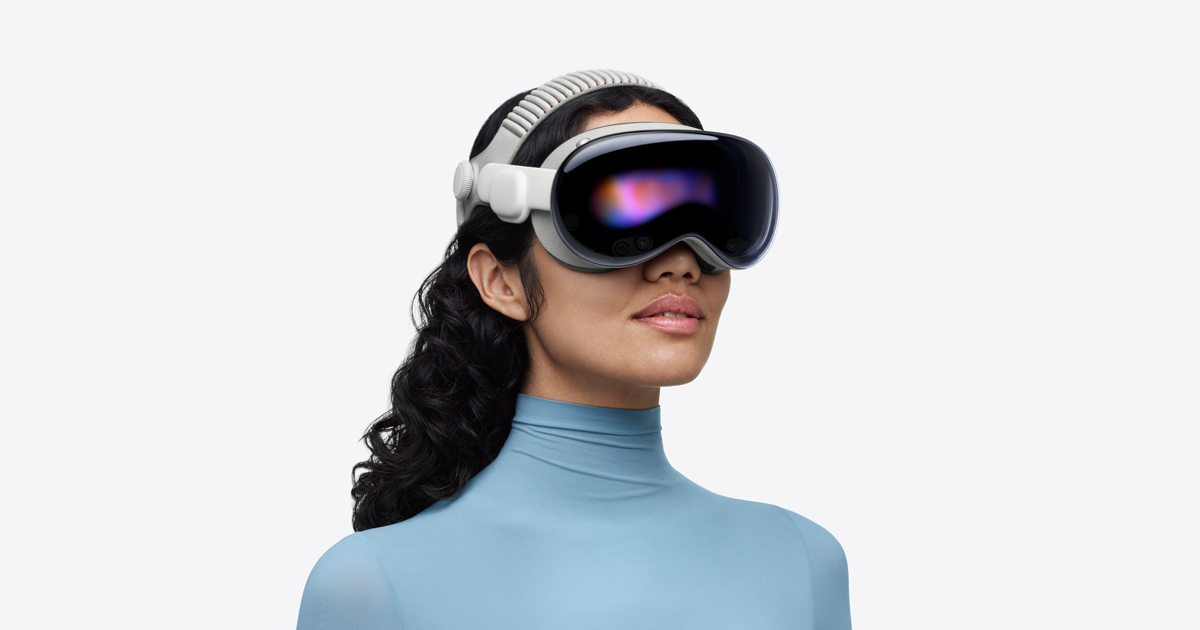
Apple Vision Pro Headset
A premium spatial computer featuring dual micro-OLED displays that pack 23 million pixels across two eyes. It is powered by a unique dual-chip design (M2 chip for standalone performance, and the R1 chip to process real-time sensor inputs with virtually zero lag).
visionOS: The Spatial Operating System
A natively 3D operating system that frees apps from the boundaries of a traditional display. Apps can appear side-by-side at any scale in “Shared Space”, or transition into fully immersive “Full Space” environments.
ARKit, RealityKit & Xcode Ecosystem
Apple provides a robust SDK for developers. ARKit handles advanced world-tracking and plane detection, RealityKit renders high-fidelity 3D assets, and Reality Composer Pro allows creators to build complex spatial scenes effortlessly.
Ideal Industry Deployments
Surgical Planning & Medical Education
Aviation & Aerospace Maintenance
Data Visualization & Analytics
3D Product Design & Engineering
Immersive Cinematic Entertainment
Remote Enterprise Collaboration
Resources & Documentation
Frequently Asked Questions
Do I need controllers to use the Apple Vision Pro?
No. Unlike traditional VR headsets, Apple Vision Pro relies entirely on precise eye-tracking and hand gestures. Users navigate by looking at UI elements and selecting them by tapping their thumb and index finger together.
Is Apple Vision Pro a VR headset or an AR headset?
It is a “mixed reality” spatial computer. By default, it operates in an Augmented Reality (AR) mode, passing through real-world video so you can see your surroundings. Users can rotate the “Digital Crown” to dial in full Virtual Reality (VR) immersion when desired.
Can developers port existing iOS and iPadOS apps to visionOS?
Yes. Hundreds of thousands of existing iPadOS and iOS apps are compatible with visionOS out of the box. They run as 2D “windows” in the spatial environment. Developers can also use Xcode to enhance these apps with native 3D spatial features.
Platform Demonstration
Watch the official introduction to Apple Vision Pro via the WWDC Keynote: