Immersive FX installation marks 13 seasons of American Horror Story
FX builds horror-themed immersive experience in Los Angeles
FX recently staged a large-scale immersive experience in Los Angeles to mark 13 seasons of its anthology series American Horror Story, using interactive storytelling and theatrical effects to bring elements of the franchise into a physical environment.
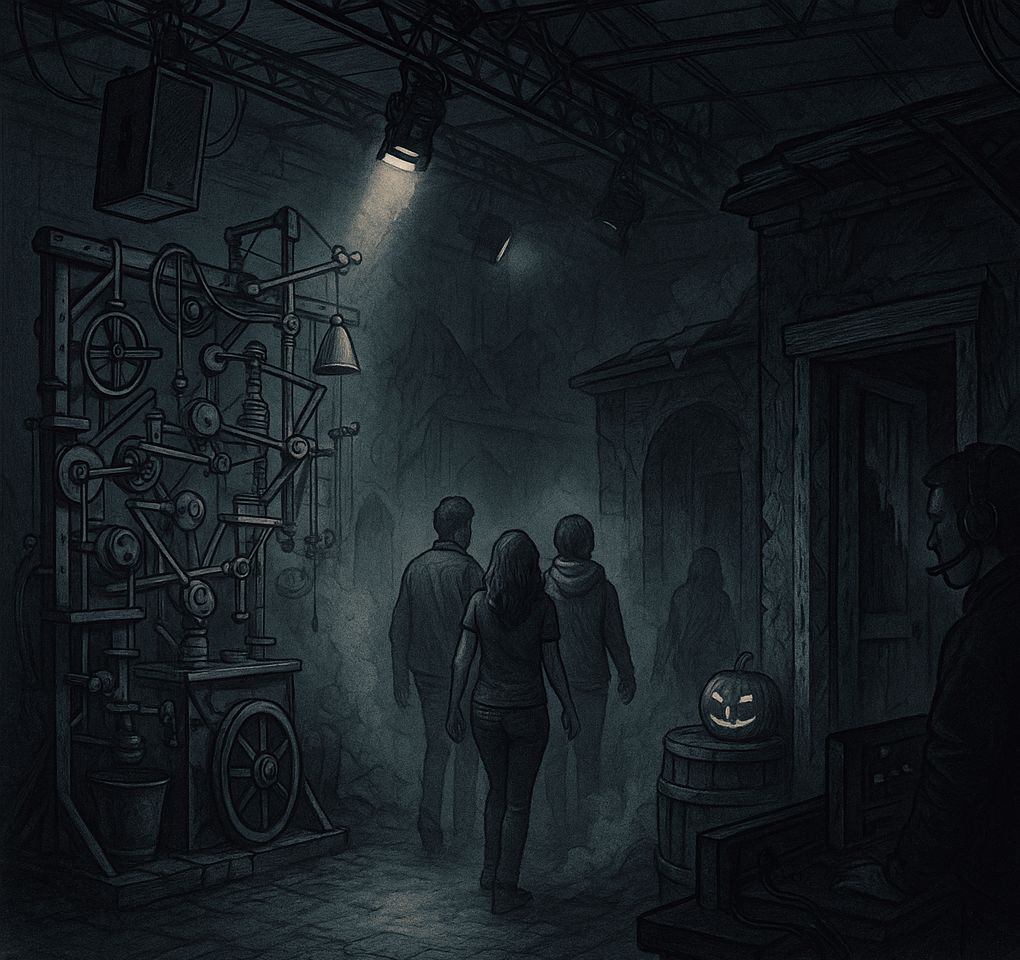
The temporary installation combined live performers, jump scares, interactive challenges and hidden references to the series with a Rube Goldberg-inspired chain reaction centerpiece, positioning the project at the intersection of experiential marketing, themed entertainment and temporary attractions.
Multi-room activation connects 13 seasons of content
The experience was structured as a walkthrough attraction, with visitors moving through a sequence of spaces designed to evoke different eras and themes from the long-running horror series. Each zone incorporated visual and narrative cues from past seasons, giving fans touchpoints to familiar storylines while still functioning as a self-contained environment for guests unfamiliar with the show.
Rooms and corridors were configured to prompt progression through the space in a controlled flow, allowing the production team to time lighting, audio and performer cues around visitor movement. The activation used physical set builds rather than simple photo-op backdrops, including detailed scenic elements, props and textured surfaces to support close-up interaction and create a sense of physical immersion.
Interactive challenges and jump scares drive engagement
Rather than operating as a passive exhibition, the installation required participants to complete tasks and respond to interactive prompts. These challenges varied across different sections and were integrated into the storyworld so that actions felt motivated by in-universe objectives rather than isolated game mechanics.
Jump scares and actor-driven moments were timed around these interactions, with performers and effects triggered as guests approached certain areas or completed specific actions. This approach is in line with current trends in immersive theater and experiential marketing, where physical participation and reactive design are used to increase dwell time and emotional impact.
The attraction also incorporated so-called Easter eggs—small, hidden references that rewarded detailed observation or repeat visits. For a franchise with more than a decade of content, this layered approach allowed the build to cater both to casual visitors and highly knowledgeable fans.
Rube Goldberg-inspired chain reaction as technical centerpiece
A notable feature of the installation was a Rube Goldberg-style chain reaction, used as both a visual focal point and a structural component of the guest journey. In this context, a Rube Goldberg device refers to a deliberately complex mechanical sequence in which one physical action triggers a series of subsequent reactions.
For production teams, this kind of feature presents both creative and operational challenges. It requires careful mechanical design, consistent reset procedures and redundancy planning to ensure that the chain reaction can be reliably triggered repeatedly throughout each event day. Its inclusion suggests that the build team had to coordinate set construction with mechanical fabrication, show control and safety oversight from the outset of the project.
In the narrative of the experience, the chain reaction functioned as a climactic moment, tying together prior interactions as guests observed or initiated the sequence. For event technologists, it illustrates how analog kinetic effects can be used alongside digital media and live performance to deliver memorable set pieces without relying exclusively on screens.
Use of theatrical techniques for a temporary installation
The production drew heavily from haunted attraction and live theater practices, adapting them for a branded environment. Core techniques included controlled sightlines, black-box style transitions between scenes, and tightly cued lighting and audio designed to support timed scares.
Lighting appears to have played a dual role: providing general visibility and acting as a storytelling device, with color, intensity and direction used to shift mood between scenes. Practical lighting effects—such as flickering fixtures or localized strobes—would likely have been combined with hidden show lighting to maintain both atmosphere and safety.
Sound design is a critical component of horror-based experiences, and this installation made use of it to shape pacing and tension. Isolated sound zones, directional speakers and layered background tracks can help guide movement and focus attention, even in relatively small spaces. Integrating these audio elements into a temporary build requires close coordination between scenic, electrical and AV teams during both design and load-in.
Operational considerations for fan-facing horror experiences
Although built as a promotional initiative, the project had to address operational issues common to all public-facing immersive attractions: capacity management, guest flow, safety, and accessibility. Horror content adds additional complexity, as producers must balance intensity with audience comfort and provide clear opt-outs or content advisories.
From an event operations standpoint, jump-scare environments often depend on pulsed entry—admitting guests in small groups at scheduled intervals—to preserve timing and minimize overcrowding in tighter spaces. This approach also eases reset tasks for performers and crew, especially when practical effects or mechanical elements must be restored between groups.
Staffing requirements extend beyond performers. Front-of-house teams manage queueing and wayfinding, while stage management or show control staff monitor timing, technical systems and emergency procedures. For experiences tied to a major media brand, reputation management also plays a role, requiring consistent delivery across all show cycles during the run.
Positioning within experiential marketing and themed entertainment
By translating more than 13 seasons of televised content into a location-based event, FX aligned itself with broader industry movement toward immersive storytelling as a marketing and fan-engagement tool. For networks and streaming platforms, such activations serve multiple functions: building community around long-running properties, generating social media content and extending IP into the realm of live experiences.
For the wider event and AV community, projects of this type highlight an ongoing convergence of disciplines. Elements traditionally found in theme parks and seasonal haunted attractions—such as linear storytelling, environmental design and show control—are increasingly appearing in brand experiences, pop-ups and festival activations.
The American Horror Story installation demonstrates how media companies are treating their series as multi-platform properties, with physical environments sitting alongside broadcast, digital, and social output. It also reinforces demand for production teams skilled in both narrative design and technical execution, spanning scenic fabrication, lighting, audio, SFX, and interactive technologies.
Implications for future immersive event design
While the Los Angeles build was tied specifically to American Horror Story, the underlying approach is applicable to a wide range of IP-driven and original experiences. Modular room-based layouts, task-oriented interaction, and mechanically driven set pieces can be adapted for both horror and non-horror themes.
For event producers, one takeaway is the value of designing interactivity that is simple to explain in person but layered enough to reward attention. The use of Easter eggs for fans, integrated into environmental graphics and props, offers a route to deeper engagement without requiring complex technology.
Another implication is the continued relevance of physical engineering within an increasingly digital event ecosystem. The Rube Goldberg-style element within the FX build underscores how analog spectacle—when integrated with narrative and timed performance—can differentiate a live experience from screen-based content, an important consideration for brands seeking to justify in-person activations.
Further information on FX programming and series such as American Horror Story is available through the network’s official channels at fxnetworks.com, which increasingly sit alongside live activations like this one as part of a wider ecosystem of audience engagement.